
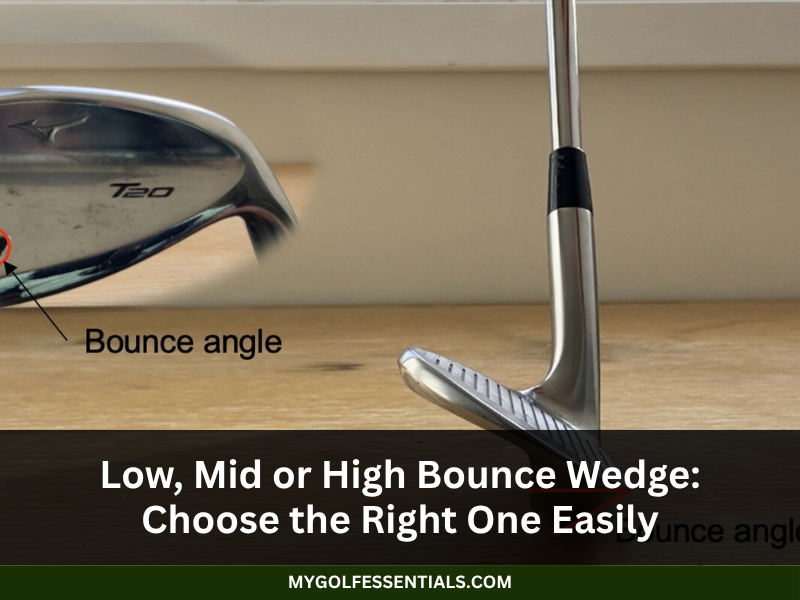
Choosing a Bounce Wedge can seem unnecessarily complicated. A golfer with a shallow delivery who plays firm fairways may benefit from less bounce. A golfer with a steeper delivery who plays soft turf may need more. Mid bounce sits between those extremes and offers a versatile option for mixed conditions.
The right Bounce Wedge therefore isn’t determined by a single number. Swing delivery, divot depth, turf conditions, bunker sand, loft and sole grind all influence how the club behaves.
The Simple Way to Think About Wedge Bounce
Bounce describes the part of the sole that helps the club move across the ground instead of digging deeply into it. When the sole has more bounce, the club generally resists digging. When it has less, the leading edge can sit closer to the ground.
That difference becomes noticeable around the green. A low-bounce Bounce Wedge can work particularly well from a tight lie because the leading edge can get close to the ball without excessive sole interference. A high-bounce design can perform differently from soft turf because the wider or more prominent sole helps the club move through the surface.
Three broad categories provide a useful starting point:
| Bounce Type | Approximate Range | Typical Swing | Suitable Conditions |
| Low | Around 4–8° | Shallow | Firm, tight lies |
| Mid | Around 8–12° | Moderate | Mixed conditions |
| High | Around 12°+ | Steep | Soft turf, sand |
These ranges should not be treated as universal standards. Golf manufacturers use different definitions for low, mid and high bounce, so the number needs context.
A 10° Bounce Wedge, for example, may sit in the middle of the available options from one manufacturer but fall near a different category in another range.
The Divot Usually Gives the First Clue
Divot depth offers one of the simplest ways to understand the type of sole interaction a golfer needs. A golfer who regularly produces deep divots creates more downward turf interaction. That delivery can make a low-bounce Bounce Wedge dig more aggressively, particularly from soft ground. More bounce can help the sole move through the turf instead. A shallow divot tells a different story. Golfers who sweep the ball with little turf disturbance often benefit from a lower-bounce setup, particularly when playing from firm ground. The leading edge can sit closer to the surface and provide cleaner contact.
Moderate divots fall between those extremes. A mid-bounce Bounce Wedge can offer a useful balance when neither the swing nor the playing environment strongly favors one extreme. Divot depth should not become a rigid fitting rule. Attack angle, shaft lean and face position also influence turf interaction. Still, divots provide valuable evidence that can make wedge selection less of a guessing game.
Then Look at the Ground
Swing characteristics tell only half the story. The surface underneath the ball can change how a Bounce Wedge performs. Firm fairways and tight lies generally make lower bounce more attractive because the club doesn’t need as much help preventing the sole from digging. Soft or wet turf can produce the opposite requirement. More bounce can help the sole glide instead of cutting deeply into the ground.
Rough adds another variable. Thick grass can change the way the club enters the ball, while bunker sand creates a completely different form of turf interaction. Sand conditions matter particularly strongly. Soft, fluffy sand often works well with more bounce because the sole can move through the sand instead of burying itself. Firm or compact sand can favor less bounce for certain players. The result is a simple principle: the best Bounce Wedge depends on both the golfer and the ground.
Low Bounce Has a Place, But It Isn’t for Everyone
Low bounce generally suits golfers who deliver the club shallowly and encounter firm conditions regularly. A low-bounce Bounce Wedge can be particularly useful from tight fairway lies. Its sole allows the leading edge to sit relatively close to the ground, which can help golfers who prefer to nip the ball cleanly from firm surfaces. Lower bounce can also work well for players who naturally sweep the ball rather than driving the club deeply into the turf. Compact bunker sand may provide another suitable environment.
The limitation appears when the delivery becomes steep or the ground becomes soft. A low-bounce Bounce Wedge has less sole angle available to resist digging. A golfer who takes deep divots may therefore find that the club enters the ground too aggressively. Low bounce should not be viewed as an advanced-player specification either. It simply matches a particular combination of delivery, lie and playing conditions.
Mid Bounce Is the Flexible Middle Ground
Mid bounce offers a useful compromise for golfers whose technique and playing environment sit between the extremes. A mid-bounce Bounce Wedge can suit moderate divot patterns and mixed turf conditions. It provides enough sole interaction to reduce excessive digging while retaining enough versatility for firmer lies. This setup can make sense for golfers who play several courses throughout the year. A course may present firm fairways during a dry season and softer turf after periods of rain. A moderate sole configuration can handle both without becoming heavily specialized.
Mid bounce also provides a sensible starting point when a golfer’s delivery isn’t clearly shallow or steep. Instead of selecting an extreme based on limited information, testing a middle option can reveal whether more or less bounce would improve turf interaction. That versatility explains why mid-bounce designs appear frequently across modern wedge ranges.
High Bounce Helps When the Sole Needs to Do More Work
High bounce generally suits steeper deliveries, deeper divots and softer playing surfaces. A high-bounce Bounce Wedge gives the sole more ability to resist digging. When a golfer strikes down aggressively, the extra bounce can help the club move through the turf rather than burying the leading edge. Soft fairways, wet ground and fluffy bunker sand can also favor this design. Golfers who frequently encounter those conditions may appreciate the additional sole interaction.
High bounce can also help from certain rough lies. The sole can assist the club as it moves through grass, although the result still depends on the wedge’s grind and the lie itself. More bounce does not automatically mean better performance. A golfer who sweeps the ball from very firm turf may find a high-bounce Bounce Wedge less comfortable from tight lies. The sole can interact with the surface earlier than expected and alter the way the leading edge reaches the ball. The goal is not maximum bounce. The goal is appropriate bounce.
Do I Want High or Low Bounce Wedges?
Neither option works universally. The choice depends on how the golfer delivers the club and where that club normally gets used. Low bounce generally fits a shallow delivery, shallow divots and firm or tight lies. High bounce generally fits a steeper delivery, deeper divots and softer surfaces. A golfer who falls between those descriptions can consider a mid-bounce Bounce Wedge, especially when course conditions change throughout the year.
Handicap alone provides little useful information here. Two golfers with the same handicap can have completely different attack angles and divot patterns. One may sweep the ball from firm turf, while another may produce deep divots from soft ground. The bounce decision should therefore begin with delivery and conditions, not handicap.
One Wedge Doesn’t Have to Match Another
A complete wedge setup does not necessarily need identical bounce throughout the set. A gap wedge often handles full and controlled approach shots, so turf interaction can differ from a sand wedge used frequently around bunkers. A sand wedge may need enough bounce to perform effectively from soft sand, while a lob wedge may see more tight lies and open-face shots. That makes a multi-wedge setup an opportunity to use different sole configurations.
A golfer might prefer a lower-bounce Bounce Wedge for a lob wedge while using more bounce in a sand wedge. Another golfer may prefer a more consistent setup across all wedges because the same delivery appears throughout the set. Neither arrangement automatically suits every player. The intended job of each club should influence the decision.
Bounce Isn’t the Whole Sole Story
Bounce angle represents only one part of wedge sole design. Grind can change how that bounce interacts with the ground. Grind refers to the shaping and relief applied to the sole. Heel relief, toe relief, trailing-edge relief and sole width can all change the way a Bounce Wedge sits and moves through the turf. This explains why two wedges with the same stated bounce can feel noticeably different.
A wedge with heel relief may work better for a golfer who frequently opens the face. Another with a broader sole may provide greater stability through soft ground. The bounce number remains important, but the sole’s overall shape determines how that number behaves during an actual shot. This distinction becomes particularly important with lob wedges and other clubs designed for face manipulation.
What Bounce Is Most Forgiving?
There isn’t one bounce specification that provides maximum forgiveness for every golfer. A higher-bounce Bounce Wedge can offer useful protection against digging for golfers with steep deliveries. However, that same configuration may not suit a shallow striker playing from a very firm, tight lie. Lower bounce can produce cleaner interaction from firm surfaces for some shallow swingers, while mid bounce can provide a useful compromise across changing conditions.
Forgiveness therefore comes from matching the sole to the delivery rather than simply selecting the largest bounce number. The most effective setup is the one that reduces the golfer’s common miss without creating another problem from the lies encountered most often.
The Ground Changes the Answer
The same Bounce Wedge can behave differently depending on the surface. On firm, dry turf, lower bounce can help the leading edge sit close to the ground. Tight lies around the green can make this characteristic especially useful. Soft or wet turf changes the equation. A higher-bounce Bounce Wedge can help prevent excessive digging and allow the sole to glide through the surface.
Bunkers require another adjustment. Fluffy sand generally favors more bounce, while compact sand can reward a different sole configuration. Grind and technique become particularly important when the face opens during bunker shots. Course conditions should therefore become part of the fitting conversation rather than an afterthought.
Five Bounce Mistakes Worth Avoiding
1. Choosing Bounce According to Handicap
Handicap doesn’t reveal attack angle, divot depth or typical turf interaction. Those characteristics provide better clues.
2. Ignoring the Divot Pattern
Deep divots and shallow divots represent different delivery patterns. A Bounce Wedge should account for that difference.
3. Giving Every Wedge Identical Bounce
Different wedges serve different purposes. A sand wedge and lob wedge don’t necessarily need the same sole configuration.
4. Ignoring Playing Conditions
A setup that works beautifully on firm summer turf may behave differently on wet or soft ground.
5. Looking Only at the Bounce Number
Grind, sole width, face angle and shaft lean can all influence effective bounce.
A Simple Bounce Test Before Buying
Testing provides more useful information than guessing from specifications. A golfer can compare different Bounce Wedge configurations from a tight lie first. Clean contact and predictable turf interaction provide useful clues. The next test should come from normal fairway turf. Divot depth, strike location and the amount of resistance through impact can reveal whether the sole feels appropriate.
Rough provides another useful test, followed by bunker sand when possible. The most revealing comparison often comes from the misses. Excessive digging, heavy contact, thin strikes or unwanted skipping can show whether the sole matches the delivery. Real turf provides better evidence than a range mat because mats remove much of the interaction that bounce is designed to manage.
Low, Mid or High Bounce? The Decision in One Look
| Golfer and Playing Conditions | Starting Point |
| Shallow swing + firm lies | Low bounce |
| Moderate swing + mixed conditions | Mid bounce |
| Steep swing + soft turf | High bounce |
| Shallow swing + mixed conditions | Low to mid |
| Steep swing + mixed conditions | Mid to high |
A golfer with a shallow delivery and firm lies can begin by testing a low-bounce Bounce Wedge. A moderate delivery and varied conditions point toward mid bounce. A steep delivery and soft turf provide a strong reason to test high bounce. Those recommendations remain starting points rather than fixed rules. Loft, grind, face manipulation and individual technique can change the result.
Final Thoughts
The right wedge bounce comes down to how the club meets the ground. Golfers with shallow swings and firm lies may find lower bounce easier to control, while steeper swings and softer turf often call for more bounce. Mid bounce can provide a practical balance when conditions and swing delivery vary. Grind, loft and shot selection also deserve attention before making a final choice. A little testing from real turf can reveal more than a number on the sole. The goal isn’t to find the highest or lowest option, but a Bounce Wedge that produces consistent contact. Choose wisely and play with confidence.
Key Takeaways
1. Bounce determines how the wedge sole interacts with turf during impact and recovery.
2. Low bounce generally suits shallow deliveries and firm, tight playing conditions.
3. Mid bounce provides useful versatility for moderate swings and changing course conditions.
4. High bounce generally helps steep deliveries move through softer turf without excessive digging.
5. Divot depth provides an accessible clue when evaluating suitable wedge bounce requirements.
6. Firm lies generally call for less bounce than soft or wet playing surfaces.
7. Fluffy bunker sand often benefits from additional bounce and appropriate sole design.
8. Grind can significantly change how the stated bounce performs during different shots.
9. Different wedges can carry different bounce configurations according to their intended roles.
10. Real-turf testing offers better evidence than selecting a wedge from specifications alone.
Frequently Asked Questions
Is 12 degrees of bounce too much for a wedge?
No. Twelve degrees isn’t inherently too much for a wedge. That amount can work well for golfers with steeper deliveries, deeper divots or softer turf. It can also perform effectively from suitable bunker conditions. Firm lies and shallow swings may call for less bounce, depending on the wedge’s grind and the golfer’s technique.
Is 14 degrees of bounce too high?
No. Fourteen degrees is not automatically too high. Higher bounce can suit steep swings, soft turf, wet conditions and fluffy sand because the sole helps resist digging. However, golfers who sweep the ball from firm or tight lies may prefer less bounce. Grind and effective bounce also influence the result.
Is mid bounce a good choice for mixed conditions?
Yes. Mid bounce can provide a practical balance when playing conditions vary between firm and soft surfaces. It can also suit golfers with moderate attack angles and average divot patterns. A mid-bounce setup doesn’t guarantee ideal performance in every lie, but it offers useful versatility for golfers without strongly specialized swing or course requirements.
Is high bounce suitable for a steep swing?
Yes. High bounce often suits a steep delivery because the additional sole angle helps reduce excessive digging. Golfers who take deep divots can benefit from that interaction, particularly on soft or wet turf. The exact setup still depends on grind, loft, course conditions and the golfer’s ability to control the club through impact.
Is low bounce suitable for tight lies?
Yes. Low bounce can work particularly well from tight lies because the leading edge can sit closer to the ground. This setup often suits golfers with shallow deliveries who play on firm surfaces. However, a golfer with a steep swing may still need more bounce even from relatively firm lies to prevent excessive digging.