
TaylorMade Qi4D, Qi35, and Qi10 drivers remain popular because each generation targets a slightly different performance need. The Qi10 built a strong reputation for forgiveness, while Qi35 added useful weighting options. Qi4D continues that progression with a stronger focus on consistency and refined fitting.
TaylorMade Qi4D, Qi35 & Qi10 Drivers: Best Comparison Guide
 Written byJustin Wilcox, Founder and editorLast updated September 24, 2026 · First published July 28, 2026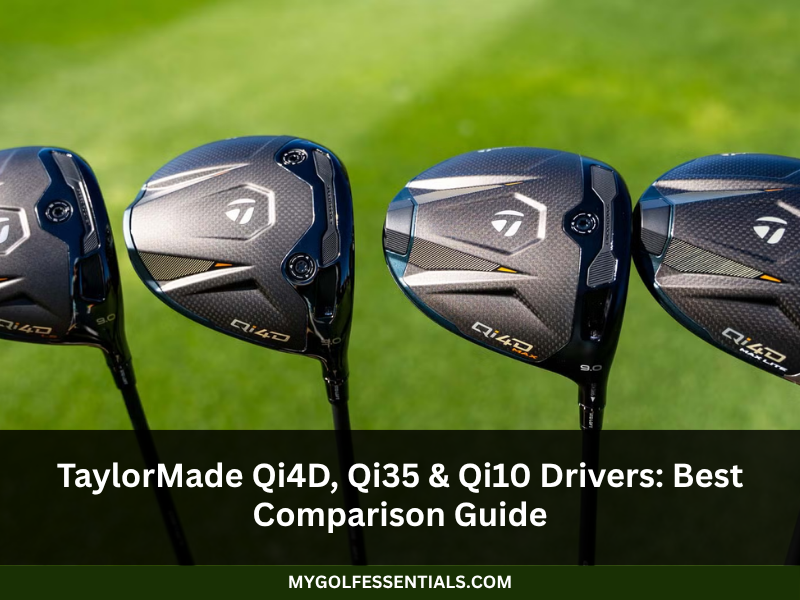
That makes a simple “newest is best” verdict too easy. Real golfers can see different results depending on swing speed, strike pattern, launch, spin, shaft, and head setup. TaylorMade Qi4D, Qi35, and Qi10 drivers require more than a specification-sheet comparison.
This guide compares the three generations across distance, forgiveness, spin, feel, adjustability, value, and upgrade potential. It also considers the mixed feedback found in the GolfWRX discussion, where golfers reported strong results from all three models. The biggest question comes next: does the newest generation create enough improvement to justify its premium?
TaylorMade Qi4D, Qi35, and Qi10 Drivers
The Qi4D is the newest option, but it is not automatically the best fit. TaylorMade Qi4D, Qi35, and Qi10 drivers each serve a distinct purpose.
| Category | Qi10 | Qi35 | Qi4D |
| Best fit | Forgiveness and value | Adjustability and balance | Latest technology |
| Forgiveness | Excellent | Excellent | Excellent |
| Spin control | Strong | Strong | Very strong |
| Adjustability | Good | Excellent | Excellent |
| Feel | Strong | Good | Strong |
| Value | Excellent | Very good | Premium |
| Main advantage | Proven performance | Versatile fitting | Spin consistency |
The Qi10 stands out when price and proven forgiveness matter most. Qi35 suits golfers who benefit from weight-positioning options and a balanced launch profile. Qi4D earns the strongest case for golfers chasing the latest design and improved spin consistency.
That does not mean every golfer should replace an older driver. For TaylorMade Qi4D, Qi35, and Qi10 drivers, testing can easily change the order.
What Changed From Qi10 to Qi35 to Qi4D?
The story behind TaylorMade Qi4D, Qi35, and Qi10 drivers is one of refinement rather than constant reinvention. Each generation keeps TaylorMade’s focus on inertia while changing how the head manages launch, spin, and forgiveness.
Qi10: The Forgiveness-Focused Foundation
Qi10 established a strong forgiveness story through its high-MOI design. For many golfers, that stability matters more than a small gain in peak ball speed.
The model also remains relevant because consistent launch and directional control can protect performance. A discounted Qi10 can therefore offer considerable value.
Qi35: More Control Through Weighting
Qi35 pushed the fitting conversation further. Its weighting system gives golfers more influence over launch, spin, and flight shape.
That matters because the same head can behave differently when weight moves forward or rearward. GolfWRX feedback reflects this point, with several golfers reporting excellent speed and dispersion from Qi35.
Qi4D: Refinement Rather Than Reinvention
Qi4D focuses on refining performance across the face. Current Golf Digest robotic testing found substantially lower spin volatility across the Qi4D family than earlier generations.
That makes Qi4D less about a dramatic change in appearance and more about extracting dependable performance. For TaylorMade Qi4D, Qi35, and Qi10 drivers, fitting can erase or magnify the differences.
TaylorMade Qi4D, Qi35, and Qi10 Drivers: Performance Comparison
A useful comparison of TaylorMade Qi4D, Qi35, and Qi10 drivers should look beyond maximum distance. Ball speed, carry, spin, launch, and dispersion work together to determine how often a driver produces playable shots.
| Performance area | Qi10 | Qi35 | Qi4D |
| Distance potential | High | High | High |
| Forgiveness | Excellent | Excellent | Excellent |
| Spin consistency | Strong | Strong | Very strong |
| Dispersion | Strong | Strong | Very strong |
| Fitting flexibility | Good | Excellent | Excellent |
Distance and Ball Speed
All three generations can produce strong speed when the strike and shaft match the golfer. Qi35 feedback from GolfWRX includes reports of excellent ball speed, while some Qi4D testers reported additional speed after fitting.
However, a single center strike does not tell the entire story. A driver that keeps launch and spin stable on imperfect strikes can deliver more useful distance over a full round.
Golf Digest’s controlled 95-mph testing adds an important wrinkle. Qi35 produced the highest average carry among the three generations tested, while Qi4D moved toward a lower-launching, lower-spinning flight.
Forgiveness and Dispersion
Forgiveness often shows up in the scorecard rather than the launch-monitor headline. A driver that turns a slight heel or toe strike into a manageable shot can protect both distance and direction.
The same testing found Qi4D had very strong side-to-side consistency, while Qi35 Max produced the smallest overall dispersion footprint in that test. That distinction matters when comparing TaylorMade Qi4D, Qi35, and Qi10 drivers.
Which driver is better, the TaylorMade Qi35 or the Qi4D?
The Qi4D has the stronger spin-consistency case, but Qi35 can remain the better value and fit for some golfers. TaylorMade Qi4D, Qi35, and Qi10 drivers do not perform identically for every swing.
Qi4D makes the stronger case when spin consistency, lateral dispersion, and the newest fitting options matter. Qi35 remains compelling when its weight settings produce an ideal launch and spin window.
The GolfWRX discussion reinforces that point. Some golfers preferred Qi4D after testing, while others reported that Qi35 delivered their best combination of speed and dispersion.
Price also changes the decision. A large discount on Qi35 can make a small performance difference difficult to justify financially. Existing Qi35 owners should therefore compare measured results before paying for a new head.
The most useful test compares both heads with the same shaft, loft, ball, and similar strike quality. That removes several variables and makes the upgrade question clearer.
Qi10 vs Qi4D: What Actually Changed?
For TaylorMade Qi4D, Qi35, and Qi10 drivers, the Qi10-to-Qi4D comparison shows how quickly driver design can evolve without making older models obsolete.
Among TaylorMade Qi4D, Qi35, and Qi10 drivers, Qi10 remains attractive for golfers who value forgiveness, feel, and lower purchase cost. Qi4D adds a newer approach to face performance and spin consistency, which can benefit golfers who struggle with variable contact.
The difference becomes more meaningful when fitting data shows tighter dispersion or a more useful launch window. If both heads produce nearly identical numbers, the older driver may provide better value.
Feel also deserves attention. GolfWRX comments include golfers who strongly preferred Qi10’s feel, while others praised Qi4D’s sound and impact sensation. That split shows why performance should not be judged from technology claims alone.
For golfers comparing TaylorMade Qi4D, Qi35, and Qi10 drivers, Qi4D offers the clearest technology step from Qi10. Even then, a fitting should confirm the benefit.
Is Qi35 better than Qi10?
Yes, Qi35 can be better than Qi10 when its weighting and launch characteristics match the golfer’s swing. TaylorMade Qi4D, Qi35, and Qi10 drivers each can win this comparison under different conditions.
Qi35 offers more ways to influence ball flight, which can help golfers fine-tune launch and spin. Some GolfWRX golfers also reported excellent speed and dispersion with Qi35.
However, Qi10 can remain the better choice for golfers who prioritize forgiveness, familiar feel, or value. The difference also depends on the exact head, loft, shaft, and weight position.
The key lesson is that “better” does not mean universally better. It means better for a particular swing and strike pattern.
Should Qi35 Owners Upgrade to Qi4D?
An upgrade makes sense when Qi4D produces measurable gains in speed, spin, dispersion, or consistency. TaylorMade Qi4D, Qi35, and Qi10 drivers can overlap heavily when the setup is not properly fitted.
An upgrade becomes more attractive when:
- Qi4D reduces dispersion without sacrificing carry.
- The new head creates a better launch and spin window.
- A fitting reveals a meaningful ball-speed gain.
- The golfer wants the latest head and fitting technology.
- The current Qi35 setup produces inconsistent results.
Keeping Qi35 makes more sense when:
- Dispersion is already tight.
- Carry and spin numbers already suit the swing.
- The price difference is substantial.
- The current head feels comfortable and reliable.
GolfWRX feedback supports caution here. Some golfers found Qi4D clearly better, while others saw little reason to leave Qi35. The result depends heavily on the individual setup.
Which TaylorMade Driver Fits Different Golfers?
The best choice among TaylorMade Qi4D, Qi35, and Qi10 drivers depends on the performance problem that needs solving.
Best for Maximum Forgiveness
Qi10 remains a strong choice for golfers who want stable performance and value. Qi4D’s forgiving variants also deserve attention when newer technology and fitting support matter more than price.
Best for Adjustable Performance
Qi35 and Qi4D stand out for golfers who want to influence launch, spin, and trajectory through weighting. That flexibility becomes especially useful during a professional fitting.
Best for Lower Spin
The LS versions deserve consideration for golfers who naturally create excess spin. However, low spin does not automatically create more distance. Too little spin can reduce carry and make the driver harder to control.
Best Value
Qi10 usually makes the strongest value argument once newer generations enter the market. Qi35 can also become attractive when retailers discount remaining stock.
Best Latest Option
Qi4D takes the strongest position for golfers who want the newest TaylorMade design. Its most defensible advantage comes from spin consistency, not simply from being newer.
Qi4D vs Qi35 vs Qi10 Specs at a Glance
The following table gives a simple framework for TaylorMade Qi4D, Qi35, and Qi10 drivers without treating specifications as the final buying decision.
| Feature | Qi10 | Qi35 | Qi4D |
| Generation | 2024 | 2025 | 2026 |
| Main focus | Forgiveness | Weighting and fitting | Refined consistency |
| Weighting | Model dependent | Adjustable | Adjustable |
| Spin profile | Moderate | Tunable | Lower and controlled |
| Forgiveness | High | High | High |
| Fitting potential | Strong | Very strong | Very strong |
| Value position | Strong | Very strong | Premium |
For TaylorMade Qi4D, Qi35, and Qi10 drivers, specifications explain the design, but launch-monitor results matter more for an individual golfer. Head choice, loft, shaft, strike location, and delivery can change the final result.
What Golfers Say About Qi10, Qi35 and Qi4D
The GolfWRX discussion gives TaylorMade Qi4D, Qi35, and Qi10 drivers useful real-world context. The conversation does not produce one universal winner.
Some golfers still favor Qi10 because of its feel and predictable performance. Others report that Qi35 delivers excellent speed, low spin, and tight dispersion.
Qi4D receives strong praise for feel, sound, consistency, and ball speed. One golfer reported more than 160 mph ball speed with Qi4D compared with roughly 157–158 mph from Qi35, although the setups were not identical.
That last detail matters. Shaft length and other fitting variables can influence results, so individual forum reports should not replace controlled testing.
The strongest conclusion from the discussion is simple: fitting can change the ranking. TaylorMade Qi4D, Qi35, and Qi10 drivers can all perform exceptionally when the head and shaft match the swing.
Final Thoughts
For golfers prioritizing the latest technology and spin consistency, Qi4D has the strongest overall case among TaylorMade Qi4D, Qi35, and Qi10 drivers. Its advantage becomes more convincing when fitting produces tighter dispersion or a better flight.
Qi35 remains an excellent alternative. Its adjustable weighting can produce an ideal flight, and its lower market price can make it especially appealing.
Among TaylorMade Qi4D, Qi35, and Qi10 drivers, Qi10 wins the value argument. It offers proven forgiveness and can make more sense when a fitting shows little measurable advantage from newer technology.
The final decision should depend on launch, spin, ball speed, dispersion, feel, and price. A golfer who already owns Qi35 or Qi10 should test before upgrading.
The newest driver may win the technology race, but the best driver remains the one that produces the most useful shots.
Key Takeaways
- Qi4D offers the strongest spin-consistency case across the three TaylorMade generations.
- Qi35 remains highly competitive when its adjustable weighting suits the golfer.
- Qi10 continues to provide excellent forgiveness and strong value for many golfers.
- Distance alone should never determine the best driver for an individual swing.
- Spin consistency can matter more than peak ball speed during real-world play.
- Qi4D offers a stronger upgrade case when testing shows measurable performance gains.
- Qi35 owners should compare launch, spin, speed, and dispersion before upgrading.
- GolfWRX feedback shows that golfers can strongly prefer different driver generations.
- Shaft selection can significantly change performance and alter the overall comparison.
- Professional fitting remains the most reliable way to identify the right driver.
FAQs
Is the Qi35 worth it?
Yes. Qi35 remains worth considering when its weighting options produce a strong launch and spin profile. It also offers excellent performance without requiring the newest-driver price. Golfers who already own Qi10 may find Qi35 useful, while Qi35 owners should test Qi4D before upgrading. The final value depends on pricing, shaft setup, and measurable performance gains.
Is it worth upgrading from Qi35 to Qi4D?
Yes, if Qi4D produces measurable gains in speed, dispersion, launch, or spin consistency. The upgrade makes less sense when a well-fitted Qi35 already delivers excellent numbers. A same-shaft comparison provides the clearest answer because it removes one major variable. Price should also factor into the final decision.
Is Qi35 better than Qi10?
Yes, Qi35 can be better than Qi10 when its adjustable weighting creates a more suitable ball flight. However, Qi10 can remain the better option for golfers who prioritize forgiveness, feel, or value. Neither driver is universally superior. Strike pattern, shaft, loft, and swing delivery can change the outcome significantly.
Which driver is better, the TaylorMade Qi35 or the Qi4D?
Yes, Qi4D generally has the stronger spin-consistency case, especially for golfers seeking newer fitting options. Qi35 can still win for golfers who respond better to its weighting system or prefer its price. A launch-monitor comparison remains more useful than a generation-based assumption.
What are the key differences between the TaylorMade Qi10 and Qi4D drivers?
Yes, the differences are meaningful, although they may not justify an upgrade for every golfer. Qi10 emphasizes proven forgiveness and value, while Qi4D focuses more on refined face performance, spin consistency, and current fitting technology. The practical gap depends on strike quality, shaft, launch, spin, and dispersion.