
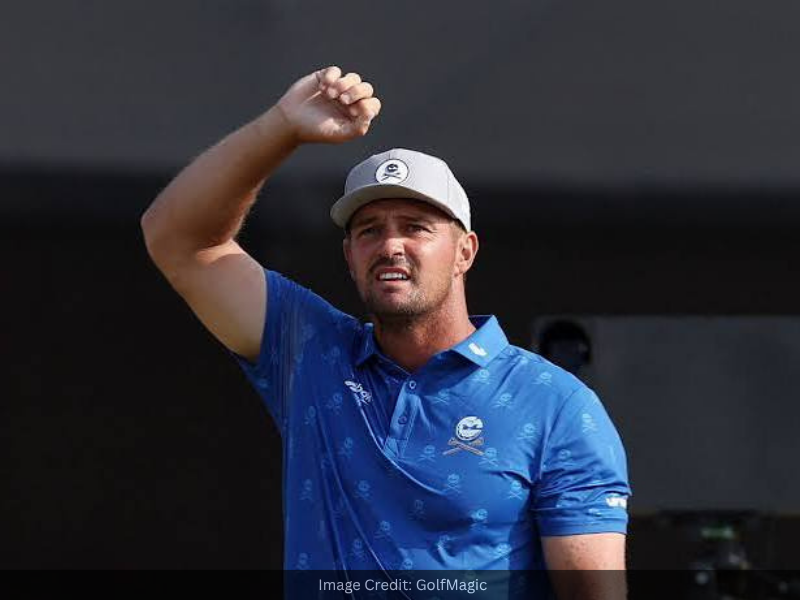
Phil Mickelson and Bryson DeChambeau once approached entertainment executive Ari Emanuel with a proposal for a new golf league requiring a reported $1 billion investment, a revelation that has resurfaced as LIV Golf faces uncertainty over its future funding. The proposal came before LIV Golf launched in 2022 and envisioned a new competition that could operate alongside the PGA Tour. Emanuel, the executive chairman of WME Group and TKO Group Holdings, recently recalled his initial reaction to the idea during a podcast appearance shared by The Golfer’s Journal.
According to Emanuel, he was enthusiastic when the two major champions first approached him. He believed the concept had considerable potential and could create a new competitive structure for professional golf. The revelation offers a glimpse into the discussions that took place before LIV Golf reshaped the professional game and intensified the rivalry between established tours and the Saudi-backed circuit.
Phil Mickelson and Bryson DeChambeau: Ari Emanuel’s $1 Billion Golf League Proposal
Emanuel recalled receiving a call from Mickelson and DeChambeau before Saudi Arabia became involved in the professional golf project. “We get a call from Phil and Bryson, I think before the Saudis. And I say, yeah, I’m in. I think this would be incredible,” Emanuel said. His response suggests that the concept appealed to him before the financial backing and structure associated with LIV Golf emerged.
Rather than simply creating a direct competitor to the PGA Tour, Emanuel imagined a model that could establish a distinct place within professional golf. He compared the proposed structure to the English Premier League, the well-known football competition. “You could almost do it like Premier League, you know, like English Premier League. And I think that’s what they’re trying to figure out now,” he explained. The comparison points to a possible league structure designed to give professional golf a more organised competition format. However, the available account does not detail the full terms of the original proposal, including how teams, events or commercial rights would have been arranged.
Emanuel was also asked whether declining to make the proposed $1 billion investment had ultimately saved him money. “I don’t know. I think we would have done well,” he replied. His comments indicate that he remains confident in the concept’s potential, although they do not establish what financial returns the proposed league might have generated.
LIV Golf Faces Questions Over Its Financial Future
The revelation comes at a significant moment for LIV Golf, which is entering a new chapter following the reported withdrawal of financial backing from Saudi Arabia’s Public Investment Fund (PIF). The PIF’s involvement was central to the league’s launch and expansion. Its substantial investment enabled LIV Golf to attract prominent players, offer significant prize money and establish a schedule of events outside the traditional PGA Tour structure.
According to the supplied report, the PIF invested more than $5 billion during LIV Golf’s first five seasons. The withdrawal of that financial support has therefore raised questions about how the organisation will fund its operations in the years ahead. BC Partners Credit has committed to an initial investment as part of a targeted $300 million financing package. The reported arrangement also includes plans for players to receive equity in the league and their respective teams.
That approach could change the relationship between players and the organisation by giving competitors a direct ownership interest. However, the long-term implications will depend on the final financing structure, the league’s commercial performance and the terms of any equity arrangements. For players, uncertainty over funding raises important questions about future contracts, prize money and the tournament schedule. For the league itself, attracting investment and maintaining commercial support will be important to its continued development.
Mickelson and DeChambeau were among the high-profile players associated with LIV Golf’s rise. Their earlier approach to Emanuel demonstrates that alternative league concepts were being discussed even before the Saudi-backed competition launched. Emanuel’s Premier League comparison also highlights an ongoing challenge for professional golf: creating a competition structure that can attract fans, generate sustainable revenue and coexist with other tours. Although his comments do not reveal whether he might become involved in a future golf venture, they show that he considered the original concept promising.
As LIV Golf navigates its financial transition, the resurfaced proposal provides a reminder that the idea of a new professional golf league existed before the circuit’s eventual launch. Whether the sport moves towards a more sustainable model will depend on investment, commercial partnerships and the ability to maintain interest among players and fans. For now, Emanuel’s recollection adds another layer to the story of how golf’s alternative-league era began, while the financial questions surrounding LIV Golf remain unresolved.