
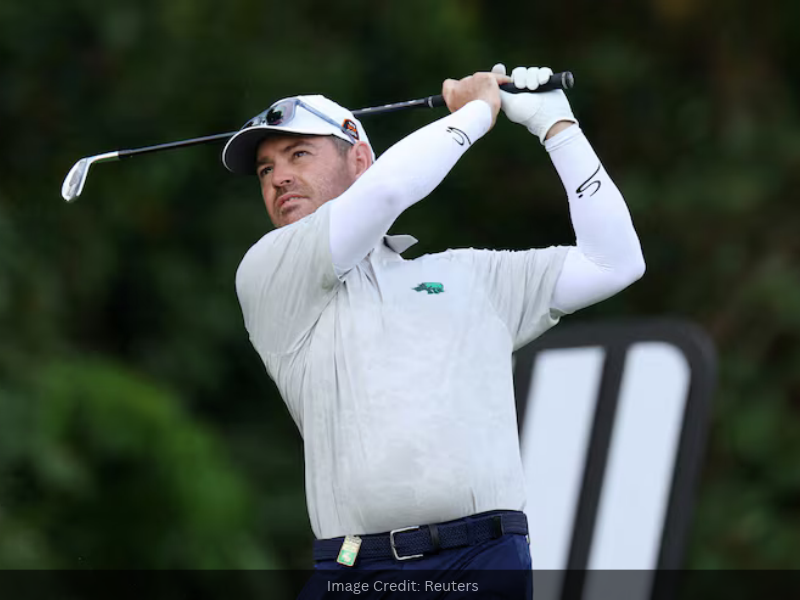
Louis Oosthuizen Leaves LIV Golf: A Major New Move
 Written byJustin Wilcox, Founder and editorLast updated October 22, 2026
Former Open champion Louis Oosthuizen has decided to leave LIV Golf and return to the DP World Tour in January 2027, citing concerns over the proposed schedule and his desire to remain competitive. His departure comes as the breakaway league confronts financial uncertainty and prepares for a potential restructuring. South African golfer Louis Oosthuizen has confirmed that he will not sign up for the next phase of LIV Golf, bringing an end to his playing role and captaincy of Southern Guards GC. The 2010 Open Championship winner believes greater control over his playing calendar will give him the best opportunity to extend his competitive career.
In announcing his decision on October 21, Oosthuizen described his time with the organisation positively but acknowledged that the proposed future schedule had influenced his thinking. His decision adds to the uncertainty surrounding LIV Golf as it attempts to establish a sustainable model for 2027.
Why Louis Oosthuizen Is Leaving LIV Golf
At 44, Oosthuizen believes he still has several years of competitive golf ahead of him. However, he is concerned that the proposed LIV Golf 2.0 schedule could require extensive international travel for individual tournaments, making it difficult to manage his physical condition and prepare consistently. Speaking ahead of the Hong Kong Open, Oosthuizen explained that he wanted greater flexibility to arrange his own schedule and compete in locations close to one another over consecutive weeks.
His comments suggest that the decision is primarily about maintaining his performance and managing the remaining years of his professional career. Rather than committing to a calendar he considers difficult to manage, he wants to choose tournaments that allow him to remain sharp and competitive. The golfer also made clear that his departure does not represent a rejection of team golf. He has consistently supported the team-based concept and believes it has an important place in the sport.
A Difficult Decision for Southern Guards GC
Oosthuizen has been central to Southern Guards GC since joining the breakaway circuit in 2022. The all-South African team also features Charl Schwartzel, Branden Grace and Dean Burmester, with whom he has developed strong professional relationships. The captain described leaving the team as a difficult decision because of the personal connections and experiences built during his time with the organisation. He also highlighted the significance of bringing LIV Golf to South Africa, describing the event as one of the most rewarding achievements of his involvement with the league.
For Southern Guards, losing its captain represents more than a change in playing personnel. Oosthuizen has helped shape the team’s identity, and his departure comes at a time when the future of the wider competition remains uncertain. Nevertheless, his decision reflects a desire to prioritise his own golfing ambitions while preserving the relationships he developed during his time with the team.
Return to the DP World Tour in 2027
Oosthuizen plans to return to the DP World Tour in January 2027, revisiting the circuit where he established himself as a professional golfer. He turned professional in 2002 and began competing on the European circuit in 2004. His career includes 11 DP World Tour victories, highlighted by his memorable triumph at the 2010 Open Championship at St Andrews. That victory established him among golf’s leading players. He has also recorded runner-up finishes in the other three men’s major championships, demonstrating his consistency at the highest level.
A return to the DP World Tour should provide opportunities to compete at familiar venues and construct a schedule around his priorities. However, participation will remain subject to the tour’s membership requirements and eligibility regulations. The move also comes amid a significant change in the relationship between established tours and LIV Golf. The DP World Tour has indicated that it will not offer membership to players participating in the proposed LIV Golf 2.0 season in 2027, making the decision over which circuit to join particularly important.
LIV Golf Faces Financial and Structural Challenges
The departure comes during a critical period for LIV Golf. In April 2026, Saudi Arabia’s Public Investment Fund announced that it would cut its funding, placing pressure on a league that had relied heavily on substantial financial backing. LIV Golf subsequently entered Chapter 11 bankruptcy proceedings in September as it pursued a restructuring. Chapter 11 allows a business to reorganise under court supervision and does not automatically mean that operations must end.
The organisation has secured proposed financing from BC Partners Credit as it considers whether to proceed with a revised competition in 2027. The proposed LIV Golf 2.0 model would seek to establish a more financially disciplined operation, although its future depends on financing arrangements, legal proceedings and player commitments. According to Reuters, players faced an October 25 deadline to decide whether they would commit to the next phase. Several prominent golfers have also moved towards leaving the circuit, increasing pressure on its leadership to secure a viable future.
Oosthuizen’s exit therefore arrives at a particularly sensitive moment. Retaining established champions and attracting continued interest from fans and commercial partners will be important if the league is to continue.
What Oosthuizen’s Departure Means for Professional Golf
The decision highlights the growing importance of scheduling flexibility, competitive opportunities and financial stability in professional golf. LIV Golf attracted leading players with substantial contracts, team competition and a different tournament format. However, the uncertainty surrounding its next phase has prompted players to reassess their options.
Oosthuizen’s comments indicate that financial incentives alone are not the only consideration. At this stage of his career, the ability to manage travel, protect his physical condition and select suitable tournaments appears central to his plans. His departure does not necessarily signal the end of team-based golf, which he continues to support. Instead, it demonstrates that players may favour different competitive structures depending on their individual circumstances and long-term ambitions.
For LIV Golf, the immediate challenge will be establishing whether its revised model can attract enough players and investment to operate sustainably. For Oosthuizen, the priority is returning to a familiar competitive environment and making the most of the years he believes remain in his career. As the deadline approaches, the decisions made by other players could provide a clearer indication of the league’s prospects. Oosthuizen’s move is another significant development in a period of uncertainty for professional golf, with the direction of LIV Golf and the wider tour landscape likely to become clearer in the coming weeks.