
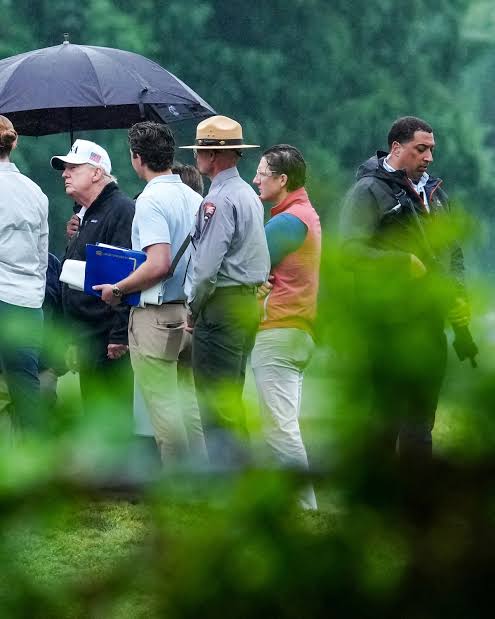
East Potomac Golf Links is at the center of a growing fight over the future of one of Washington, D.C.’s best-known public recreation spaces, as proposed renovations collide with historic-preservation concerns, tree removal and an ongoing federal lawsuit.
The dispute has intensified after President Donald Trump’s administration identified the course for a major transformation. The proposal would replace the existing 36-hole municipal setup with an 18-hole championship course, with acclaimed designer Tom Fazio involved in the planning.
Construction was expected to begin on September 1. That date passed without clear evidence of large-scale golf-course construction, although heavy machinery has appeared on the property and work crews have been active. Golfers have continued to use the facility, leaving residents and observers uncertain about what happens next.
Why East Potomac Golf Links Has Become Controversial
The most visible sign of change has been the removal of trees. More than 150 trees have reportedly been cleared in recent weeks under descriptions of routine maintenance involving dead or invasive trees. Additional removals are expected, according to the report.
For opponents, however, the tree clearing has become a symbol of a broader concern: that major changes to a historic public landscape are moving ahead before the public has had a meaningful opportunity to weigh in.
East Potomac Golf Links sits on Hains Point in East Potomac Park, a heavily used recreational area south of the National Mall. The National Park Service describes the golf course as a public facility that remains popular year-round. The broader park also serves runners, cyclists, tennis players, families and visitors.
East Potomac Golf Links carries unusual historical significance. The National Park Service says the golf course was completely desegregated in 1941 after Black golfers challenged segregation there, helping pave the way for wider integration of national park facilities. The course is also part of a group of historic Washington golf properties documented by the agency.
A Legal Battle Over the Park’s Future
The D.C. Preservation League filed suit against the Department of the Interior in February, arguing that actions affecting East Potomac Park must comply with federal historic-preservation requirements.
The organization has challenged what it views as efforts to change public access, golf offerings and other aspects of the peninsula without completing the review and public-engagement processes required by law.
The East Potomac Golf Links lawsuit has already produced one temporary victory for opponents, but the legal picture remains unsettled. Judge Ana C. Reyes recently asked the Preservation League to amend and update its complaint to account for developments since the case began.
The Department of the Interior has taken a different position. In a recent court filing, the department argued that there are no finalized redesign plans requiring the court to intervene and cited a recent Supreme Court decision involving renovations at the White House as relevant precedent.
The Preservation League rejected that comparison, maintaining that the administration’s decisions are already being implemented.
What Happens Next?
The courtroom dispute is now moving toward another procedural milestone. The Preservation League is expected to file its amended complaint within nine days of Thursday’s hearing, after which the case can move forward.
Outside the courthouse, the debate is continuing at Hains Point. Local protesters have gathered against the proposed changes, while golfers continue to play the course largely as normal.
That tension reflects the central question surrounding East Potomac Golf Links: can a historic public course be modernized without sacrificing the accessibility, character and community role that made it important in the first place?
The answer could affect more than golf. East Potomac Park was created as public recreational land, and its future touches questions of historic preservation, public access and federal control of prominent spaces in the nation’s capital.
For East Potomac Golf Links, there is no definitive timeline for when the proposed championship course will take shape. Machinery is on site, trees have been removed and litigation is active, but the final form of the property remains uncertain.
As Washington waits for the next court filing and clearer construction plans, East Potomac Golf Links has become a test of how the city balances ambitious redevelopment with the history and public purpose of one of its most recognizable recreational landscapes.