
Choosing the wrong golf ball is one of the easiest mistakes to make as a high handicapper. The best golf balls for high handicappers are softer, more forgiving, and designed to give you more distance with less effort.
Best Golf Balls for High Handicappers: Our Top 5 Recommendations
 Written byJustin Wilcox, Founder and editorLast updated June 23, 2026
Some links in this review earn us a commission at no cost to you. It never changes what we recommend.
This guide covers five top picks for 2026, breaks down what matters most for your game right now, and helps you stop leaving yards and strokes on the table. Let’s get into it.
Quick Comparison Table: Best Golf Balls for High Handicappers 2026
| Golf Ball | Compression | Cover | Layers | Best For |
| Callaway Supersoft | Very Low (~35) | Ionomer | 2-piece | Best overall forgiveness |
| Srixon Soft Feel | Low (~60) | Ionomer | 2-piece | Best value |
| Titleist TruFeel | Low (~65) | TruFlex | 2-piece | Best feel |
| Bridgestone e6 | Low (~50) | Ionomer | 2-piece | Straightest flight |
| Wilson Duo Soft+ | Very Low (~29) | Surlyn | 2-piece | Best budget pick |
The 5 Best Golf Balls for High Handicappers in 2026
Every ball on this list shares a few things in common. They all use low to very low compression, which suits the moderate swing speeds most high handicappers generate.
They also prioritize distance and forgiveness over short game spin. Every single one costs significantly less per dozen than premium tour options.
1. Callaway Supersoft – Best Overall
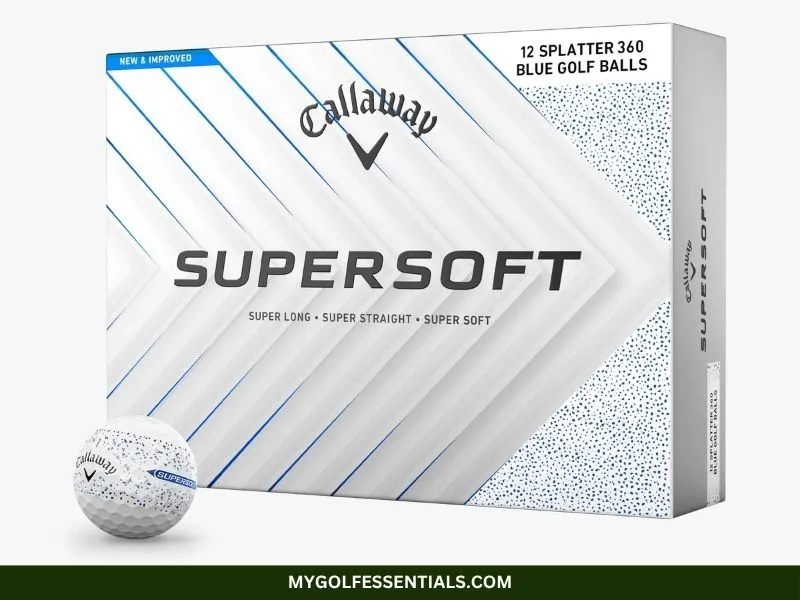
The Callaway Supersoft has built its reputation as one of the most forgiving golf balls for high handicappers over many years, and the current version keeps that legacy firmly intact.
Its very low compression core delivers consistent distance and a soft feel across all clubs without requiring a fast swing to activate it.
Key Features:
- 2-piece construction built for maximum distance and consistent forgiveness
- Very low compression (approximately 35) suits swing speeds under 90 mph
- HEX aerodynamic cover pattern improves stability and flight consistency
- Soft ionomer cover delivers comfortable feel at impact across all club types
Pros:
- Outstanding forgiveness on off-center and mishit shots
- Soft, comfortable feel off the putter and all irons
- Consistent distance across a wide range of swing speeds
- Available in multiple colors for easier ball tracking in the air
Cons:
- Minimal greenside spin compared to urethane-covered alternatives
- Not suited to swing speeds consistently above 95 mph
Best For: High handicappers who want the most forgiving and consistent ball.
2. Srixon Soft Feel – Best Value
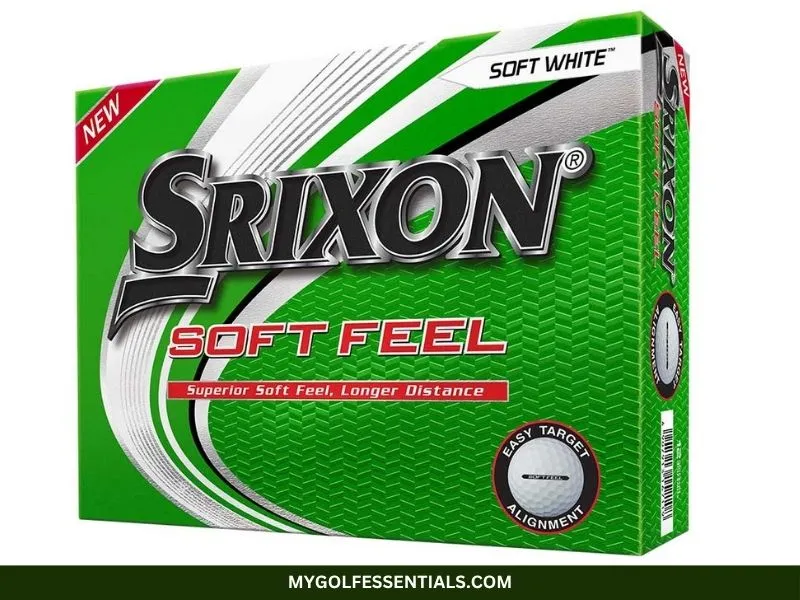
The Srixon Soft Feel delivers exactly what high handicappers need at one of the lowest prices on this list. It’s soft, it launches well, and it performs consistently above what most players expect from a ball.
Key Features:
- 2-piece construction for consistent distance and easy, reliable launch
- Low compression core (approximately 60) suits moderate swing speeds effectively
- 338-speed dimple pattern improves aerodynamics and wind performance
- Ionomer cover provides good durability and a comfortable feel round after round
Pros:
- Excellent performance at a very affordable price point
- Soft feel across all clubs in the bag
- Consistent ball flight in various wind conditions
- Durable cover holds up well over multiple rounds
Cons:
- Slightly less distance than larger-core very low compression options
- Minimal short game spin for players developing greenside skills
Best For: High handicappers who want solid, reliable performance at the lowest possible price per dozen.
3. Titleist TruFeel – Best Feel
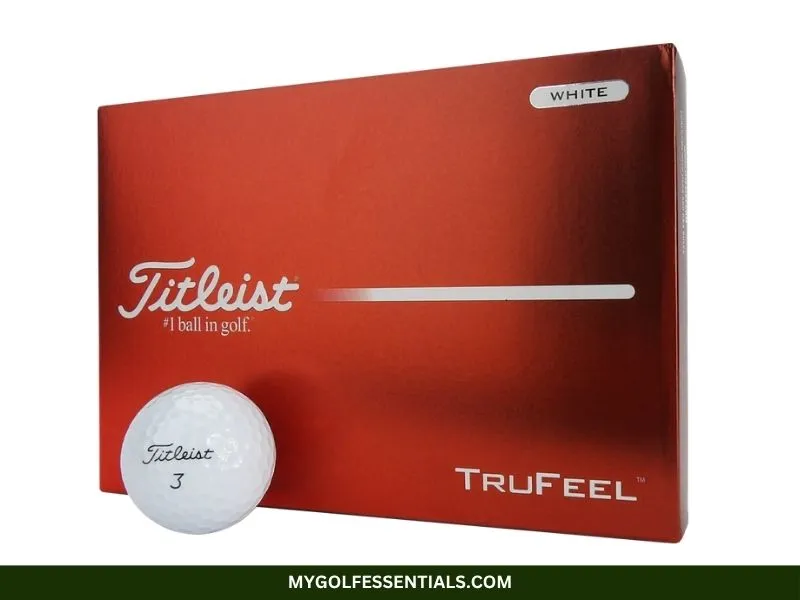
The Titleist TruFeel gives high handicappers access to Titleist quality without the Pro V1 price tag. It delivers a genuinely soft feel across every club and a consistent, penetrating flight that suits a developing swing well.
Key Features:
- 2-piece construction for maximum distance and consistent, easy launch
- Low compression TruTouch core for soft feel across all clubs in the bag
- TruFlex cover provides soft, responsive feel and reliable performance at impact
- Optimized dimple design promotes a consistent and stable ball flight
Pros:
- Genuinely soft feel that competes with more expensive alternatives
- Consistent and predictable ball flight from tee to green
- Reliable distance for a low-compression ball
- Trusted Titleist quality at an accessible price point
Cons:
- Slightly higher price than other value options on this list
- Limited color variety compared to most competitors
Best For: High handicappers who want Titleist-level feel and consistency without spending Pro V1 prices every round.
4. Bridgestone e6 – Best for Straight Distance
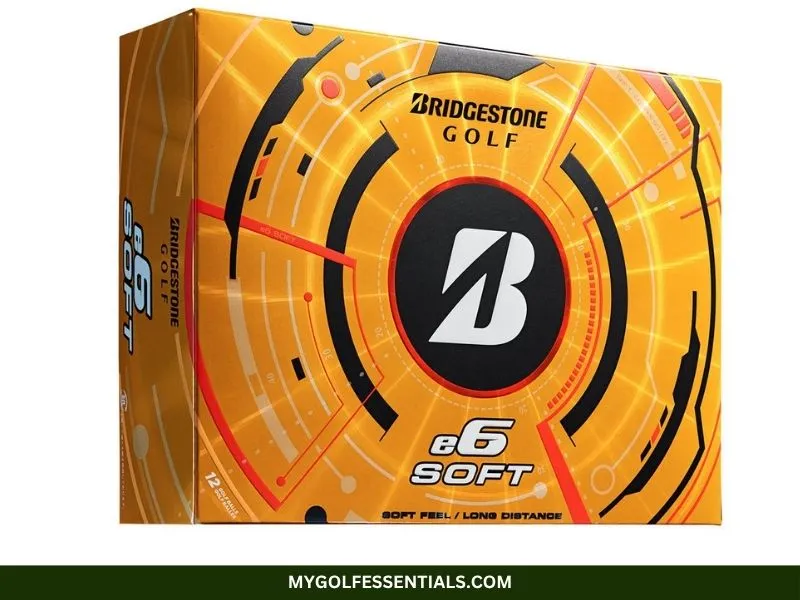
The Bridgestone e6 targets one problem that affects more high handicappers than almost anything else: the slice. Its low-spin design reduces side spin off the driver and keeps tee shots flying straighter down the fairway more consistently.
Key Features:
- 2-piece construction designed specifically for straight distance off the tee
- Low spin core reduces side spin for a noticeably straighter ball flight
- Soft ionomer cover provides a comfortable feel at impact
- Designed specifically for players who need a straighter, more forgiving flight
Pros:
- Noticeably straighter flight on off-center and mishit tee shots
- Good distance for a low-compression 2-piece ball
- Soft feel at impact builds confidence across all clubs
- Specifically engineered to help players who slice off the tee
Cons:
- Less versatile for players who already hit straight consistently
- Limited greenside control compared to multi-layer alternatives
Best For: High handicappers who struggle with a consistent slice and want a ball that actively promotes a straighter, longer tee shot.
5. Wilson Duo Soft+ – Best Budget Pick
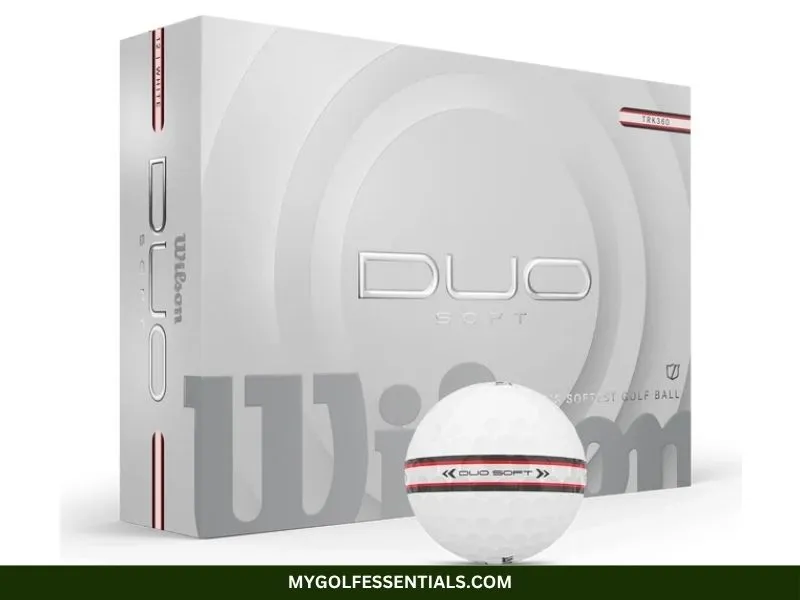
The Wilson Duo Soft+ earns its place here as the most affordable ball on this list by a clear margin. It’s one of the lowest-compression golf balls on the market, which makes it genuinely soft and easy to launch for players with slower swing speeds.
Key Features:
- 2-piece construction built for maximum distance and easy, high launch
- Very low compression (approximately 29 to 35), among the lowest available anywhere
- Surlyn cover provides good durability at the lowest price point on this list
- Low-compression core promotes a higher launch for slower swing speeds
Pros:
- Most affordable option on this list by a significant margin
- Very soft feel suits slower swing speeds exceptionally well
- Easy to launch and get consistently airborne
- Good durability makes it a smart choice for players who lose balls frequently
Cons:
- Least advanced ball technology on this list overall
- Minimal feel feedback on short game shots around the green
Best For: Budget-conscious high handicappers or beginners who want the softest and most affordable option on the market.
What High Handicappers Really Need in a Golf Ball
The right ball for a high handicapper looks completely different from the right ball for a scratch golfer.
Your priorities shift at this level. Distance, forgiveness, durability, and value matter far more than greenside spin or short game control.
1. Compression
Low compression is the single most important factor for high handicappers. A low-compression ball deforms more easily at impact, which means you don’t need a fast swing to generate solid ball speed.
Most high handicappers swing between 70 and 90 mph. Balls in the 29 to 65 compression range work best at these speeds.
Tour balls with compression above 85 or 90 work against you at slower speeds. The ball doesn’t compress properly at impact and returns less energy. That translates to shorter drives and flatter iron shots on almost every swing.
2. Distance and Launch
High handicappers lose the most strokes from the tee and on approach shots, not around the greens. A ball that launches higher and carries farther on mishits saves more strokes than a high-spin urethane cover ever could at this stage of the game.
Look for a ball with a large, soft core that promotes higher launch and more carry distance on off-center hits. All five options on this list deliver this quality in different ways at different price points.
3. Durability
High handicappers hit more shots per round than lower handicappers. A round of 95 to 110 strokes puts significantly more wear on a ball than a round of 72. Off-center contact, cart path hits, and bunker play all add up quickly over 18 holes.
Surlyn and ionomer covers resist scuffing better than urethane options. They hold up well over several rounds of play, which matters far more when you’re spending less per dozen. Every ball on this list uses either surlyn or ionomer for exactly this reason.
4. Price
Losing balls is simply part of the game at the high handicap level. Spending $55 per dozen on premium tour balls only to lose three in a round is genuinely bad math.
A well-priced dozen that performs well for your swing speed makes far more financial sense right now. Put that extra money toward a lesson instead.
Common Golf Ball Mistakes High Handicappers Make
Most high handicappers make at least one of these mistakes when buying a ball. Avoiding them costs you nothing and saves you real strokes every round.
- Playing a Tour Ball – Tour balls use high compression designed for swing speeds above 100 mph. At slower speeds, they reduce distance, feel harder at impact, and cost you more money for a ball that actively works against your swing.
- Switching Balls Every Round – Playing a different ball each round prevents you from building feel and consistency. Stick with one ball for a full month. You’ll start to understand its flight characteristics, which directly improves your shot selection on the course.
- Ignoring Compression – Picking a ball based on brand name alone without checking compression is one of the most common and costly mistakes. A firm ball at a slow swing speed guarantees a distance loss every time you tee it up.
- Overspending Per Dozen – High handicappers lose more balls than any other group of golfers. Spending premium prices per dozen on a tour ball makes very little financial sense at this stage. The savings go further toward equipment or lessons.
- Skipping Colored Options – Colored balls are not just for novelty. Yellow, orange, and high-visibility options help you track the ball in the air and find it faster in rough and trees. Losing fewer balls starts with seeing the ball better.
Should High Handicappers Use Soft or Hard Golf Balls?
Soft golf balls suit high handicappers far better than firm options in almost every situation. A softer ball compresses more easily at the moderate swing speeds most high handicappers generate. That compression produces better energy transfer, a higher launch, and more distance without needing to swing any harder.
Hard golf balls need faster swing speeds to compress correctly. At the swing speeds most high handicappers generate, a firm ball returns less energy, launches lower, and feels worse at every point of contact. The only exception is a high handicapper who swings consistently above 95 to 100 mph, in which case a mid-compression option starts to make more sense.
For the overwhelming majority of high handicappers, softer always means better.
Final Thoughts
The best golf balls for high handicappers in 2026 share one common goal: making the game easier and more enjoyable for developing players. Each option on this list delivers that in a slightly different way.
Go with the Callaway Supersoft for the most forgiving all-around package. Choose the Bridgestone e6 if a slice is your biggest problem off the tee. Pick the Titleist TruFeel for the best overall feel.
Grab the Srixon Soft Feel for strong performance at excellent value. Start with the Wilson Duo Soft+ if you want the softest ball at the lowest price on the market.
Whatever you choose, commit to it for several rounds before switching. Consistency builds feel, feel builds confidence, and both lead directly to lower scores over time.
Key Takeaways
- High handicappers need low to very low compression balls suited to swing speeds between 70 and 90 mph.
- The Callaway Supersoft remains the most forgiving and most popular choice for high handicappers in 2026.
- Tour balls with high compression actively work against slower swing speeds, reducing distance rather than adding it.
- The Bridgestone e6 is the strongest choice for high handicappers who consistently struggle with a slice off the tee.
- Durability matters more for high handicappers since more shots per round puts more wear on each ball.
- The Wilson Duo Soft+ offers one of the lowest compressions on the market at the most affordable price on this list.
- Committing to one ball for several rounds builds feel and consistency faster than constantly switching brands.
- Surlyn and ionomer covers outlast urethane options in durability, which suits high handicappers better at this stage.
- Overspending on a premium tour ball makes poor financial sense when losing multiple balls per round is common.
- High-visibility color options help you track the ball in the air and find it faster in rough and off-line areas.
FAQs
Do Golf Balls Actually Make a Difference for High Handicappers?
Yes, ball selection makes a real and immediate difference for high handicappers. Playing the wrong compression costs you distance off the tee every single round.
Should a High Handicapper Use a Pro V1?
A Pro V1 is not the best choice for most high handicappers. It uses high compression designed for swing speeds above 95 to 100 mph. At slower speeds, it launches lower, travels shorter distances, and feels firmer than a low-compression alternative.
What Compression Golf Ball Is Best for High Handicappers?
Compression below 65 works best for most high handicappers. Players swinging below 80 mph benefit most from very low compression options in the 29 to 40 range like the Wilson Duo Soft+ or Callaway Supersoft.