Golf equipment has always evolved, but most changes have stayed within the limits of casting and forging. 3D printed golf clubs step outside those limits entirely. Instead of shaping metal with molds or pressure, engineers now build clubheads layer by layer from a digital design. This shift is not just about how clubs are made. It directly affects how they perform, from launch and forgiveness to feel at impact.
For golfers, the real question is simple: does this actually improve your game or is it just new tech hype. This guide breaks it down in a clear, practical way. You will see how 3D printing works in golf clubs, what benefits you can expect on the course, which brands are leading right now, and whether these clubs are worth the higher price for your level of play.
What Are 3D Printed Golf Clubs?
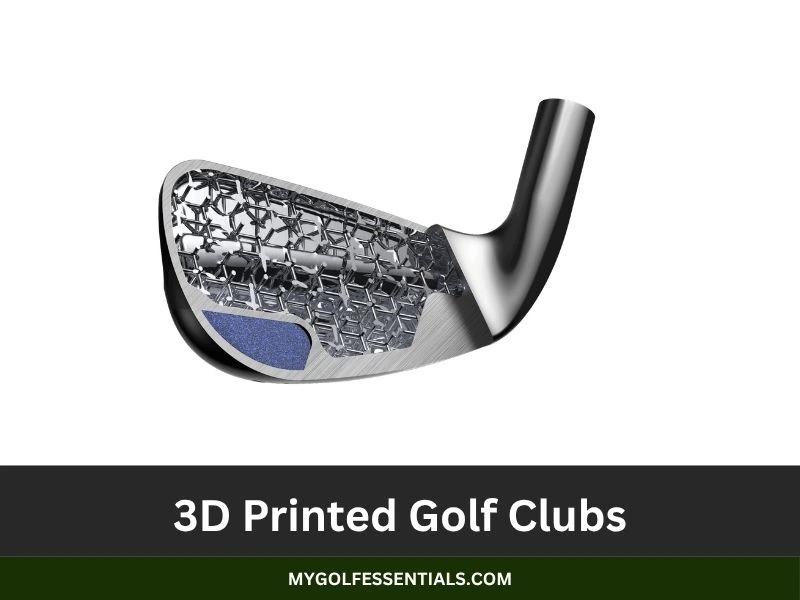
3D printed golf clubs are clubheads built through additive manufacturing, where metal powder gets fused layer by layer using a laser.
Traditional clubs get made through either casting, where molten metal gets poured into a mold, or forging, where solid metal gets pressed into shape under extreme pressure. Both methods set hard physical limits on what the inside of a clubhead can look like.
3D printing removes those limits entirely. Engineers design the clubhead digitally, down to every internal cavity and weight pocket. The printer then builds that exact design from the ground up, layer by layer, with precision that no mold can match.
Brands moved toward this technology because it solves a real problem. The internal geometry of a clubhead controls everything from ball flight to feel. When you can engineer that geometry freely, you build a better club. That is the core promise of 3D printed golf clubs.
How Does 3D Printing Work in Golf Clubs?
Here is how the manufacturing process works from digital file to finished club.
It starts with a 3D design created by engineers using specialized software. They map out every wall thickness, weight pocket, and internal cavity. Once the design is finalized, the file goes directly to the printer.
The most common method used in golf is Direct Metal Laser Sintering (DMLS) or Selective Laser Melting (SLM). A high-powered laser traces the design pattern across a thin bed of metal powder, fusing it into a solid layer. The printer repeats this process hundreds of times until the full clubhead takes shape.
The materials most used include:
- Titanium: Lightweight and extremely strong, ideal for driver faces and hollow iron bodies
- Stainless steel: Durable and cost-effective, commonly used for iron heads
- Maraging steel: High strength with excellent flex, often chosen for clubfaces
- Tungsten: Dense and heavy in small volumes, used for precision weighting inserts
After printing, the club goes through heat treatment, surface finishing, and quality inspection. The result is a production-ready clubhead designed to a level of precision that traditional manufacturing simply cannot reach.
What Are the Key Benefits of 3D Printed Golf Clubs?
The technology does not just change how clubs get built. It changes what those clubs can do on the course. Here is how it performs across four areas that matter most to golfers.
1. Better Weight Placement
Weight placement directly controls ball flight, launch angle, and forgiveness. With 3D printing, engineers place weight exactly where it needs to go inside the clubhead. They create thinner walls in some areas and denser sections in others, all within a single seamless structure.
This precision lets manufacturers lower the center of gravity and push weight toward the perimeter of the face. A lower center of gravity launches the ball higher with less effort. Perimeter weighting keeps the face stable on off-center strikes. Both results benefit golfers across every skill level.
Traditional casting cannot deliver this level of control. Molds restrict how complex the internal geometry can get. 3D printing operates without that restriction.
2. Improved Feel and Sound at Impact
Many 3D printed clubheads use internal lattice or honeycomb frameworks that change how vibration travels through the structure after impact. The result is a cleaner, more controlled sensation at the moment of contact.
Golfers who test these clubs consistently describe the sound as more solid and the feel as more consistent across the face. That consistency gives you better feedback on every shot. You start to understand your strike quality faster, which accelerates improvement.
Engineers design these internal structures intentionally during the digital modeling phase. The feel is not a happy accident. It gets built in before the printer even starts.
3. More Forgiving on Miss-Hits
This is one of the strongest selling points for the technology. Because weight placement is so precise, engineers push more of it to the perimeter of the clubhead with greater accuracy than any traditional method allows. That perimeter weighting expands the effective sweet spot.
When you catch a shot slightly toward the heel or toe, a forgiving clubhead minimizes the loss in distance and direction. For mid and high handicap golfers, that means fewer disasters from imperfect contact. Even low handicappers appreciate the extra stability when their swing is not at its best.
The clubhead stays more stable through the hitting zone, which makes the margin for error larger across the entire face.
4. Unique Internal Designs
Designers can now engineer internal structures that no mold or forging press could ever produce. Hollow cavities, lattice frameworks, variable wall thickness, and complex internal channels all become buildable with additive manufacturing.
These designs look simple from the outside. Inside, they contain engineering that pushes the sport’s equipment into new territory.
What Are the Downsides of 3D Printed Golf Clubs?
Every technology comes with trade-offs, and this one is no different. Here is what to know before you commit.
1. Price is the biggest barrier. The machinery, materials, and post-processing steps all cost more than traditional manufacturing. Those costs pass directly to the buyer. Expect to pay a premium over cast irons in the same performance category.
2. Limited availability is another reality. The market for these clubs is still young. Not every major brand offers them yet, and those that do offer a smaller selection than their traditional lineups. Buyers have fewer choices across shaft options, lofts, and fitting configurations.
3. Unfamiliarity in the fitting process adds a layer of difficulty. Many club fitters have limited hands-on experience with 3D printed models. Getting a data-backed fitting for a newer category is harder than fitting a traditional iron with decades of performance data behind it.
None of these drawbacks are permanent. As the technology scales, prices will drop and availability will grow. But right now, those are real factors worth considering.
Which 3D Printed Golf Clubs Can You Buy Right Now?
The retail market for 3D printed golf clubs is still young, but it is expanding quickly. Here are the main options currently available.
Cobra LIMIT3D Irons
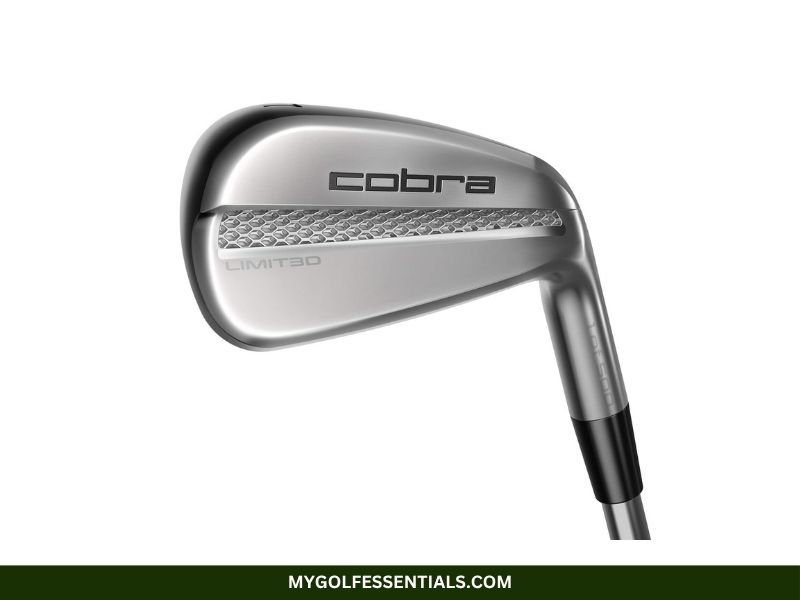
Cobra launched the LIMIT3D irons in 2023 as the first consumer-available 3D printed iron set. A 4-PW configuration retailed at approximately $3,000 and sold out within days of launch.
These irons targeted low-handicap players who wanted a clean, compact look with more off-center forgiveness than a traditional blade. The internal lattice structure repositioned weight to the perimeter, producing a significantly more stable ball flight on mishits than a forged blade of similar dimensions.
Cobra 3DP Tour Iron Family
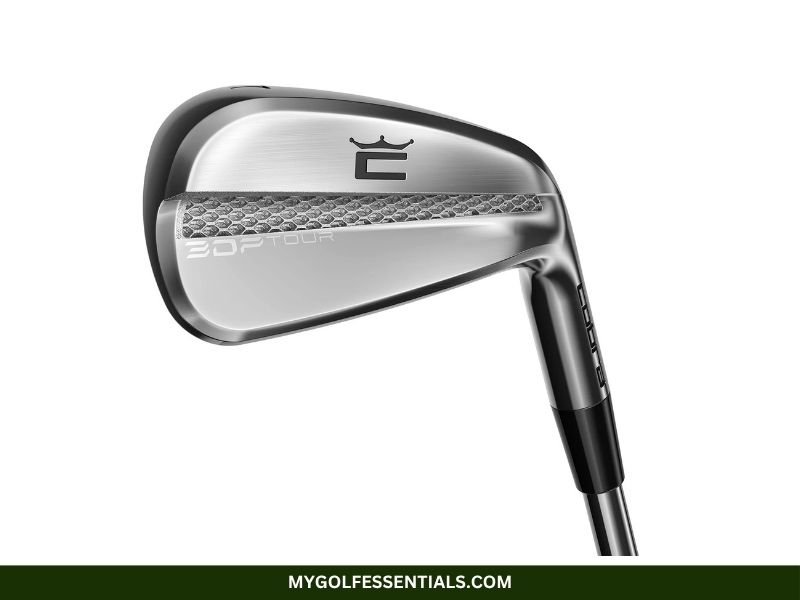
Cobra followed the LIMIT3D release with a three-model family designed to cover a wider range of player types:
- Cobra 3DP Tour: Tour-player feel with maximum perimeter weighting for lower handicaps
- Cobra 3DP MB: A muscle back design for purist ball-strikers who prioritize feedback
- Cobra 3DP X: Additional offset and a more forgiving profile for mid-handicap players
Pricing for this family falls between $2,000 and $3,000, depending on shaft selection and configuration.
Cobra 3DP Tour Putter Family
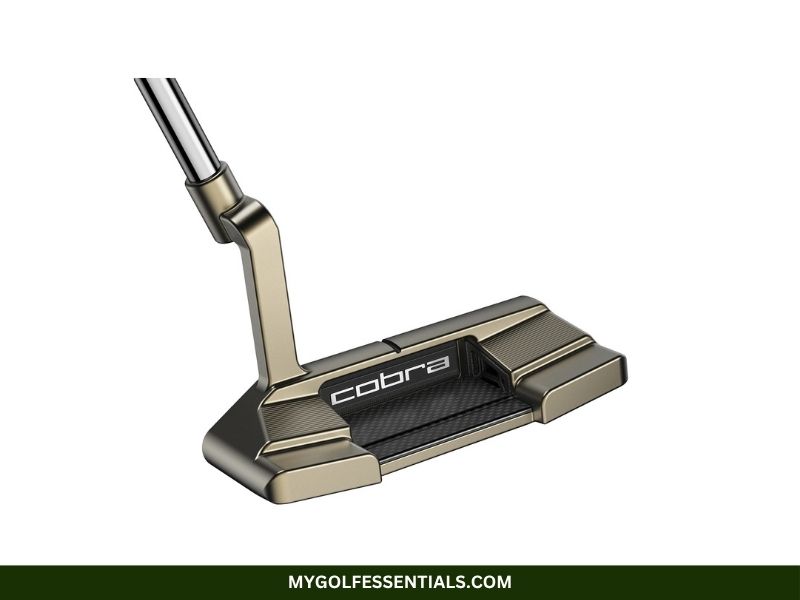
Cobra’s journey with this technology actually started with putters, not irons. The KING Supersport-35 putter, released in 2020, became the first commercially sold 3D printed putter in golf.
The newer 3DP Tour putter family combines a printed stainless steel body with a carbon fiber crown and a nylon cartridge inside the head. That multi-material construction places the center of gravity precisely where engineers intend and produces a noticeably soft feel through impact.
What Other Golf Brands Are Exploring 3D Printing?
Cobra is not working alone in this space. Several major manufacturers have integrated 3D printing into parts of their development process.
- Titleist applies the technology in custom fitting and early-stage prototype development
- TaylorMade uses additive manufacturing within their research and design pipeline
- Callaway has explored 3D printed components for internal club structures
- Ping uses printed prototypes to refine head designs before committing to mass production
Most of these brands have not yet released fully 3D printed consumer clubs. The research happening today, however, will drive the product launches of the next few years.
How Do 3D Printed Irons Compare to Traditional Irons?
Here is a direct comparison across the features that matter most to golfers.
| Feature | 3D Printed Irons | Traditional Cast Irons |
| Weight Control | Highly precise | Limited by mold design |
| Internal Design | Complex structures possible | Simple geometry only |
| Impact Feel | Engineered and consistent | Varies by material and model |
| Forgiveness | High through perimeter weighting | Depends on design category |
| Price | Premium tier | Wide range, more affordable |
| Availability | Limited selection | Broad range of options |
| Custom Fitting Data | Growing | Well established |
The performance edge clearly goes to 3D printed irons in weight control, internal design, and forgiveness engineering. Traditional irons win on price and variety. For golfers working with a tighter budget or needing a broad fitting range, traditional cast irons remain a practical and capable choice.
Who Should Actually Use 3D Printed Golf Clubs?
Not every golfer needs this technology, but the right player will notice a genuine difference on the course. Here is how the fit breaks down across skill levels.
- Beginners can benefit from the extra forgiveness these clubs deliver. A larger effective sweet spot produces more consistent contact while you develop your swing. That said, the price premium is hard to justify at the early stages of the game.
- Mid-handicap golfers sit in the sweet spot for this technology. You strike the ball well enough to feel the difference in feedback and distance control. Forgiveness helps on shots that miss the center, while the feel rewards you when you get it right.
- Low-handicap golfers care about feedback and shot shaping. The engineered feel and precise ball flight these clubs deliver matter more at this level. If you want a club that responds clearly to your swing, 3D printed designs offer something traditional manufacturing struggles to match.
What Should You Look for Before Buying 3D Printed Golf Clubs?
Before spending money on these clubs, work through this checklist carefully.
1. Skill level: Match the club to your game. Forgiveness-focused 3D printed irons suit mid-handicappers more than complete beginners or scratch golfers.
2. Budget: These clubs cost more than traditional options. Set a realistic number and compare within that range before committing.
3. Shaft options: A premium clubhead needs the right shaft. Confirm your chosen model comes in the flex and weight that matches your swing speed.
4. Fitting: Get a professional fitting before you buy. A fitted club outperforms any off-the-shelf option, regardless of how it gets manufactured.
5. Brand reputation: Choose brands with proven experience in the technology. Cobra currently leads the consumer space with demonstrated results.
What Is the Future of 3D Printed Golf Clubs?
The future looks strong, and several trends point clearly in one direction.
More brands will enter this space as the process becomes cheaper and more scalable. What carries a premium price today often becomes mainstream within a decade in manufacturing. Golf has seen this before with multi-material construction, adjustable hosels, and carbon fiber crowns.
Custom fitting will also become far more exciting. The ability to print a club from scratch using an individual golfer’s measurements and swing data opens the door to truly personalized equipment. Some brands are already exploring this concept in fitting studios.
Price drops are coming as competition increases and production scales up. That downward pressure on cost will eventually make 3D printed technology accessible to a much wider range of golfers. The early adopters today are simply the first wave of what will become a mainstream shift in how golf equipment gets made.
Final Thoughts
3D printed golf clubs represent a genuine leap forward in how golf equipment gets designed and built. The technology addresses real limitations that casting and forging could never fully solve. Better weight distribution, smarter internal geometry, and engineered feel combine to produce clubs that perform at a higher level for the right golfer.
The main barriers right now are price and limited availability. Both will improve as the market matures. If you play regularly, invest in your game, and want equipment that reflects where manufacturing is heading, 3D printed irons deserve serious consideration.
Get a proper fitting. Choose the right model for your skill level. And keep watching this space, because the best products from this technology are still on the way.
Key Takeaways
- 3D printed golf clubs use additive manufacturing to build clubheads layer by layer from metal powder
- The technology creates internal structures that casting and forging cannot physically produce
- Weight placement in 3D printed clubs is far more precise than in any traditional manufacturing method
- Precise perimeter weighting expands the sweet spot and increases forgiveness on off-center strikes
- Internal lattice structures change how vibration travels through the clubhead, producing a more solid feel
- Cobra leads the consumer market with 3D printed components in their clubs
- Major brands including Titleist, TaylorMade, Callaway, and Ping actively use 3D printing in research and development
- 3D printed irons cost more than traditional cast irons due to the advanced materials and machinery involved
- Mid-handicap golfers benefit most from the balance of forgiveness and engineered feedback these clubs deliver
- Prices will drop and availability will grow as more manufacturers scale up their 3D printing capabilities
FAQs
Are 3D Printed Golf Clubs Legal to Use in Competition?
Yes, 3D printed golf clubs are legal as long as they conform to the Rules of Golf set by the USGA and R&A. Conforming club lists get updated regularly. Any club you buy from a major brand like Cobra should already meet those standards, but checking the conforming list before tournament play is always smart.
Why Are 3D Printed Golf Clubs More Expensive Than Traditional Ones?
The higher cost comes from the machinery, materials, and post-processing required. Industrial metal printers are expensive to run, and fine metal powders like titanium cost more than cast raw materials. The finishing process also adds labor time. As production scales and competition grows, prices are expected to come down significantly.
Do Professional Golfers Use 3D Printed Clubs on Tour?
Yes, several tour players use clubs that incorporate 3D printed components, often in prototype or custom configurations developed through their equipment sponsors. The technology shows up more in design testing and fitting than in full sets. As brands release more tour-validated models, wider professional adoption is likely to follow.