Golf doesn’t have to depend on perfect weather, long tee-time waits, or spending half your day on a course. Indoor golfing changes how the game is played by bringing real golf indoors using modern simulator technology. That’s the magic of indoor golf.
You’ll discover everything you need to know about indoor golfing in this guide. We’ll break down how simulators work, what equipment you need, and how much it costs. You’ll also learn about different indoor golfing experiences and why beginners love this approach to the game.
What Exactly Is Indoor Golfing?
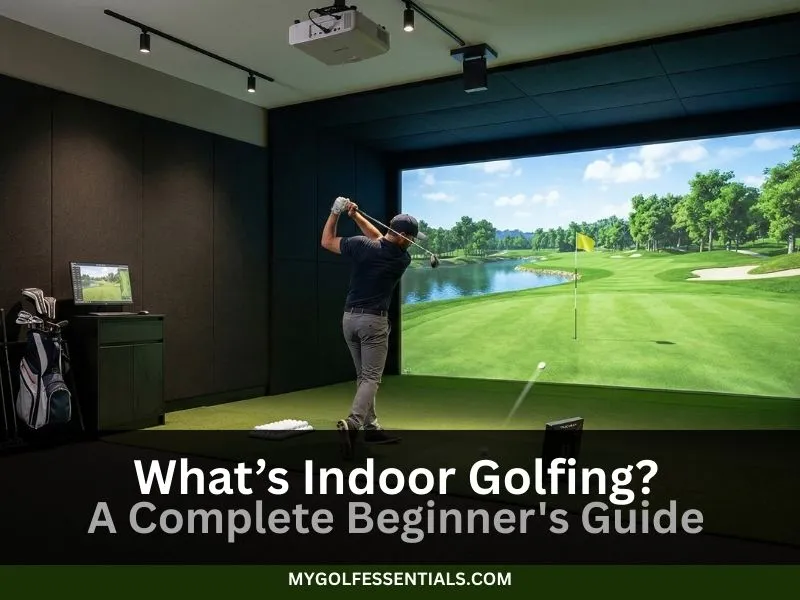
Indoor golfing is playing golf inside using simulator technology that tracks your real shots and displays them on virtual courses.
You hit real golf balls into a screen. Sensors track every detail of your shot. The system calculates ball speed, launch angle, and spin. Then it shows where your ball lands on the virtual course.
Modern indoor golfing facilities offer complete rounds on championship courses. You can play Pebble Beach in California or St. Andrews in Scotland without leaving your city. The system displays where your ball lands on famous courses around the world.
Key Setup Elements
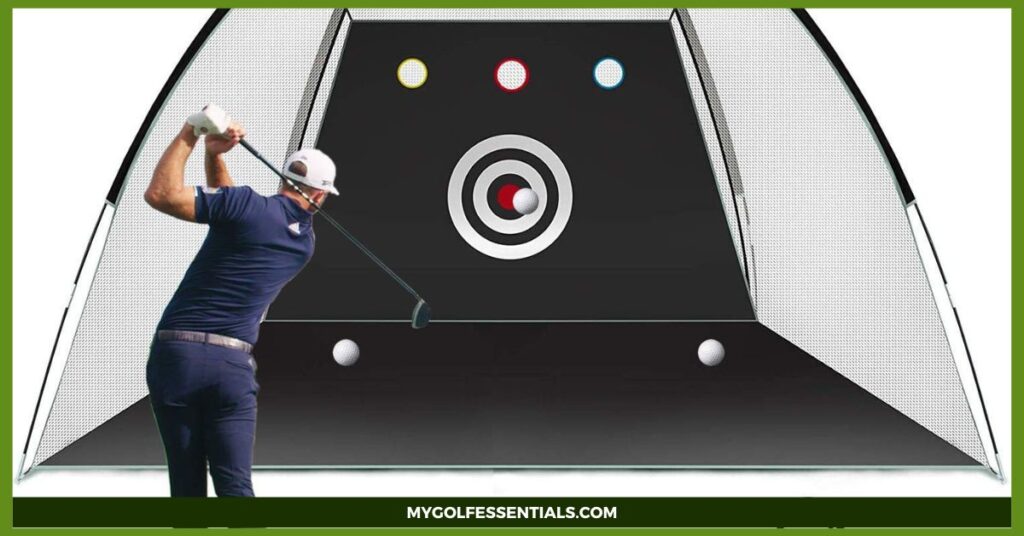
Every indoor golf setup includes three essential elements: hitting space, tracking technology, and an impact screen. Your hitting space could be a commercial facility, your garage, or a spare room. The space must accommodate your full swing safely.
The tracking technology measures your shot and displays results on screen. High-speed cameras or radar sensors capture data in milliseconds.
The impact screen catches your golf balls and protects your space. Professional screens handle ball speeds over 200 mph without damage.
How Do Golf Simulators Work?
Golf simulators use sensors to track your ball and club movement.
Two main technologies power how golf simulators work: camera-based systems and radar-based systems.
1. Camera-Based Systems
Camera systems capture your swing using high speed photography.
Multiple cameras photograph your club and ball at impact. The software calculates ball speed, launch angle, and spin rate from these images. This happens in fractions of a second.
Popular camera-based systems include SkyTrak, Uneekor, and Full Swing. They typically mount above or around your hitting area.
2. Radar-Based Systems
Radar systems use radio waves to track ball flight. The sensor emits radar waves that bounce off your ball. It measures speed, direction, and spin by analyzing the returning waves. This technology works similar to police speed guns.
TrackMan and FlightScope are leading radar-based options. They’re known for exceptional accuracy with outdoor quality data.
The Software: How does it work?
The software processes all this data instantly.
It calculates where your shot would land on a real course. Programs like E6 Connect, TGC 2019, and GSPro offer thousands of courses. The system factors in wind, elevation changes, and green speeds. Then it displays the result on screen. You see your ball soar through the air, bounce on the fairway, and roll toward the pin.
Types of Indoor Golf Experiences
You’ll find indoor golf in different settings. Some of them are as follows:
1. Golf Lounges
These venues combine golf with social entertainment. You rent simulator bays by the hour. Food and drinks arrive at your bay. Music plays while you compete with friends.
The atmosphere is relaxed and beginner-friendly. No one judges your swing. Many locations offer games beyond traditional golf.
2. Professional Golf Studios
Golf studios focus purely on the game.
These facilities cater to serious players and lessons. PGA professionals often run instruction programs here. The environment emphasizes improvement over entertainment.
Studios typically offer club fitting services. You can test different equipment and see real data on every club. This helps you build the perfect bag for your game.
3. Country Club Simulators
Many country clubs now feature indoor golf simulator spaces. Members escape weather limitations during winter months. The simulators extend the golf season year-round. Clubs often host indoor leagues and tournaments.
Access typically requires club membership. The quality matches or exceeds commercial facilities.
4. Home Golf Simulators
Home setups give you ultimate convenience.
You play whenever you want. No driving to facilities or hourly fees adding up. Your practice routine becomes effortless.
The space requirements vary. Minimum dimensions run about 10 feet wide, 10 feet deep, and 9 feet tall. Larger spaces improve comfort and safety.
How Much Does Indoor Golf Cost?
Indoor golfing cost varies dramatically based on your approach.
Let’s break down the numbers across different options:
1. Pay-Per-Use Facilities
Commercial indoor golf venues charge by the hour or bay.
Most facilities run $30 to $60 per hour. You split this cost among your group. Premium locations in major cities can reach $80 to $100 per hour. These spots often include full bars, restaurants, and entertainment options beyond golf.
2. Home Simulator Investment
Building a home setup requires upfront investment.
Budget setups ($1,000 to $3,000): Basic launch monitors like Garmin Approach R10 or Rapsodo start around $500. Add a net, mat, and screen to complete the setup.
Premium setups ($10,000 to $50,000+): Professional systems like TrackMan or Uneekor deliver tour level accuracy. These include high-end projectors, enclosures, and impact screens.
3. Membership Options
Some facilities offer monthly memberships.
Unlimited play memberships typically cost $150 to $400 monthly. This works great if you play several times per week. The math favors memberships once you exceed 8 to 10 hourly sessions monthly.
Indoor Golf Cost Comparison
| Option | Initial Cost | Ongoing Cost | Best For |
| Pay-Per-Use Facility | $0 | $30–$60 per hour | Casual players and first-time users |
| Budget Home Setup | $1,000–$3,000 | Minimal | Beginners testing indoor golfing at home |
| Premium Home Setup | $10,000–$50,000+ | Minimal | Dedicated and serious golfers |
| Monthly Membership | $0 | $150–$400 per month | Frequent indoor golf players |
What Equipment Do You Need for Indoor Golfing?
Starting indoor golf requires less gear than you might think. Here’s what you need in general:
For Commercial Facilities
You only need your golf clubs. Seriously, that’s it.
Facilities provide balls, tees, and all technology. Some locations offer rental clubs if you don’t own any. Just show up and play. Comfortable athletic shoes work fine, golf shoes aren’t necessary indoors.
For Home Setups
Home indoor golf simulator systems need more components.
Essential equipment:
- Launch monitor or tracking system
- Impact screen or net
- Hitting mat
- Golf balls (regular or foam)
- Projector or large monitor
- Computer or tablet for software
Optional but recommended:
- Enclosure frame and netting
- Side barriers for safety
- Quality sound system
- Putting mat
Your clubs transfer directly from outdoor golf. Most players use their regular equipment. Some choose to use specific balls designed for indoor use to reduce noise.
Space Requirements
The minimum space for a functional setup measures 10 feet wide, 10 feet deep, and 9 feet high. Taller players need additional height. Left-handed golfers might need extra width. More space always improves comfort and shot variety.
Ceiling height matters most. You need clearance for your full driver swing plus two feet of safety margin.
Benefits of Indoor Golfing for Beginners
Indoor golf removes many barriers that intimidate new players. Key benefits can include the following:
1. Low Pressure Environment
You learn without judgment.
Outdoor courses can feel intimidating when you’re starting. Other players wait behind you. You worry about pace of play. Indoor golf eliminates these anxieties completely.
Take all the time you need. Hit multiple practice shots. Experiment with different clubs without slowing anyone down.
2. Instant Feedback
Every shot delivers detailed data.
You see exactly what your club did at impact. The numbers show your swing speed, ball speed, and shot shape. This information helps you improve faster than guessing on outdoor ranges.
Beginners grasp cause and effect quickly. A slice shows up immediately in the data. You adjust your grip or stance and see results instantly.
3. Consistent Practice
Weather never interrupts your progress.
Building golf skills requires regular practice. Outdoor golf becomes difficult during rain, extreme heat, or winter. Indoor golfing maintains your practice schedule regardless of conditions.
This consistency accelerates skill development. You don’t lose months of progress during off-seasons.
4. Cost Effective
Indoor golf can save money long-term.
Driving ranges charge $10 to $20 per bucket of balls. Play twice weekly and you spend $80 to $160 monthly. An indoor golf membership or budget home setup often costs less with unlimited practice.
5. Play World Class Courses
You access courses that would cost thousands to play in person.
Want to experience Augusta National? It’s available on many golf simulator platforms. Same with Pebble Beach, St. Andrews, and hundreds of championship venues.
This exposure teaches you different course strategies. You learn how professionals navigate famous holes.
6. Social and Solo Options
Indoor golf adapts to your preferences.
Bring friends for competitive fun. Most facilities support multiple players per bay. You can play team games or individual competitions.
Prefer solo practice? The simulator becomes your private coach. Work on specific shots without distraction. Track your improvement over time through saved data.
Final Thoughts
Indoor golfing revolutionizes how beginners approach the game.
You get immediate feedback, weather-proof practice, and access to world-class courses. The technology removes intimidation while delivering skill development. Whether you visit commercial facilities or build a home setup, indoor golf offers a pathway to improvement that traditional methods can’t match.
Start with a commercial facility to test the experience. Most offer beginner-friendly environments and reasonable hourly rates. Once you’re hooked, you can explore home simulator options that fit your budget.
The future of golf is here. It’s accessible, data driven, and available 365 days a year.
Key Takeaways
- Indoor golfing uses technology to bring golf courses inside with real balls and virtual environments
- Golf simulators track ball speed, spin, and trajectory using cameras or radar sensors
- Commercial facilities charge $30-60 per hour while home setups range from $1,000 to $50,000+
- You only need golf clubs at commercial venues; home setups require launch monitors and screens
- Beginners benefit from pressure-free learning, instant feedback, and year-round practice consistency
- Camera-based and radar-based systems offer different accuracy levels and price points
- Indoor golfing takes 2 hours versus 4-5 hours for traditional outdoor rounds
- Players improve handicaps 40% faster using simulators compared to outdoor-only practice
- Memberships cost $150-400 monthly and make sense for frequent players
- You can play famous courses like Pebble Beach and St. Andrews virtually from anywhere
FAQS
Is indoor golf good for beginners?
Yes, indoor golf is excellent for beginners. You practice without pressure or judgment from other players. The instant feedback helps you understand your swing faster. Weather never interrupts your learning, and you can take unlimited practice shots without worrying about pace of play.
Is indoor golf harder than real golf?
Indoor golf simulators can be easier due to the absence of wind, rough penalties, and bunker play. However, putting and chipping can feel more challenging. Overall, simulators tend to be quite accurate from a scoring perspective.
Who started indoor golf?
Indoor golf was revolutionized by Tiger Woods and Rory McIlroy, who created a tech-infused indoor golf league. It officially launched at the purpose-built SoFi Center in Florida, with both golf legends present at the event.
How accurate are golf simulators?
Quality golf simulators are highly accurate, matching outdoor launch monitor data within 2-3% margin. Premium systems like TrackMan deliver tour-level precision. Budget options may have slightly lower accuracy but still provide valuable feedback for improvement and entertainment purposes.
Can you play full rounds on indoor golf simulators?
Absolutely! Most indoor golf simulator software includes hundreds of real courses. You play complete 18-hole rounds with realistic terrain, hazards, and scoring. Rounds typically finish in 90-120 minutes, much faster than outdoor golf while maintaining authentic gameplay.