A flexible and mobile mid-back is key to a smooth, powerful golf swing. In this article, we’ll share the top 7 thoracic spine mobility drills every golfer should know in 2025. These simple exercises can help you rotate more freely, protect your lower back, and improve both consistency and distance in your swing.
So, without further ado, let’s read on our article and learn how to add these drills to your routine and take your game to the next level.
Why Mid-Back Mobility Matters in Golf
The mid-back, also called the thoracic spine, plays a key role in every golf swing. This part of the spine allows rotation, extension, and side bending, which are all movements needed to create a smooth and powerful swing. When the thoracic spine is stiff, the body looks for rotation in other areas like the lower back or shoulders.
Over time, this can lead to poor swing mechanics and even injury.
Common Mobility Issues Affecting Golfers
Many golfers struggle with limited mobility in the thoracic spine without even realizing it. Some of the most common issues include:
- Reduced backswing rotation – making it harder to create a full turn and generate power.
- Excess strain on the lower back – because the spine below is forced to do the job of the thoracic spine.
- Poor follow-through – stiffness prevents the chest and shoulders from rotating smoothly through impact.
- Loss of posture – rounded shoulders or slouched chest reduce swing control and accuracy.
When these issues build up, they not only affect performance but can also increase the risk of injuries such as back pain, shoulder strain, or even repetitive stress problems.
How Good Mobility In The Thoracic Spine Helps Golfers
Here’s how having good mobility in the thoracic spine can help golfers during their play:
- Generate more rotation – allowing the body to turn properly during the backswing and follow-through.
- Protect the lower back – reducing stress by ensuring the movement comes from the right place.
- Maintain posture – keeping the chest up and shoulders in the right position throughout the swing.
- Add distance and consistency – better mobility means smoother motion, leading to more powerful and repeatable shots.
We all know that, golf relies on coordinated movement from the ground up. The hips and shoulders need to rotate, but the mid-back is the central link that connects everything together. A mobile thoracic spine allows the hips and shoulders to move freely without strain, which is why golfers who train mobility often see improvements not only in swing performance but also in comfort and recovery after rounds.
Now that you know how important it is to train thoracic spine mobility as a golfer, let’s move on to the top 7 drills you can start practicing today to improve your swing and protect your body.
Top 7 Thoracic Spine Mobility Drills for Golfers
Improving thoracic spine mobility is one of the most effective ways for golfers to enhance their swing, protect the lower back, and maintain proper posture throughout the game. The following seven drills are designed to target the mid-back, improve rotation, and increase flexibility. Practicing them regularly can help you move more freely, reduce tension, and generate more consistent power in your swing.
Here are the top 7 drills every golfer should incorporate into their routine:
1. Thoracic Spine Rotation (Open Book Stretch)
The open book stretch (also know as Thoracic Spine Rotation) is a simple yet effective drill that improves thoracic spine rotation. It helps loosen tightness in the mid-back and shoulders while encouraging proper movement through the chest and upper spine.
For golfers, this drill is especially useful in creating a fuller backswing and smoother follow-through without putting extra strain on the lower back.
How to Do It
- Lie on your side with knees bent at a 90-degree angle and stacked on top of each other.
- Extend both arms straight out in front of you at shoulder height, palms together.
- Keep your bottom arm pressed to the floor as you slowly open your top arm, rotating it across your body toward the opposite side.
- Let your chest and shoulders follow the motion, but keep your knees and hips stable on the ground.
- Hold the stretch for 5–10 seconds, then return to the starting position.
- Repeat 8–10 times on each side.
Tips for Best Results
- Keep your knees stacked to prevent your hips from rotating.
- Move slowly and focus on feeling the rotation in your mid-back.
- Exhale as you open your arm to allow more range of motion.
- Avoid forcing the stretch. Instead, let your mobility improve gradually.
How It Helps Your Golf Swing
This drill trains the thoracic spine to rotate properly, which is essential for a full and powerful golf swing.
By improving mobility in the mid-back, it reduces the need to compensate with the lower back or shoulders. Golfers often find this leads to a more consistent backswing, greater clubhead speed, and reduced risk of back pain.
2. Foam Roller Thoracic Extension
Foam roller thoracic extension is a mobility drill that targets stiffness in the upper and mid-back. It helps open up the chest, improve posture, and restore extension in the thoracic spine.
For golfers, this drill is especially helpful in keeping the chest tall during the swing and reducing slouching that can limit rotation.
How to Do It
- Sit on the floor with a foam roller placed horizontally behind you.
- Lean back so the roller is positioned just under your shoulder blades.
- Support your head with your hands, keeping your elbows slightly tucked in.
- Slowly extend your upper back over the roller while keeping your lower back and hips stable on the floor.
- Hold for 2–3 seconds, then return to the neutral position.
- Move the roller slightly up or down your mid-back and repeat for 6–8 reps in each spot.
Tips for Best Results
- Keep your core engaged to prevent the lower back from arching.
- Move in small, controlled motions rather than forcing the stretch.
- Breathe out as you extend over the roller for deeper mobility.
- Spend 1–2 minutes on this drill before practice or a round.
How It Helps Your Golf Swing
By improving extension in the thoracic spine, this drill helps golfers maintain proper posture throughout the swing. Better posture allows for a fuller turn, smoother rotation, and improved shoulder positioning at the top of the backswing.
Furthermore, it also reduces strain on the lower back, making your swing more efficient and less likely to cause discomfort.
3. Tennis Ball Spine Mobility Drill
The tennis ball spine mobility drill is a self-massage technique that targets tight muscles around the thoracic spine. Using a tennis ball (or a similar-sized ball), it applies focused pressure to release tension and improve mobility in the mid-back.
For golfers, this drill helps free up restricted areas that limit rotation and contributes to better swing mechanics.
How to Do It
- Lie on your back with a tennis ball placed between your shoulder blades, just to the side of the spine.
- Bend your knees and keep your feet flat on the floor for support.
- Slowly shift your body weight to roll the ball up and down the thoracic spine area.
- Pause on any tight spots and hold for 20–30 seconds, letting the muscle release.
- Move the ball slightly outward to target different areas on each side of the spine.
- Spend 1–2 minutes on each side, adjusting pressure as needed.
Tips for Best Results
- Avoid placing the ball directly on the spine; keep it just to the side.
- Relax your arms at your sides or fold them across your chest to increase pressure.
- Take slow breaths while holding pressure on tight spots.
- Use two balls taped together for a broader release if you need more coverage.
How It Helps Your Golf Swing
This drill improves thoracic spine mobility by loosening stiff muscles that restrict movement. A freer mid-back allows for smoother rotation, reduces compensations in the lower back, and makes it easier to maintain posture during the swing. Golfers who use this drill often notice less tightness after rounds and more fluid motion in their swings.
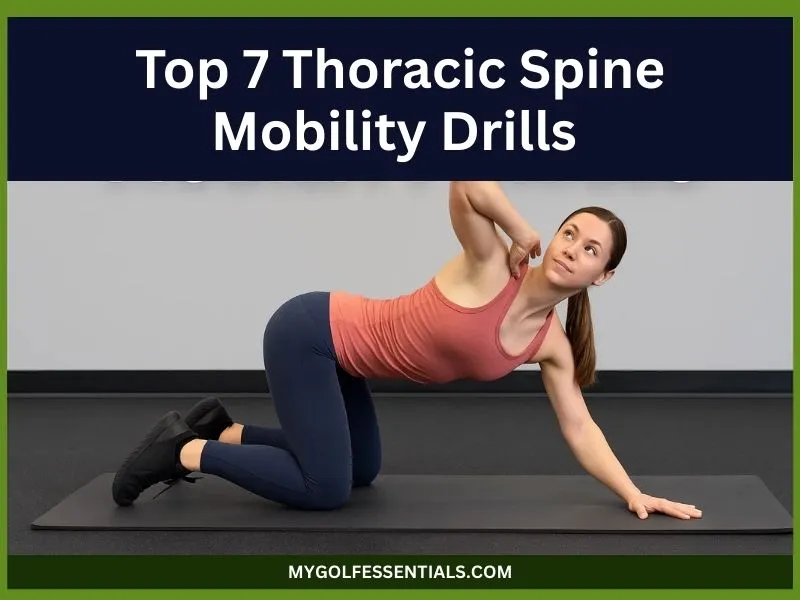
4. Kneeling Thoracic Rotation
The kneeling thoracic rotation drill helps improve rotation through the mid-back while keeping the lower body stable. By working in a kneeling position, it reduces the chance of using the hips or lower back to cheat the movement.
For golfers, this drill trains the thoracic spine to rotate more freely, which directly supports a stronger and more consistent swing.
How to Do It
- Begin in a kneeling position with your hips sitting back on your heels.
- Place your left hand on the floor in front of you for support.
- Put your right hand behind your head, keeping your elbow bent.
- Slowly rotate your upper body as you lift your right elbow toward the ceiling.
- Pause briefly at the top, then return to the starting position.
- Perform 8–10 reps on one side before switching to the other.
Tips for Best Results
- Keep your hips steady and avoid twisting through the lower back.
- Move in a controlled way. Don’t rush through the rotation.
- Exhale as you rotate upward to improve your range of motion.
- If sitting back on your heels is uncomfortable, perform the drill from a hands-and-knees position instead.
How It Helps Your Golf Swing
This drill builds rotational mobility in the thoracic spine, which is critical for both the backswing and follow-through. By isolating the mid-back, it encourages the correct muscles to work, leading to smoother torso rotation and better sequencing in the swing. Golfers who practice this often notice improved consistency and reduced stress on the lower back.
5. Thoracic Spine Wall Rotation
The thoracic spine wall rotation drill is designed to improve rotational mobility while providing stability through the hips and lower back.
By using a wall for support, golfers can focus on proper movement of the mid-back without compensating with other parts of the body. This drill helps golfers achieve better swing mechanics and reduces strain during rotation.
How to Do It
- Stand with your side to a wall, about a foot away, feet shoulder-width apart.
- Place the hand closest to the wall on it for support, keeping the arm straight.
- Slowly rotate your torso away from the wall, keeping your hips and legs stable.
- Rotate as far as comfortable, then return to the starting position.
- Perform 8–10 controlled reps, then switch sides.
Tips for Best Results
- Keep your core engaged to prevent twisting in the lower back.
- Move slowly to ensure you feel the rotation in the thoracic spine.
- Avoid shrugging your shoulders; focus on chest and mid-back rotation.
- Hold briefly at the end range for 1–2 seconds to maximize the stretch.
How It Helps Your Golf Swing
This drill trains the mid-back to rotate properly while keeping the lower body stable. Improved thoracic rotation helps generate more power in the backswing and follow-through. Golfers who use this drill often notice smoother swings, better posture, and reduced tension in the lower back and shoulders.
6. Cat-Cow Spine Mobilization
The Cat-Cow mobilization is a classic drill that improves overall spinal flexibility, particularly in the thoracic spine. It encourages smooth movement through flexion and extension while gently warming up the mid-back.
For golfers, this drill helps maintain mobility throughout the swing and reduces stiffness that can limit rotation or cause back discomfort.
How to Do It
- Begin on your hands and knees with your wrists under your shoulders and knees under your hips.
- Inhale and arch your back, lifting your chest and tailbone toward the ceiling (Cow position).
- Exhale and round your back, tucking your chin and pelvis (Cat position).
- Move slowly and smoothly between these two positions.
- Perform 8–12 repetitions, focusing on controlled motion and breathing.
Tips for Best Results
- Keep your movements slow to feel the stretch and activation in your thoracic spine.
- Engage your core lightly to support the lower back.
- Avoid forcing the range of motion; let the spine move naturally.
- Focus on separating the movement between the upper and lower spine, emphasizing mid-back mobility.
How It Helps Your Golf Swing
This drill enhances flexibility and awareness of thoracic spine movement, which is crucial for a fluid golf swing. By improving mobility and control, golfers can rotate more effectively during the backswing and follow-through, leading to smoother swings, better posture, and reduced risk of lower back strain.
7. 90/90/90 Oblique Stretch
The 90/90/90 oblique stretch targets rotational mobility in the thoracic spine while also engaging the oblique muscles. It helps golfers open up their mid-back and sides, which is essential for generating a smooth, powerful swing. This drill also encourages proper posture and reduces tension in the torso.
How to Do It
- Sit on the floor with both knees bent at 90 degrees, one leg in front and the other to the side, forming a “90/90” position.
- Place your opposite hand on the floor for support.
- Rotate your torso over the front leg, reaching your other arm toward the ceiling.
- Hold the stretch for 10–15 seconds, then return to the starting position.
- Repeat 3–5 times on each side, moving slowly and maintaining controlled breathing.
Tips for Best Results
- Keep your hips stable and avoid leaning backward or forward.
- Focus on rotating through the thoracic spine, not the lower back.
- Inhale to prepare, exhale as you rotate to increase mobility.
- Perform this drill after warming up to maximize flexibility.
How It Helps Your Golf Swing
This drill improves rotational mobility in the mid-back and engages the oblique muscles needed for a coordinated golf swing. By increasing thoracic rotation, it allows golfers to achieve a fuller backswing and smoother follow-through, enhancing both swing power and consistency while reducing stress on the lower back.
Incorporating these seven drills consistently can make a noticeable difference in your swing mechanics, posture, and overall comfort on the course. Over time, they help build a more powerful, efficient, and injury-free golf swing.
Additional Tips To Start Your Thorasic Spine Mobility Drill Workout
Starting a thoracic spine mobility routine can make a big difference in your golf performance, but it’s important to approach it correctly. Here are some tips to get the most out of your drills:
- Warm up first – Begin with 3–5 minutes of light cardio or dynamic movements to increase blood flow before doing mobility drills.
- Focus on control, not speed – Move slowly and deliberately through each drill to ensure you’re targeting the thoracic spine, not compensating with other areas.
- Breathe properly – Inhale to prepare, exhale during the stretch or rotation. Proper breathing helps increase range of motion and relax muscles.
- Start with 1–2 sets – Begin with one or two rounds of each drill, then gradually increase as your mobility improves.
- Consistency is key – Perform these drills 3–4 times per week, or include them as part of your daily warm-up before practice or a round.
- Listen to your body – Mild stretching discomfort is normal, but sharp pain is not. Adjust intensity or skip any drill that causes discomfort.
- Combine with other exercises – Incorporate core strengthening and hip mobility work to support a full, coordinated golf swing.
- Track your progress – Notice improvements in rotation, posture, and swing fluidity over time to stay motivated.
By following these tips, you’ll safely build thoracic mobility and create a stronger, smoother, and more injury-resistant golf swing.
Sample Weekly Workout Plan
To get the most from thoracic spine mobility drills, it’s helpful to follow a structured routine.
Here’s a sample weekly plan you can use based on your skill and experience level.
| Day | For Beginners | For Experienced Golfers | Additional Note |
| Monday | Foam Roller Thoracic Extension – 1 set of 6–8 repsOpen Book Stretch – 1 set of 8 reps per side | Foam Roller Thoracic Extension – 2 sets of 8–10 repsOpen Book Stretch – 2 sets of 10 reps per side | Warm up with 5 minutes of light cardio before starting drills |
| Tuesday | Rest or light cardio | Rest or light cardio | Recovery days are important to avoid overloading the spine |
| Wednesday | Kneeling Thoracic Rotation – 1 set of 8 reps per sideCat-Cow Mobilization – 1 set of 8–12 reps | Kneeling Thoracic Rotation – 2 sets of 10 reps per sideCat-Cow Mobilization – 2 sets of 10–12 reps | Focus on slow, controlled movements |
| Thursday | Rest or light stretching | Rest or light stretching | Include gentle breathing exercises to improve range of motion |
| Friday | 90/90/90 Oblique Stretch – 1 set of 3–5 reps per sideThoracic Spine Wall Rotation – 1 set of 8–10 reps per side | 90/90/90 Oblique Stretch – 2 sets of 5–8 reps per sideThoracic Spine Wall Rotation – 2 sets of 10–12 reps per side | Maintain proper form; don’t rush through rotations |
| Saturday | Optional light practice or mobility review | Optional light practice or mobility review | Use this day to combine drills into a short 10–15 minute routine |
| Sunday | Rest | Rest | Ensure full recovery before next week |
Additional Note
- Always warm up before starting your mobility routine. Light cardio or dynamic stretching for 3–5 minutes is recommended.
- Track your progress by noting improvements in rotation, posture, and swing fluidity.
- Avoid overdoing it. Quality is more important than quantity. Gradually increase reps, sets, and hold times as your mobility improves.
Mistakes to Avoid While Doing Thoracic Spine Mobility Drills As A Golfer
While thoracic spine mobility drills can significantly improve your golf swing, performing them incorrectly can reduce effectiveness or even cause discomfort.
Here are common mistakes to avoid:
- Using momentum instead of control – Swinging or rushing through drills reduces their effectiveness and can strain other areas of the body.
- Twisting the lower back – Ensure rotation comes from the thoracic spine, not the lumbar region, to avoid injury.
- Holding your breath – Proper breathing enhances range of motion and helps relax tight muscles.
- Skipping the warm-up – Cold muscles are more prone to strain. Spend 3–5 minutes on light cardio or dynamic movements before starting.
- Ignoring posture – Slouching or rounding your shoulders diminishes the benefits of the drill. Keep the chest lifted and spine aligned.
- Overstretching or forcing the movement – Mobility improves gradually. Forcing rotation can lead to pain or injury.
- Neglecting consistency – Doing drills sporadically limits progress. Aim for regular practice to see noticeable improvements.
- Not focusing on both sides equally – Imbalances between left and right rotation can affect swing mechanics and performance.
By avoiding these mistakes, you can safely increase thoracic spine mobility, improve your swing, and reduce the risk of back or shoulder discomfort.
Final Thoughts
Thoracic spine mobility is a key factor in a golfer’s performance, affecting rotation, posture, and overall swing mechanics. The seven drills outlined in this guide target the mid-back, helping golfers generate more rotation, protect the lower back, and maintain consistency throughout their swing.
Incorporating these drills into a regular routine, along with proper warm-ups, controlled movements, and mindful breathing, can lead to noticeable improvements in swing fluidity, power, and comfort on the course. Beginners can start with lighter sets and fewer reps, while experienced golfers can increase intensity and duration to challenge their mobility further.
Consistency and correct technique are essential. Avoid rushing, twisting the lower back, or forcing movements, and make sure to balance drills on both sides. By practicing regularly and paying attention to your body, you’ll build a stronger, more flexible thoracic spine, reduce the risk of injury, and enhance every aspect of your golf game.
Key Takeaways
- The thoracic spine (mid-back) is essential for rotation, extension, and side bending during a golf swing.
- Limited thoracic mobility can lead to compensations in the lower back and shoulders, increasing injury risk.
- Good mid-back mobility helps maintain proper posture, ensuring a tall chest and aligned shoulders throughout the swing.
- Thoracic spine mobility improves rotation, allowing for a fuller backswing and smoother follow-through.
- Incorporating drills like Open Book Stretch, Foam Roller Extensions, and Cat-Cow Mobilization can loosen tight mid-back muscles.
- Self-massage techniques, such as the Tennis Ball Spine Drill, help release tension and improve movement in restricted areas.
- Stability-focused drills, including Kneeling Thoracic Rotation and Wall Rotations, encourage proper spinal movement without lower back compensation.
- The 90/90/90 Oblique Stretch enhances rotational mobility while engaging core muscles needed for a coordinated swing.
- Consistency, control, and proper breathing are key to maximizing the benefits of thoracic spine drills.
- A structured weekly routine, combined with correct form and attention to common mistakes, supports a stronger, smoother, and injury-free golf swing.
FAQs
How does poor thoracic mobility affect my golf game?
Limited thoracic spine mobility can lead to a shortened backswing, compensatory movements, reduced power, inconsistent ball striking, and a higher risk of injuries, particularly in the lower back and shoulders.
How often should I do thoracic spine mobility exercises?
Most experts recommend performing these mobility exercises 2–3 times per week, especially before or after playing golf or as part of a daily routine to see noticeable benefits in flexibility and swing performance.
Can improving thoracic spine mobility help with low back pain in golfers?
Yes, enhancing thoracic spine mobility reduces compensatory movements in the lower back and can help alleviate or prevent pain and overuse injuries associated with the golf swing.
Are thoracic spine exercises safe for everyone?
These exercises are generally safe but should be performed with proper technique. If you have existing injuries or persistent pain, consult a healthcare provider or golf-specific physiotherapist for guidance before starting new mobility exercises.
How quickly can I expect results from thoracic spine mobility training?
Regular practice can yield improvements in flexibility, swing mechanics, and reduced discomfort within a few weeks. Consistency is key to achieving sustained benefits in your golf game.
Do I need any equipment for thoracic spine exercises?
Many thoracic spine mobility exercises only require basic equipment like a golf club, pole, or household items (such as taped tennis balls for the “peanut”), making them easy to incorporate at home or on the course.