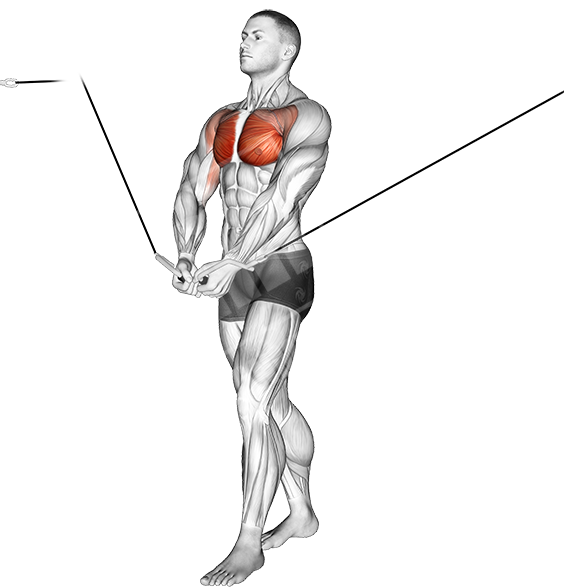

If you’re a golfer looking to boost swing power, improve posture, and prevent injuries, the straight-arm lat pulldown is a must-try exercise. In this guide, we’ll walk you through the proper form, key benefits, common mistakes to avoid, and ways to incorporate it into your training routine.
So, we invite you to read on our article and learn how this simple yet powerful exercise can take your golf performance to the next level.
What is Straight-Arm Lat Pulldown?
The straight-arm lat pulldown is a strength training exercise that targets the muscles of the back, shoulders, and core. Unlike the traditional lat pulldown where you bend the elbows, this variation keeps the arms nearly straight throughout the movement. The key action is pulling the bar (or rope attachment) down in front of the body using controlled movement from the shoulders and lats.
This makes it one of the best isolation exercises for strengthening the latissimus dorsi (lats) while also engaging stabilizing muscles that are vital for golfers.
Muscles Used / What It Trains
The straight-arm lat pulldown works both large and supporting muscles. It primarily develops the lats but also engages several secondary muscle groups.
Namely, they are as follows:
Primary Muscles (Lats)
- Latissimus dorsi (lats): The main target muscle, responsible for pulling the arms downward and toward the body. Strong lats help generate power and control during a golf swing.
Secondary Muscles
- Core muscles: Stabilize the torso and prevent excess movement.
- Shoulders (rear deltoids): Assist in controlling the downward motion of the arms.
- Triceps: Support the arm position and resist elbow bending during the exercise.
- Teres major and rhomboids: Help with scapular stability and shoulder control.
Why Golfers Should Do Straight-Arm Lat Pulldowns
For golfers, this lat exercise directly supports the demands of a powerful and consistent swing. By training the lats, shoulders, and core, it builds the physical foundation golfers need for both strength and control.
Key benefits include:
- Swing power: Stronger lats and shoulders help generate more force and speed.
- Posture and stability: Core activation and scapular control reduce unnecessary movement during the swing.
- Rotational control: Stable shoulders and a strong back improve accuracy and consistency.
- Injury prevention: Balanced upper-body strength protects against common shoulder and lower back issues.
- Endurance: A stronger back and core allow golfers to maintain form and power across an entire round.
In short, the straight-arm lat pulldown gives golfers the physical foundation for both power and control, two elements that translate directly into better performance on the course.
How to Do Straight-Arm Lat Pulldown Exercise Right (Form & Technique)
Performing the straight-arm lat pulldown correctly is essential for maximizing its benefits and reducing the risk of injury. This guide breaks down the exercise step by step, covering setup, execution, breathing, and key tips.
1. Set-Up: Equipment, Grip, and Body Position
Before starting the exercise, make sure your setup is correct:
i. Equipment: Use a cable machine with a straight bar or rope attachment. Choose a weight that allows controlled movement.
ii. Grip: Hold the bar or rope with an overhand grip, slightly wider than shoulder-width. This ensures proper lat engagement.
iii. Body Position:
- Stand with feet shoulder-width apart and knees slightly bent.
- Engage your core and glutes to stabilize your torso.
- Keep a neutral spine and slightly retract shoulder blades.
- Maintain a tall posture without overarching the lower back.
2. Starting Position: Arms, Shoulders, and Core
- Extend your arms overhead, keeping a slight bend in the elbows to prevent strain.
- Keep shoulders down and back; avoid shrugging.
- Engage your core and glutes to stabilize your torso.
- Ensure your chest is slightly lifted but not excessively arched.
3. Execution: Pull Motion
The pulling phase is where proper muscle engagement is crucial:
- Pull the bar or rope down in front of your body, focusing on the lats rather than the arms.
- Maintain nearly straight arms with only a small bend at the elbows.
- Pull until your hands reach shoulder level or just below your chest, based on comfort.
- Move slowly and avoid swinging your torso or using momentum.
4. Return Phase: Controlled Release and Full Stretch
- Slowly allow the bar or rope to return to the starting position.
- Fully stretch the lats at the top while keeping shoulders stable.
- Maintain control to keep tension in the muscles and reduce injury risk.
- Avoid letting the shoulders creep up toward the ears.
5. Breathing and Tempo
- Breathing: Exhale while pulling down, inhale while returning to the start. This helps stabilize the core and maintain control.
- Tempo: Use a controlled pace, around 2–3 seconds for both the pulling and returning phases. Avoid fast, jerky movements that can reduce effectiveness and increase injury risk.
Key Tips for Proper Form
- Keep your head neutral and eyes forward to maintain spinal alignment.
- Engage the lats before initiating the pull to ensure they are the primary movers.
- Avoid excessive elbow bending or letting the biceps dominate the movement.
- Start with a manageable weight; do not compromise form to lift heavier.
- Focus on the mind-muscle connection with the lats rather than just moving the bar.
Following this step-by-step guide will help golfers strengthen the lats, shoulders, and core effectively, improving swing power, stability, and overall back strength.
Common Mistakes and How to Avoid Them
Performing the straight-arm lat pulldown incorrectly can reduce its effectiveness and increase the risk of injury. Below are the most common mistakes golfers make and how to correct them.
1. Bending Elbows Too Much / Letting Biceps Take Over
- Why it’s a problem: Shifts work from the lats to the biceps, reducing back engagement and swing power.
- How to fix it: Keep arms mostly straight with only a slight bend at the elbows throughout the movement.
2. Using Momentum or Swinging the Torso
- Why it’s a problem: Reduces lat and core activation and may strain the lower back.
- How to fix it: Perform the exercise slowly and deliberately, focusing on controlled movement.
3. Letting Shoulders Creep Up / Poor Shoulder Position
- Why it’s a problem: Shrugging limits lat activation and stresses the neck and upper traps.
- How to fix it: Keep shoulder blades down and back while pulling, maintaining strong posture.
4. Arching Lower Back Too Much
- Why it’s a problem: Places tension on the lower back instead of the lats.
- How to fix it: Engage your core and maintain a neutral spine throughout the exercise.
5. Not Using Full Range of Motion
- Why it’s a problem: Limits muscle stretch and contraction, reducing strength gains.
- How to fix it: Pull down fully and return to the top with controlled motion, using a full range of motion.
6. Going Too Heavy Too Soon
- Why it’s a problem: Compromises form, relies on momentum, and increases injury risk.
- How to fix it: Start with a manageable weight, prioritizing control and proper technique.
By combining awareness of these common mistakes with corrective strategies, golfers can perform the straight-arm lat pulldown safely and effectively, maximizing back strength, stability, and swing performance.
Variations & Progressions
Introducing variations and progressions to the straight-arm lat pulldown can help target muscles differently, increase challenge, and add variety to a golfer’s training routine. These options also allow adaptation based on skill level, equipment availability, or specific training goals.
Here are some variation approaches you could take:
1. Different Grips or Attachments
- Straight bar: Standard grip that provides even resistance across both arms.
- Rope attachment: Allows a greater range of motion at the bottom of the pull and enhances scapular engagement.
- Neutral grip: Palms facing each other; reduces strain on the shoulders and elbows while maintaining lat activation.
Each grip or attachment slightly changes muscle recruitment, helping golfers strengthen supporting muscles and improve swing mechanics.
2. Standing vs Slight Forward Lean / Hip Hinge
- Standing upright: Focuses on lat activation with minimal lower-back involvement.
- Slight forward lean / hip hinge: Increases range of motion and engages the core more heavily, simulating the rotational posture used during a golf swing.
Both variations help golfers build strength while improving body control and stability.
3. Single-Arm Version
- Performing the exercise one arm at a time improves unilateral strength and balance.
- Helps identify and correct side-to-side strength imbalances, which can affect swing consistency.
- Enhances core stabilization as the body resists rotation during the pull.
4. Resistance Bands Alternative
- Using resistance bands is ideal for home workouts or when cable machines are unavailable.
- Bands provide variable resistance, increasing tension at the end of the pull, which helps improve muscle activation.
- Easy to adjust resistance and modify the angle of pull to mimic different aspects of the golf swing.
Incorporating these variations and progressions allows golfers to challenge their muscles in different ways, improve functional strength, and continue progressing safely over time.
How to Fit It into a Golfer’s Training Routine
The straight-arm lat pulldown is a highly effective exercise for golfers, but its benefits are maximized when incorporated strategically into a training program. This section covers timing, volume, combination with other exercises, and a sample plan for optimal results.
When to Do It
- Off-Season: Focus on building strength and muscle endurance without the pressure of upcoming rounds. Include 2–3 sessions per week.
- Strength Days During Season: Perform 1–2 sessions per week to maintain upper-body strength while managing fatigue from playing and practicing.
- Avoid on Recovery or High-Volume Swing Days: Doing heavy lat work immediately after a long round can increase fatigue and reduce performance.
Sets, Reps, and Rest
- Beginners: 2–3 sets of 10–12 reps with light to moderate weight. Focus on perfect form and controlled movement.
- Intermediate/Advanced: 3–4 sets of 8–12 reps with progressively heavier weights. Maintain slow, controlled tempo.
- Rest Periods: 60–90 seconds between sets to allow recovery while keeping muscles engaged.
- Tempo: 2–3 seconds down, 2–3 seconds back to maintain tension and control.
Combining with Other Exercises
Integrating the straight-arm lat pulldown with complementary exercises enhances golf-specific performance:
- Rotational Exercises: Medicine ball twists or cable rotations improve swing control.
- Core Work: Planks, dead bugs, or anti-rotation presses stabilize the torso for a powerful swing.
- Mobility Drills: Shoulder openers and thoracic spine rotations maintain range of motion for smooth, unrestricted swings.
Sample Training Plan
Example for 1 Upper-Body Strength Day:
| Exercise | Sets | Reps / Duration | Notes |
| Dynamic Warm-Up & Mobility | — | 5–10 min | Shoulder and thoracic mobility drills |
| Straight-Arm Lat Pulldown | 3 | 10–12 | Focus on controlled movement, full range of motion |
| Single-Arm Cable Row / Dumbbell Row | 3 | 10 per side | Maintain core stability |
| Medicine Ball Rotational Throws | 3 | 12 per side | Enhance rotational power for golf swing |
| Plank Variations | 3 | 30–60 sec | Engage core and glutes to stabilize torso |
| Cool Down Stretches | — | 5 min | Shoulder and back stretches for recovery |
Frequency Recommendation:
- Beginners: 1–2 times per week.
- Intermediate/Advanced: 2–3 times per week.
Safety Tips & When to Be Careful
- If you have elbow, shoulder, or back issues
- Proper warm-up and mobility beforehand
- Listening to pain vs discomfort
Final Thoughts
Even when performed correctly, the straight-arm lat pulldown requires attention to safety to prevent injury and ensure long-term benefits. Golfers should consider the following precautions:
1. Pre-Existing Joint or Back Issues
- Avoid the exercise if you have recent injuries or chronic pain in the elbows, shoulders, or lower back.
- Consult a healthcare professional or physiotherapist before adding this exercise to your routine.
- Start with very light resistance and controlled movements if cleared to perform it.
2. Proper Warm-Up and Mobility
- Always warm up for 5–10 minutes before performing the exercise.
- Include dynamic stretches targeting the shoulders, lats, and thoracic spine.
- Incorporate mobility drills to ensure full range of motion and reduce strain during the pull.
3. Listen to Pain vs. Discomfort
- Discomfort: Mild muscle fatigue or a stretch in the lats is normal.
- Pain: Sharp or persistent pain in joints, shoulders, or back indicates improper form or overloading. Stop immediately and reassess technique or weight.
- Adjust weight, range of motion, or frequency if discomfort becomes excessive.
By following these safety tips, golfers can perform the straight-arm lat pulldown effectively while minimizing injury risk and improving upper-body strength, stability, and swing performance.
Final Thoughts
The straight-arm lat pulldown is a highly effective exercise for golfers, offering targeted strength for the lats, shoulders, and core while directly supporting a powerful and controlled golf swing. When performed correctly, it enhances swing power, stability, posture, rotational control, and endurance, all of which contribute to better performance on the course.
Success with this exercise depends on proper form, controlled movements, and attention to common mistakes such as excessive elbow bending, using momentum, or poor shoulder positioning. Incorporating variations (like different grips, single-arm work, or resistance bands) can add challenge and address specific training goals.
Strategically integrating the exercise into a golfer’s routine, combined with complementary rotational, core, and mobility work, ensures balanced development and minimizes the risk of injury.
By prioritizing safety, using appropriate resistance, and maintaining focus on controlled execution, golfers can fully benefit from the straight-arm lat pulldown, building the strength and stability necessary for consistent, powerful swings.
Key Takeaways
- Targets Key Muscles for Golf: Primarily strengthens the lats while engaging the core, shoulders, triceps, and scapular stabilizers.
- Enhances Swing Power: Stronger lats and shoulders help generate greater clubhead speed and force during the golf swing.
- Improves Posture and Stability: Core engagement and scapular control support proper alignment and reduce unnecessary movement.
- Boosts Rotational Control: A strong back and stable shoulders allow for smoother, more accurate swings.
- Reduces Injury Risk: Balanced upper-body strength helps prevent common shoulder and lower back injuries.
- Supports Endurance: Strengthening the lats and core helps maintain swing quality throughout a full round.
- Proper Form is Essential: Maintaining straight arms (slight bend), controlled movement, and neutral spine ensures maximum benefits and safety.
- Common Mistakes to Avoid: Excessive elbow bend, using momentum, poor shoulder positioning, over-arching the back, incomplete range of motion, or lifting too heavy too soon.
- Variations and Progressions: Different grips, single-arm work, standing vs hip hinge, and resistance bands provide variety and targeted challenges.
- Integration Into Training: Best performed on strength or off-season days, combined with rotational, core, and mobility exercises for golf-specific performance improvements.
FAQs
Is there a difference between straight-arm pulldowns and other lat exercises?
Yes, the straight-arm pulldown isolates the lats more specifically by reducing elbow involvement, unlike traditional lat pulldowns or pull-ups where elbow flexion engages the biceps and forearms more. It focuses on stretching and contracting the lats in a unique arc motion.
How important is it to keep the arm straight during the exercise?
Keeping the arms straight maximizes lat engagement and minimizes triceps and elbow flexor involvement. Slight bending is tolerated if needed for comfort, but maintaining a mostly straight arm is key to targeting the lats effectively.
Can straight-arm lat pulldowns help with deadlift stability?
Yes, by strengthening the lats and enhancing core and shoulder stability, this exercise helps maintain proper deadlift form and keeps the bar close to the body during the lift, improving overall deadlift performance.