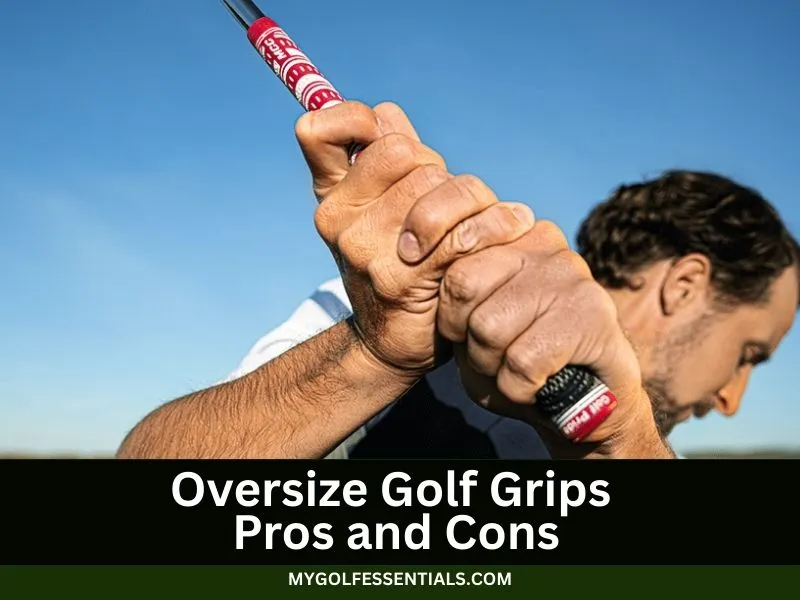
Oversize golf grips can change how your hands control the club more than almost any other equipment adjustment. Many golfers spend a fortune on new clubs, balls, or coaching, yet rarely consider their grip, which is the one point of contact that connects every swing.
In fact, choosing the wrong grip size can cause tension, inconsistent shots, and fatigue, even if every other part of your game is perfect.
These grips, sometimes called jumbo grips, are thicker than standard options and designed for specific types of golfers. In this guide, you will learn what oversize grips are, how they perform, who benefits from them, and whether your game needs them right now.
What Are Oversize Golf Grips?
Oversize golf grips, sometimes called jumbo grips, measure noticeably thicker in diameter than standard options. A standard grip measures around 0.900 inches in diameter. Midsize grips push that to roughly 0.940 inches. Oversize grips go past 0.960 inches, with true jumbo models reaching 1.0 inch or beyond.
The added thickness changes how the club sits in your hands. Your fingers rest with less curl and palms make contact with more of the grip surface. That shift influences your grip pressure, wrist movement, and how consistently the clubface returns to square at impact.
Who Are Oversize Grips Designed For?
Oversize grips are designed primarily for golfers with large hands, players managing arthritis or joint pain, and anyone fighting a persistent hook. They also suit golfers who squeeze the club too hard, since the extra thickness naturally encourages a lighter, more relaxed hold throughout the swing.
Why Does Grip Size Actually Matter in Golf?
Grip size matters because it controls how freely your hands and wrists move during the swing. Your hands drive the clubface. When the grip fits poorly, your hands compensate with tension or excess movement you often can’t detect. That hidden compensation produces inconsistency, missed shots, and a swing that never fully locks in.
Golf legend Sam Snead described ideal grip pressure as holding “a small bird, firm enough so it doesn’t escape, but gentle enough that you don’t crush it.” The right grip size makes that feeling natural. The wrong size forces you to either over-squeeze or lose control when it matters most.
How Grip Size Affects Clubface Control
Here is how the connection works, When a grip runs too thin, your fingers wrap deeply into your palm. That deep wrap promotes aggressive wrist rotation through impact. Active wrists close the clubface early, sending the ball left for right-handed players. A thicker grip restricts that rotation and keeps the face in a squarer position through the hitting zone.
Problems caused by incorrect grip size include:
- Inconsistent ball flight on full swings
- Excessive grip pressure and forearm tension
- Difficulty controlling trajectory and distance
- Persistent shot shape issues that swing lessons can’t fix
- Fatigue and discomfort after longer rounds
Who Should Actually Use Oversize Golf Grips?
Oversize golf grips suit a specific type of golfer, and knowing which profile fits you saves time, money, and frustration.
Here is a clear breakdown of who benefits most:
1. Golfers with large hands gain the most consistent advantage. Large hands on thin grips create excess finger tension and a cramped grip position. Oversize grips deliver a natural fit that reduces tension and improves ball-striking right away.
2. Players who hook the ball often fix their miss without a single swing change. The restricted wrist action from a thicker grip prevents the face from closing aggressively through impact. Many chronic hookers see dramatic improvement within a few range sessions after switching.
3. Golfers with hand pain or arthritis benefit from reduced joint load on every swing. The combination of less required grip force and more palm contact with the grip significantly eases discomfort. Several major grip manufacturers now produce cushioned oversize models specifically built for arthritic players.
4. Players who grip too tightly find that oversize grips break that habit naturally. A grip sizing too small promotes white-knuckle pressure. Switching up solves the tension problem without requiring a conscious mental reminder to relax your hands before every shot.
Pros of Oversize Golf Grips
Oversize golf grips deliver genuine performance advantages for players who fit the profile. Here is how they perform across the areas:
1. More Stability Through Impact
Oversize grips create a wider contact surface between your hands and the handle. That wider surface increases stability at the moment of impact. Off-center strikes feel less jarring. Shots stay on line more consistently, especially with longer irons and woods. Golfers who struggle with twisting at impact often notice immediate improvement after switching.
2. Reduced Grip Pressure
When a grip fills your hand properly, squeezing becomes unnecessary. Oversize grips contact more of your palm, which triggers a natural relaxation response in your hands and forearms. Lower grip pressure produces better tempo, smoother rhythm, and more consistent ball-striking across all 18 holes.
3. Reduce or Eliminate Hooks
Thicker grips limit wrist rotation through impact. Less rotation means the face closes less aggressively through the hitting zone. Players who battle snap hooks or a stubborn draw turning left often straighten their ball flight simply by sizing up their grips.
Many club fitters recommend testing oversize options before booking expensive swing lessons for a hook problem.
4. Comfort for Larger Hands
Standard grips don’t fit large hands well. When your fingers dig deeply into your palm, tension builds and swing consistency drops. Oversize grips let large-handed players hold the club naturally, without forcing an awkward finger position. If you wear a glove size XL or above, you almost certainly need at least a midsize grip, if not a full oversize.
5. Less Strain on Hands and Wrists
Oversize grips reduce the force required to control the club during the swing. Less gripping force means less stress on finger joints, knuckles, and wrists with every swing. For golfers managing arthritis or recurring wrist pain, that reduction is significant.
Cons of Oversize Golf Grips
Oversize golf grips carry real drawbacks that matter depending on your playing style. Here is where they fall short:
1. Harder to Shape Shots
Shot shaping demands deliberate hand manipulation through the swing. Oversize grips restrict that hand action by design. If you routinely work the ball both ways, a thicker grip limits your creative options. This is a key reason tour-level professionals rarely use jumbo grips in competition. They need maximum hand freedom to control trajectory and shape.
2. Loss of Wrist Action and Swing Speed
The same wrist restriction that cures a hook can cost you clubhead speed. Wrist hinge and release through impact generate power. Oversize grips dampen that release. Players with naturally slow swing speeds risk losing distance they can’t afford to give up. If swing speed already sits below average, thicker grips may not be the right call.
3. Not Suitable for Small Hands
Small hands on an oversize grip create a real disconnect. Your fingers can’t wrap the handle properly, forcing a weak grip position. A weak grip reduces your ability to square the face through impact. Golfers wearing a medium glove or smaller should stay on standard grips. Jumping to oversize will almost certainly cost shots, not save them.
4. Reduced Feel on Short Shots
Thicker grips absorb tactile feedback. Chipping, pitching, and putting all rely on precise feel to judge distance and touch. Standard grips transmit vibration through the shaft directly to your hands. Oversize grips dull that sensation. Players with a sharp short game often notice the reduced feedback hurts their scoring around the greens almost immediately.
5. Adjustment Period Required
Switching grip sizes changes how the swing feels from the first swing to the last. Your timing, tempo, and distance perception all need to recalibrate. Expect several practice sessions before everything feels natural again.
Most players adapt fully within two to three weeks. Push through the adjustment before drawing conclusions about whether the change worked.
Oversize vs. Midsize vs. Standard Grips: What’s the Difference?
The right grip size depends on three things: your hand dimensions, your swing tendencies, and your feel preferences. Here is a clear side-by-side comparison to help you decide.
| Grip Size | Diameter | Best Glove Size | Wrist Action | Shot Shaping | Hook Correction | Short Game Feel |
| Undersize | 0.860 in | XS to S | Very active | Maximum | None | Very high |
| Standard | 0.900 in | S to M | Full | High | None | High |
| Midsize | 0.940 in | L | Moderate | Moderate | Slight | Moderate |
| Oversize | 0.960+ in | XL and above | Restricted | Lower | Strong | Lower |
| Jumbo | 1.00+ in | 2XL+ | Minimal | Minimal | Maximum | Lowest |
No single size wins across every category. Match the grip to your swing tendencies and hand dimensions, not to what your playing partners use. A golfer with average hands and a reliable short game belongs on standard grips. A large-handed player with wrist pain and a persistent hook belongs on oversize.
Quick selection guidance
- Fighting a hook and have large hands: go oversize
- Battling a slice or fade: stay standard or go midsize at most
- Managing arthritis or joint pain: oversize or jumbo
- Prioritizing shot-shaping and feel: stay standard
- Unsure: get a professional fitting before regripping your set
How Do You Know if Oversize Grips Fit Your Hands?
The best way to know is to measure your hand and test different sizes before committing. Here are the three most reliable methods to find your correct grip size.
Method 1: Hand Measurement
Measure from the tip of your middle finger straight down to the base of your palm. Use this as your starting guide:
- Under 7 inches: Standard grip
- 7.0 to 8.75 inches: Midsize grip
- 8.75 to 9.5 inches: Oversize grip
- Over 9.5 inches: Jumbo grip
Method 2: Glove Size Guide
Your golf glove size gives a strong starting point when you don’t have a measuring tape handy:
- Small or Cadet Small: Standard or undersize grip
- Medium: Standard grip
- Large or Cadet Large: Midsize grip
- XL or Cadet XL: Midsize to oversize grip
- 2XL and above: Oversize or jumbo grip
Method 3: The Finger-to-Palm Check
Hold a club with your lead hand in your normal grip position. Look at where your middle and ring fingers contact your palm. They should lightly brush the pad of your palm without pressing deeply into it. If they dig hard into your palm, the grip runs too thin. If they float without touching, the grip runs too thick.
Signs the grip feels correct:
- Your fingers barely brush the palm without digging in
- Your grip pressure feels natural without conscious effort
- Your forearms stay relaxed from address through impact
- The club feels balanced and secure without squeezing
- The grip disappears from your awareness during the swing
Final Thoughts
Oversize golf grips work exceptionally well for the right player and poorly for the wrong one. Large-handed golfers, chronic hookers, and anyone managing arthritis or joint pain gain real, measurable advantages from the extra thickness. Players with average hands, a reliable short game, or a tendency to slice should think carefully before making the switch.
The most important step you can take is getting fitted before you commit. Visit a pro shop or fitting center, test a few sizes on the range, and pay close attention to how your hands feel at address and through impact. Two to three weeks of consistent play will tell you everything you need to know about whether the change suits your game.
Your hands connect every part of your swing to every club in your bag. Get that connection right, and your consistency will improve in ways no new driver or swing tip ever could. Sometimes the smallest equipment change delivers the biggest results on the course.
Key Takeaways
- Oversize golf grips measure 0.960 inches or more in diameter, larger than standard and midsize options.
- Thicker grips naturally lower grip pressure by filling more of your palm, promoting relaxed hands and smoother tempo.
- Oversize grips restrict wrist rotation through impact, which directly reduces hooking for many players.
- Golfers with arthritis can reduce joint load by up to 25% by switching to oversize or jumbo grip sizes.
- Reduced feel around the greens is a real downside, making oversize grips less ideal for touch-reliant short games.
- Players with small or medium hands risk losing clubface control by using grips that are too thick for their hands.
- Slicers should avoid oversize grips, as extra thickness can worsen an already open face position at impact.
- Your glove size and a simple hand measurement give you a reliable starting point for selecting grip size.
- An adjustment period of two to three weeks is normal after switching grip sizes, so test thoroughly before judging.
- Always test any new grip size during practice sessions before regripping your entire set of clubs.
FAQs
Do oversize golf grips affect swing speed?
Oversize grips can reduce swing speed slightly by limiting wrist hinge and release through impact. However, golfers who squeeze standard grips excessively often swing faster after switching because relaxed hands produce more efficient motion. The net effect on swing speed depends entirely on how much tension you carry in your current grip.
Who Makes the Best Oversize Golf Grips?
Winn and Golf Pride lead the market, with Lamkin and Flat Cat Golf close behind. PING and JumboMax excel in true jumbo sizing. Evnroll and Odyssey offer strong oversized putter grip options for golfers focused on the short game.
Do Jumbo Grips Cause a Slice?
Jumbo grips can make it marginally harder to square the clubface, leaving it slightly open at impact. However, slicing is usually a swing issue. If you already battle a fade, avoid oversized grips and focus on your swing path first.
Are oversize grips good for seniors?
Oversize grips are excellent for many senior golfers, particularly those dealing with arthritis, reduced grip strength, or joint stiffness. The larger diameter reduces the force required to control the club and eases pressure on finger and wrist joints throughout the round. Many seniors report significantly more comfortable and consistent play after switching to oversize or jumbo grip sizes.