If you’re trying to decide whether to rely on hybrids or stick with traditional irons (Hybrids vs Irons), you’re not alone. Choosing the right club can make a big difference in distance, accuracy, and confidence on the course.
In this article, we’ll break down everything you need to know about hybrids and irons in 2025, from their design, uses, and pros and cons to tips on picking the right club for your game. Keep reading to find out which clubs belong in your bag and how to get the most out of every shot.
What Are Hybrids?
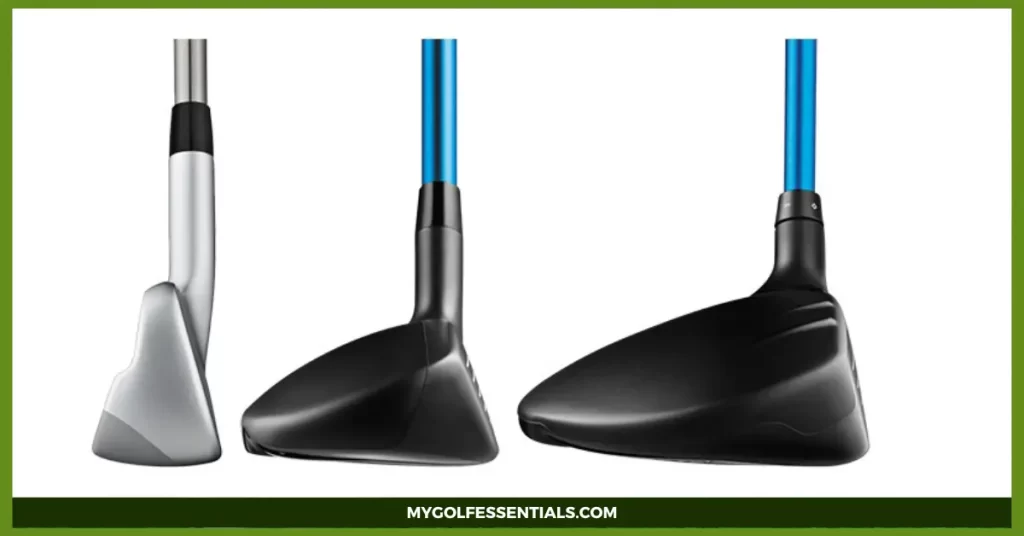
Hybrids are golf clubs designed to combine the best features of long irons and fairway woods. They are generally easier to hit than long irons while offering similar distance and control. Hybrids have a slightly larger clubhead than irons, a lower center of gravity, and a more forgiving design, making them ideal for a wide range of lies on the course.
These clubs help bridge the gap between your long irons and fairway woods, making it easier to hit consistent shots from the fairway, rough, or even off the tee. Hybrids are especially useful for golfers who struggle with long irons or want more confidence in their long-game shots.
Typical Lofts and Shaft Lengths
Hybrids come in different numbers, each with specific lofts and shaft lengths to cover a variety of distances and trajectories:
- 2-Hybrid: Loft usually around 17–19°, often used to replace a 2 or 3-iron. The longest shaft among hybrids, designed for maximum distance.
- 3-Hybrid: Loft typically 19–21°, slightly shorter shaft than a 2-hybrid. Offers a balance of distance and control, ideal for fairway or tee shots.
- 4-Hybrid: Loft usually 22–24°, with a shorter shaft for easier control. Often replaces a 4-iron, providing more forgiveness on off-center hits.
- 5-Hybrid: Loft typically 25–27°, shorter shaft for better accuracy. Great for approach shots or long par-3s where precision matters.
The loft and shaft length directly affect the trajectory and distance. Longer shafts generate more speed and distance but require better technique, while shorter shafts offer more control and consistency.
Uses and When to Play Hybrids
Hybrids are extremely versatile and can be used in a variety of situations:
- From the Fairway: Perfect for long shots where accuracy and distance are both important.
- From the Rough: Easier to hit cleanly than long irons due to the club’s forgiving design.
- Off the Tee: Ideal on tight holes or par 3s where control matters more than maximum distance.
- Long Approach Shots: Helpful when approaching greens from longer distances while maintaining accuracy.
- Trouble Shots: Hybrids can help lift the ball over hazards or from tricky lies thanks to their higher launch design.
Pros and Cons of Hybrids
Advantages:
- Easier to hit than long irons.
- More forgiving on off-center shots.
- Can be used from multiple lies, including rough.
- Bridge the gap between long irons and fairway woods.
Disadvantages:
- May not offer the same workability as a long iron for shaping shots.
- Less effective for very low, controlled ball flights.
- Requires adjustment if you’re used to traditional irons.
Hybrids are essential for golfers looking to improve consistency and confidence with long-game shots. Using them effectively can reduce mishits and make long approaches or tee shots more manageable.
What Are Irons?
Irons are golf clubs designed for precision, control, and versatility. They have a smaller clubhead than woods or hybrids, with a flat angled face that allows golfers to strike the ball cleanly and accurately. Irons are essential for approach shots, tee shots on shorter holes, and navigating tricky situations on the course.
Unlike hybrids, irons offer more workability, allowing skilled players to shape shots, control trajectory, and land the ball softly on the green. They are a key part of any golfer’s bag, helping bridge the gap between short-game finesse and long-distance power.
Typical Lofts and Shaft Lengths
Irons are numbered from 1 to 9, with each number offering a specific loft and shaft length to produce varying distances and ball flights:
- 3-Iron: Loft around 19–21°, long shaft, used for distance and lower ball flight. Less forgiving, often replaced by hybrids for many golfers.
- 4-Iron: Loft typically 22–24°, slightly shorter shaft, balances distance and control.
- 5-Iron: Loft usually 25–28°, medium shaft length, ideal for mid-range approach shots.
- 6-Iron: Loft around 29–32°, shorter shaft for more accuracy and control.
- 7-Iron: Loft typically 33–36°, commonly used for approach shots, offering a balance of distance and precision.
- 8-Iron: Loft around 37–40°, shorter shaft, focused on accuracy and stopping the ball quickly on the green.
- 9-Iron: Loft typically 41–44°, shortest iron shaft, designed for precision and soft landings on greens.
The loft and shaft length affect trajectory, distance, and ease of hitting. Longer irons can generate more distance but are harder to control, while shorter irons offer more accuracy and consistency.
Uses and When to Play Irons
Irons are versatile and can be used in a variety of situations on the course:
- Approach Shots: Perfect for hitting the green from medium to long distances with precision.
- Tee Shots on Short Holes: Ideal for par 3s or tighter holes where accuracy is more important than distance.
- Challenging Lies: Useful for shots from uneven lies, light rough, or tricky positions near hazards.
- Controlled Shots: Allows shaping of the ball flight and spin to land softly on greens.
- Course Management: Irons help golfers play strategically, especially when avoiding hazards or setting up better angles for the next shot.
Pros and Cons of Irons
Advantages:
- Offer greater precision and control than woods or hybrids.
- Allow skilled players to shape shots and control spin.
- Essential for approach shots and strategic play.
- Versatile across different lies and course situations.
Disadvantages:
- Harder to hit consistently for beginners, especially long irons.
- Less forgiving on off-center strikes.
- Require more skill and practice to master compared to hybrids.
Irons are a cornerstone of any golf bag. Mastering them can dramatically improve scoring opportunities by providing accuracy, consistency, and strategic flexibility on every hole.
Key Differences Between Hybrids vs Irons
Hybrids and irons serve similar purposes in a golf bag, but their design, performance, and usage create distinct differences that can significantly affect a golfer’s game. Here are some of the key differences that can help you choose the right club for your game:
1. Club Design and Shape
- Hybrids: Hybrids have a larger, rounded clubhead with a lower center of gravity. This design makes it easier to get the ball airborne and provides more forgiveness on off-center hits. The face is slightly more angled than a fairway wood, helping golfers achieve higher launch angles with less effort.
- Irons: Irons feature a smaller, flatter clubhead with a more traditional blade or cavity-back design. This allows for greater precision, shot shaping, and control over spin. Irons are less forgiving on mishits, requiring a cleaner strike for optimal performance.
2. Forgiveness
- Hybrids: Forgiveness is one of the key advantages of hybrids. The wider sole and perimeter weighting help reduce the effects of mis-hits, making them ideal for beginners or golfers struggling with long irons. Even off-center strikes can produce reasonably straight and long shots.
- Irons: Long irons are harder to hit consistently, with mishits often resulting in a lower, sliced, or pulled shot. Mid and short irons are more forgiving than long irons but still less so than hybrids. The precision-focused design of irons rewards skill but punishes mistakes.
3. Distance and Trajectory
- Hybrids: Hybrids generally launch the ball higher than irons due to their design. They provide good carry distance, especially from the fairway or rough, and help the ball land softly on greens. Many golfers find that a 3-hybrid or 4-hybrid can replace a 3-iron or 4-iron, producing similar or even greater distance with more consistency.
- Irons: Irons, particularly long irons, produce a lower ball flight, which can be advantageous in windy conditions or when a controlled, penetrating shot is needed. While shorter irons are used primarily for approach shots, their lofts allow for precise distances and spin control.
4. Control and Workability
- Hybrids: Hybrids prioritize forgiveness and ease of use over shot-shaping. While players can still shape shots with hybrids, the larger clubhead makes it slightly harder to produce precise fades or draws compared to irons.
- Irons: Irons excel in control and shot workability. Skilled players can manipulate trajectory, spin, and ball flight to execute a wide variety of shots, making irons the preferred choice for approach shots, challenging lies, or strategic plays.
5. Versatility and Playability
- Hybrids: Hybrids are extremely versatile, playable from the fairway, rough, or even off the tee on shorter holes. They are particularly useful when distance and consistency are priorities, and they make long approaches less intimidating.
- Irons: Irons are versatile in their own right, especially for controlled approach shots, shorter tee shots, and tricky lies. However, they require more skill to use effectively from rough or uneven lies compared to hybrids.
6. Confidence and Ease of Use
- Hybrids: Many golfers feel more confident with hybrids because they are easier to hit, especially long shots from challenging lies. This confidence often leads to better overall performance.
- Irons: Irons demand a higher level of skill and practice, which can be intimidating for beginners or high-handicap players. While mastery of irons offers excellent control, inconsistency can lead to frustration.
As you can see, Hybrids focus on forgiveness, ease of use, and higher launch, making them perfect for long shots where consistency is key. Irons focus on precision, control, and shot-shaping, making them essential for approach shots and strategic play. Most golfers benefit from carrying a mix of both to cover all distances and situations on the course.
Which Club Fits Your Game?
Selecting the right club between hybrids and irons depends on your skill level, swing characteristics, and the situations you face on the course. Making an informed choice can help improve consistency, confidence, and scoring opportunities.
Here is some valuable information to keep in mind when choosing the right club for your game:
Player Skill and Swing Speed Considerations
Your skill level and swing speed play a significant role in deciding whether to use hybrids, irons, or a combination of both:
- For Beginners and Mid-Handicap Players: Hybrids are generally easier to hit due to their forgiving design and higher launch. They help cover long distances with less effort and reduce the likelihood of mishits from tricky lies. Long irons can be challenging for newer golfers, so replacing them with hybrids often improves consistency.
- For Low-Handicap and Skilled Players: Irons allow precise control and shot-shaping, which is crucial for approach shots and navigating hazards. Skilled golfers with faster swing speeds can generate the distance needed from long irons and take advantage of their ability to control spin and trajectory.
- Swing Speed Considerations: Players with slower swing speeds benefit from hybrids because the club design helps generate height and distance. Faster swingers may still prefer irons for control, as they can achieve similar distances while manipulating ball flight more effectively.
Do You Need Both in Your Bag?
Most golfers benefit from carrying a combination of hybrids and irons, as each has a specific purpose, such as:
- Covering Distance Gaps: Hybrids often replace long irons, providing more confidence and consistent distance coverage.
- Precision and Control: Irons are essential for approach shots, short par 4s, par 3s, and tricky course conditions where accuracy matters more than distance.
- Course Strategy: Having both types allows flexibility, enabling golfers to choose the club best suited for the lie, wind conditions, and target.
Factors to Consider
Several factors should influence your choice between hybrids and irons:
- Course Conditions: If you frequently face thick rough or uneven lies, hybrids may be easier to hit. For tight fairways or greenside approach shots, irons provide better control.
- Confidence and Comfort: The club you feel most confident swinging consistently should play a primary role. Confidence often translates into better ball striking and fewer mistakes.
- Ease of Use: Hybrids are forgiving and simpler for many golfers, while irons require more skill to strike cleanly, especially long irons. Consider how often you make solid contact and what will improve your scoring chances.
- Distance Needs: Evaluate your average distances with each club type. Hybrids can provide extra carry, while irons may give more workability for shaping shots.
Making the Decision
Choosing between hybrids and irons isn’t about picking one over the other. It’s about finding the right balance for your game.
For that, you can:
- Assess Your Long-Iron Ability: If you struggle to hit long irons consistently, adding a hybrid can improve confidence and distance.
- Evaluate Mid- and Short-Iron Performance: Irons are crucial for approach shots and short-game control, so ensure you maintain a set that covers these distances effectively.
- Test and Compare: Try both clubs on the range, from the fairway, rough, and tee. Observe ball flight, carry, and landing to determine which suits your swing and course strategy.
- Consider Your Bag Setup: Create a combination that fills distance gaps, maintains control, and suits your typical course conditions. A mix of hybrids and irons often provides the most complete solution.
By evaluating skill level, swing speed, course conditions, and personal comfort, golfers can make informed decisions about which clubs to carry. The goal is to create a setup that maximizes distance, control, and confidence on every shot.
Bag Setup in 2025
A well-organized bag ensures you have the right club for every situation, maximizes your scoring potential, and reduces guesswork on the course. In 2025, many golfers rely on a combination of hybrids and irons to balance distance, control, and versatility.
When to Use Hybrids
Hybrids are ideal for long shots where consistency and forgiveness are more important than complete control. They are particularly useful in the following scenarios:
- Replacing Long Irons: Hybrids often replace 2-, 3-, or 4-irons, making it easier to hit from fairways, rough, or tricky lies.
- Long Fairway Shots: When you need distance but want more accuracy than a fairway wood can provide.
- Rough or Uneven Lies: The design of hybrids helps lift the ball cleanly, reducing the chances of a mishit.
- Tee Shots on Shorter Holes or Par 3s: Hybrids can give controlled distance without sacrificing accuracy.
When to Stick with Irons
Irons remain essential for approach shots, precision, and strategic course play. Situations where irons shine include:
- Mid- to Short-Range Approach Shots: Irons allow more control over trajectory and spin to land softly on greens.
- Tight Fairways or Narrow Targets: The smaller clubhead provides better accuracy when precision matters more than distance.
- Shot-Shaping Needs: Skilled golfers can use irons to fade, draw, or punch the ball under obstacles.
- Short Par 4s or Par 3s: Irons give better control for landing the ball on or near the green.
Hybrid-Iron Combo Strategies
Combining hybrids and irons effectively helps create a balanced bag:
- Cover Distance Gaps: Replace long irons with hybrids to maintain consistent carry distances while keeping mid- and short-irons for precision.
- Balance Forgiveness and Control: Use hybrids for trouble or long shots, and irons when you need accuracy or want to shape the ball.
- Flexible Course Strategy: Hybrids handle rough, fairways, and longer approach shots, while irons manage precision and strategic positioning near greens.
How to Maintain Proper Distance Gaps
Maintaining consistent distance gaps between clubs ensures you can confidently select the right club for each shot:
- Check Loft Differences: Each club should cover a distinct distance range. Typically, aim for a 10–15 yard difference between clubs.
- Test on the Range: Hit each club under typical conditions to verify carry distance and trajectory.
- Adjust Based on Your Swing: Personal swing speed and ball flight can affect distance gaps, so adjust club selection accordingly.
- Mix Hybrids and Irons Thoughtfully: Ensure hybrids fill gaps where long irons are difficult to hit, while irons handle mid- and short-range precision shots.
By carefully organizing your bag with a combination of hybrids and irons, maintaining proper distance gaps, and planning your strategy for different lies and holes, you can maximize consistency and confidence throughout the round.
How to Pick the Right Club: Fit, Testing and Buying Tips
Choosing the right club goes beyond brand or appearance. It’s about finding the perfect fit for your swing, skill level, and course needs. Proper club selection improves consistency, distance, and confidence on every shot.
Importance of Getting Fitted
A professional club fitting ensures the club matches your swing characteristics:
- Correct Shaft Length and Flex: The right length and flex help you generate optimal clubhead speed and control. Too long or too stiff can cause mishits, while too short or too soft reduces distance.
- Proper Loft and Lie Angles: Loft affects trajectory and distance, while lie angle impacts how the club interacts with the turf. A proper fit ensures straighter shots and better contact.
- Grip Size and Feel: Comfort in your hands can improve swing consistency and reduce fatigue over a round.
Club fitting is especially important for hybrids and irons, as the differences in design can significantly influence performance for each golfer.
Testing Tips
Before buying, testing clubs on the range or course gives a realistic feel of how they perform:
- Try Multiple Clubs: Compare different hybrids or irons to see which launch, spin, and distance suits your swing.
- Test From Different Lies: Hit from fairways, rough, and tees to evaluate forgiveness and versatility.
- Observe Ball Flight: Check trajectory, carry distance, and accuracy. Make note of how easy it is to hit the sweet spot consistently.
- Feel and Confidence: Choose clubs that feel comfortable and boost your confidence, as comfort often translates into better performance.
Buying Tips
When purchasing hybrids or irons, consider these practical tips:
- Set or Individual Clubs: Decide if you need a full set or just specific clubs to fill gaps. Hybrid-iron combinations often work best.
- New vs. Used Clubs: Quality used clubs can offer excellent performance at a lower cost, but ensure they are in good condition and properly fitted.
- Brand and Technology: Look for clubs that use modern materials and design features that match your game style. Don’t just follow trends (focus on what suits your swing).
- Budget Considerations: Balance cost with performance. Investing in key clubs like long hybrids or mid-irons can significantly improve your game.
By combining proper fitting, testing under real conditions, and thoughtful purchasing, you can select clubs that complement your swing, maximize performance, and give you confidence on the course.
Common Myths and Mistakes When Choosing Hybrids vs. Irons, and How to Overcome Them
Many golfers struggle with choosing between hybrids and irons due to misconceptions or mistakes that can affect performance and confidence. Knowing the truth behind these myths can help you make better decisions on the course.
Myth 1: “Hybrids Always Go Farther Than Irons”
While hybrids are generally easier to hit and can produce higher launch, distance isn’t guaranteed:
- Reality: Distance depends on swing speed, contact quality, and loft. Skilled players may hit long irons as far or farther than hybrids.
- Tip: Test both clubs on the range under realistic conditions to see which actually performs better for your swing.
Myth 2: “Only Beginners Need Hybrids”
Many assume that hybrids are just for high-handicap golfers.
- Reality: Even skilled players benefit from hybrids for long approaches, tough lies, and consistent distance coverage.
- Tip: Evaluate your bag and distance gaps, as hybrids can replace long irons to improve confidence and performance for any skill level.
Myth 3: “Irons Are Always More Accurate”
While irons offer more workability, that doesn’t automatically mean they’re easier to hit accurately.
- Reality: Long irons are harder to strike consistently, especially from rough or uneven lies.
- Tip: Use hybrids for long shots where forgiveness and consistency matter more, and reserve irons for precision approach shots.
Common Mistake 1: Ignoring Distance Gaps
Many golfers carry clubs without considering whether they leave gaps between shots.
- Reality: Properly spaced distance gaps are crucial for confident club selection and better scoring.
- Tip: Measure your average carry with each club and ensure there’s roughly a 10–15 yard difference between them. Hybrids can help fill gaps left by long irons.
Common Mistake 2: Not Testing Clubs Before Buying
Some golfers choose clubs based on brand or recommendations without personal testing.
- Reality: Every swing is unique, so a club that works for one golfer may not suit another.
- Tip: Hit multiple hybrids and irons from different lies, observe ball flight, and choose clubs that feel comfortable and consistent for your swing.
Common Mistake 3: Overlooking Course Conditions
Choosing clubs without considering the typical course conditions can lead to poor performance.
- Reality: Certain clubs perform better from rough, tight fairways, or uneven lies.
- Tip: Think about the courses you play most often. Use hybrids for tricky lies or long fairway shots and irons when precision is critical.
How to Overcome These Myths and Mistakes
- Test both hybrids and irons on the range and course.
- Keep track of your distances and gaps to make informed choices.
- Adjust your bag based on personal skill, course conditions, and comfort level.
- Focus on confidence and consistency rather than assuming one type of club is inherently “better.”
By understanding these common myths and mistakes, you can make smarter decisions when choosing hybrids and irons, improving your consistency, accuracy, and overall scoring.
Final Thoughts
Choosing between hybrids and irons isn’t about picking one over the other. It’s about understanding how each club can work for your game.
- Hybrids offer forgiveness, higher launch, and versatility, making them ideal for long shots, tricky lies, and golfers looking for consistency.
- Irons, on the other hand, provide precision, control, and shot-shaping ability, making them essential for approach shots and strategic play around the green.
Most golfers benefit from carrying a mix of both, using hybrids to replace hard-to-hit long irons while relying on mid- and short-irons for accuracy and finesse. By assessing your skill level, swing speed, course conditions, and personal comfort, you can create a balanced bag setup that maximizes distance, control, and confidence on every shot.
Ultimately, understanding the strengths and limitations of each club, testing them in real conditions, and maintaining proper distance gaps ensures that your choices enhance your performance and enjoyment of the game. A thoughtful hybrid-and-iron strategy can make your rounds smoother, more consistent, and more rewarding.
Key Takeaways
- Hybrids combine the best of long irons and fairway woods, offering forgiveness, higher launch, and easier play from various lies.
- Irons provide precision, control, and workability, making them essential for approach shots and strategic play.
- Typical lofts and shaft lengths vary for both hybrids and irons, affecting distance, trajectory, and ease of hitting.
- Hybrids are ideal for long shots, tricky lies, and replacing hard-to-hit long irons, boosting confidence and consistency.
- Irons excel for mid- to short-range approach shots, tight fairways, and situations requiring precise shot-shaping.
- Most golfers benefit from carrying a mix of hybrids and irons to cover all distances and course situations.
- Bag setup should maintain proper distance gaps (10–15 yards between clubs) to ensure confident club selection.
- Getting fitted and testing clubs is crucial for matching shaft length, loft, flex, and feel to your swing.
- Common myths and mistakes (like assuming hybrids are only for beginners or irons are always more accurate) can mislead golfers; testing and observation overcome these.
- A balanced hybrid-and-iron strategy maximizes performance, consistency, and confidence, making every round more effective and enjoyable.
FAQs
Are hybrids better than long irons for golfers?
Hybrids are generally considered easier to hit and more forgiving than long irons, making them a popular choice for many golfers, especially amateurs. They launch the ball higher and tend to offer better control for shots from difficult lies compared to traditional long irons.
Why do pros use hybrids instead of long irons?
Many professionals prefer hybrids over long irons because hybrids are more consistent and forgiving, helping them handle various course conditions. They often replace 3 and 4 irons in a pro’s bag for better distance control and accuracy.
Can hybrids replace all irons?
Hybrids can replace long irons (typically 3, 4, and sometimes 5 irons) but are not usually used to replace mid or short irons as their design is optimized for longer distances and easier turf interaction.
Are hybrids easier to hit than irons?
Yes, hybrids are designed to be easier to hit, particularly from difficult lies such as rough or tight fairway turf. Their design promotes a higher ball flight and more forgiveness on off-center hits.
Should beginners use hybrids or irons?
Beginners often benefit from hybrids due to their forgiving nature and ease of use, which can boost confidence and consistency early in their game.
Can hybrids be used for shots off the tee?
Yes, hybrids are versatile and can be used effectively off the tee for long par-3s or tight holes where accuracy is prioritized over raw distance.
Do hybrids offer more forgiveness than irons?
Generally, hybrids provide more forgiveness than long irons due to their design features like a wider sole and lower center of gravity, which help reduce the penalty of mishits.