
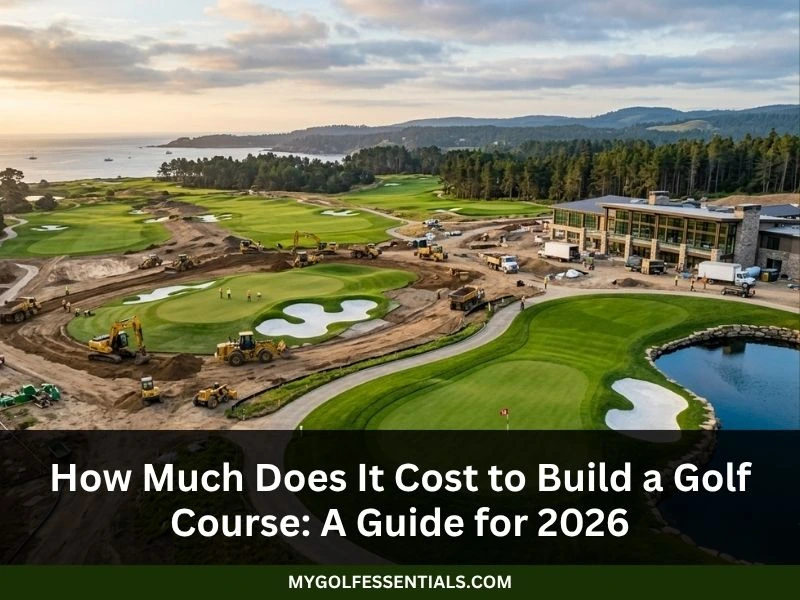
How Much Does It Cost to Build a Golf Course: A Guide for 2026
March 27, 2026 · By Justin Wilcox
Building a golf course is a massive investment, and the costs can vary widely depending on the type, location, and features you choose. Whether you’re considering a small 9-hole course, a full 18-hole public course, or a luxury championship resort, knowing the factors that drive expenses is essential.
In this guide for 2026, we break down how much it really costs to build a golf course, from land and design to construction, maintenance, and hidden expenses, so you can plan your project with confidence. Read on to get the full picture and make informed decisions before taking the first swing.
How Much Does It Cost to Build a Golf Course?
Building a golf course is a major investment, with costs varying widely depending on the size, type, and location of the project. Overall, you can expect the total cost to range from $2 million on the low end for a smaller course to $25 million or more for luxury or championship-level builds. One of the biggest drivers of this cost is land acquisition, which can account for 40–50% of the total budget, especially if the land is in a25 Exciting New Golf Courses Scheduled to Open in 2025 prime location.
Cost by Course Type
- Executive / 9-hole course: Range around $2M – $7M. Ideal for smaller properties or community-focused courses, these courses require less land and fewer amenities.
- Standard public 18-hole course: Range around $5M – $8M. The most common type of course, designed for general public access, balancing playability and cost.
- Semi-private course: Range around $8M – $12M. Offers limited memberships along with public play, often with upgraded amenities and better maintenance.
- Private/luxury course: Range around $12M – $25M. High-end courses with exclusive memberships, premium facilities, and top-quality turf and design.
- Championship or resort course: Range around $25M+. These courses are built to host professional tournaments or attract luxury resort guests, featuring complex designs, advanced irrigation, and extensive landscaping.
- Mini golf course: Range around $50,000 – $250,000. Smaller-scale entertainment-focused courses, typically for recreational or family-friendly venues, are far cheaper to build than traditional golf courses.
Cost to Build a Golf Course: Full Breakdown
Building a golf course involves multiple cost components, each contributing significantly to the total budget. Here’s a detailed look at what goes into constructing a full-scale golf course.
1. Land Acquisition
Land is almost always the single biggest expense in any golf course project. A standard 18-hole course needs a minimum of 150 to 200 acres, including playing corridors, a clubhouse, parking, and maintenance areas. A 9-hole course can work on 75 to 100 acres.
Cost per acre varies widely. Rural farmland runs $5,000 to $20,000 per acre, suburban land ranges from $20,000 to $65,000, and urban or coastal markets can exceed $100,000 per acre. At 150 acres, even mid-range land puts your land cost alone at $3 million, which is why land typically accounts for 40 to 50 percent of your total budget.
Before purchasing, confirm the land is correctly zoned for a golf course. If the site contains wetlands or protected habitats, you will need additional permits and environmental studies, which add both time and cost to your project.
2. Design and Architecture Fees
A golf course architect handles the complete layout of your course, including routing holes, designing greens and bunkers, selecting turfgrass, managing drainage, and securing permits. Their work sets the foundation for everything that follows.
Fees typically range from $50,000 for a simple local course to over $200,000 for a full championship design. Most architects charge either a flat project fee or 3 to 5 percent of total construction costs. For a standard 18-hole project, budget between $75,000 and $150,000.
Skipping a qualified architect is one of the most expensive mistakes a developer can make. Poor routing causes drainage problems. Bad green design creates unpopular holes. A course that plays poorly will struggle to attract members, and fixing design mistakes after construction costs far more than hiring the right person upfront.
3. Site Preparation and Land Development
Before any construction begins, the land needs to be cleared, graded, and shaped to match the course design. This includes removing trees and vegetation, moving soil to create proper elevations, installing storm water systems, and excavating any lakes or ponds in the design.
On workable land, site preparation typically costs between $500,000 and $1 million. However, several conditions push costs higher, like dense forests that need clearing, low-lying ground that requires fill material, rocky terrain that requires blasting, steep slopes that need heavy cut-and-fill work, or poor soil that needs amendments before turf can grow.
Flat, open farmland with good natural drainage is always the cheapest site to prepare. The more challenging the terrain, the more you will spend before a single hole takes shape.
4. Irrigation and Drainage Systems
Water management is one of the most critical systems on any golf course, and it is largely invisible once installed. A full irrigation system includes miles of underground piping, remote-controlled sprinkler heads, a central pump station, and a computerized control system. On an 18-hole course, the piping network alone can stretch over 25 miles. Irrigation costs roughly $25,000 per hole, with the full system approaching $1 million. In some regions, securing water rights or drilling an on-site well adds another $50,000 to $150,000.
Drainage works alongside irrigation to remove excess rainwater quickly. Common methods include French drains, catch basins, and slotted pipe networks beneath greens and fairways. Bunkers need their own drainage too. Drainage installation runs $30,000 to $40,000 per hole, bringing the total drainage budget to roughly $540,000 to $720,000 for 18 holes.
5. Turf, Grass, and Vegetation
Grass is what golfers actually play on, and quality turf is one of the larger line items in your build. Greens use bentgrass or Bermuda grass and cost $8 to $12 per square foot installed.
With each green averaging 6,000 square feet, greens turf alone can exceed $1 million across 18 holes. Fairways and tee boxes use tougher grasses like Zoysia or ryegrass at $2 to $4 per square foot, budget can go up at least $500,000 for these areas. Rough areas use less expensive grasses like fescue at $1 to $2 per square foot, adding another $200,000 or more.
Beyond grass, landscaping adds real character to a course. Trees, shrubs, native grass areas, and flower beds near the clubhouse typically add $50,000 to $150,000 to your vegetation budget.
6. Course Shaping and Feature Construction
This is where the architect’s design comes to life on the ground. Tee boxes need to be perfectly level and firm. Greens require precise contouring to create the breaks and slopes that make putting challenging. Most quality greens are built using the USGA method, an engineered layered profile of gravel, drainage pipe, sand, and peat, which adds cost but produces surfaces that last for decades.
Bunkers need careful shaping and their own drainage systems beneath the sand. Otherwise, they flood and become unplayable. Lakes and ponds require full excavation, bank shaping, and sometimes lining, adding $200,000 to $500,000 depending on scale. Fairway mounds and undulations are also sculpted during this phase. These contouring details are what give a course its visual character and strategic depth.
7. Cart Paths
A full cart path network covers 6 to 8 miles on an 18-hole course, connecting every tee, fairway, green, and support area on the property. Asphalt is the most common and cost-effective material. Concrete costs more upfront but lasts longer and suits premium private courses. Crushed gravel is a lower-cost option used on some budget public courses but requires more ongoing maintenance.
For a full asphalt network, budget between $500,000 and $800,000. Concrete paths can push past $1 million depending on total length and terrain. Steep or winding sections take more material and labor to install, so hilly sites will sit at the top of that range. Cart paths are easy to underestimate during budgeting, but they are a non-negotiable part of any playable golf course.
8. Clubhouse and Amenities
The clubhouse is where golfers check in, eat, and form their lasting impression of your course, so what you build here matters.
Construction costs range from $300 to $400 per square foot for a basic facility to $500 to $700 per square foot for a full-service clubhouse with a restaurant, bar, and premium finishes. A modest 5,000 square foot building runs around $1.5 million, while a large premium facility can reach $8 to $10 million.
A pro shop, driving range, and practice green are strong revenue drivers and typically add $500,000 to $1.2 million combined. A paved parking lot for 150 to 250 cars costs $100,000 to $300,000. On-course restroom facilities add another $50,000 to $150,000. These details are easy to overlook, but they affect the daily experience of every golfer on your property.
9. Maintenance Equipment and Facility
Keeping a golf course in good condition requires a full fleet of specialized equipment, like greens mowers, fairway mowers, rough mowers, aerators, topdressers, fertilizer spreaders, and utility vehicles. A complete equipment package for an 18-hole course typically costs $500,000 to $1.5 million, depending on whether you buy new or used and which brands you choose.
You also need a dedicated maintenance facility to house and service all of it. A proper building includes covered storage bays, a repair workshop, chemical storage areas built to safety codes, and staff facilities for your crew. Expect to spend $300,000 to $800,000 on this building. It is easy to treat this as an afterthought, but poor equipment storage leads to faster machine wear, higher repair costs, and a maintenance operation that struggles to keep the course in shape.
How Location Affects the Cost to Build a Golf Course
The cost to build a golf course in the United States varies significantly depending on the region and location of the property. Factors like land prices, labor costs, climate, and local regulations all play a role in the final budget.
Regional Cost Breakdown
- Southeast: States like Florida, Georgia, and South Carolina offer relatively affordable land compared to urban areas, but labor costs can vary. Courses here often need robust drainage systems due to heavy rainfall, which can increase construction costs.
- Southwest: Arizona, Texas, and Nevada typically require more investment in irrigation because of the desert climate. Water infrastructure can add significant cost, though land may be less expensive in rural areas.
- Midwest: States like Ohio, Illinois, and Kansas generally have lower land and labor costs. Flat terrain makes site preparation simpler, keeping construction costs moderate.
- Northeast: New York, New Jersey, and Massachusetts have some of the highest land prices, especially near urban centers. Labor costs are also higher, and environmental regulations can add to construction expenses.
- West Coast: California, Oregon, and Washington often have premium land prices and strict environmental regulations. Courses here may require extensive grading, irrigation, and drainage work, making construction more expensive overall.
Why Land Prices and Labor Costs Differ
Land prices depend on proximity to urban centers, tourism demand, and natural beauty. Labor costs vary by region based on local wages and availability of skilled construction and turf management professionals.
Urban vs. Rural Tradeoffs
| Urban locations: | Rural locations: |
| Higher land and labor costs, more zoning and environmental restrictions, but often easier access to customers and revenue streams. | Lower land and labor costs, fewer regulations, and more space for creative course design, but attracting players and memberships may be more challenging. |
Location decisions can make a multi-million-dollar difference in your overall golf course budget, so careful regional analysis is critical before purchasing land.
Cost Per Hole: A Simple Way to Budget
One of the easiest ways to estimate the cost of building a golf course is by calculating the average cost per hole. This method gives a quick benchmark to check whether your overall budget is realistic.
Average Cost Per Hole
- Budget course: $250,000 – $400,000 per hole
Typically smaller courses or 9-hole executive layouts with basic amenities. - Mid-range course: $400,000 – $700,000 per hole
Standard public or semi-private 18-hole courses with quality turf, moderate landscaping, and standard infrastructure. - Premium/luxury course: $700,000 – $1.5M+ per hole
Private, championship, or resort-level courses with advanced design, extensive landscaping, water hazards, and high-end amenities.
Using Cost Per Hole as a Sanity Check
By multiplying the per-hole cost by the total number of holes, you can quickly see if your projected budget aligns with industry standards. For example, an 18-hole mid-range course at $500,000 per hole would roughly cost $9 million, helping you validate your planning.
Why This Number Varies
Several factors influence per-hole cost:
- Course features: Water hazards, bunkers, and complex landscaping increase expenses.
- Terrain: Rocky, hilly, or marshy land requires more grading and earthwork.
- Location: Land prices, labor costs, and regional regulations can raise or lower costs significantly.
Using a per-hole calculation provides a useful starting point, but always account for the full breakdown of construction and operational costs for a more accurate budget.
Public vs. Private Golf Course: Cost Differences
Golf courses can be public or private, and the type you choose greatly affects both construction and operational costs. Public courses focus on accessibility and affordability, while private courses( like Pine Valley Golf Club) emphasize luxury and exclusivity.
Key Differences
| Feature / Factor | Public Courses | Private Courses |
| Purpose | Accessible to the general public | Exclusive memberships |
| Construction Budget | Moderate ($5M – $8M for 18 holes) | High ($12M – $25M+ for 18 holes) |
| Amenities | Basic clubhouse, practice area | Luxury clubhouse, spa, pro shop, events |
| Maintenance Level | Standard turf care | High-end turf, landscaping, and facilities |
| Revenue Sources | Green fees, events | Membership fees, events, high-end services |
| Course Features | Simpler bunkers, fewer hazards | Advanced bunkers, water features, premium design |
| Accessibility | Open to all, more foot traffic | Limited access, exclusive memberships |
What This Means for Cost
- Public courses prioritize keeping costs down, using simpler designs, fewer premium features, and lower maintenance. This makes them ideal for communities and municipal projects.
- Private courses focus on providing a luxury experience with high-end design, premium turf, and exclusive facilities, which drives costs significantly higher.
By understanding these priorities, developers can align budget, design, and amenities with the type of course they plan to build, ensuring a balance between investment and expected revenue.
Annual Golf Course Maintenance Costs
Building a golf course is just the beginning. Annual maintenance is a significant ongoing expense that can impact the overall profitability of your investment.
Key Components of Maintenance
- Turf Care: Keeping the greens, fairways, tees, and roughs in top condition requires fertilizers, pesticides, aeration, and regular mowing. High-quality turf management ensures consistent playability and prevents costly turf damage.
- Irrigation and Water Costs: Maintaining healthy turf depends heavily on a reliable irrigation system. Water consumption, pumping, and system upkeep contribute a major portion of annual costs, particularly in drier regions or courses with extensive landscaping.
- Staffing: Golf courses typically employ 30–50 full-time staff, including greenskeepers, irrigation specialists, maintenance workers, and supervisory personnel. Labor costs vary by region but represent a large portion of the yearly budget.
Total Annual Maintenance
For a standard 18-hole course, annual maintenance costs typically range from $500,000 to $1M or more, depending on the size, location, course type, and level of upkeep.
Proper maintenance is essential not only to preserve course quality but also to protect your investment and ensure a positive player experience, which in turn affects revenue and long-term success.
Hidden Costs Most Developers Overlook
While major construction expenses often get the most attention, many developers underestimate hidden costs that can significantly impact the total budget.
1. Pre-Planning, Permits, and Environmental Impact Studies
Before breaking ground, courses may require zoning approvals, environmental impact studies, and permits. These processes can take time and money, especially if the property is near protected land, wetlands, or sensitive ecosystems. Skipping or underestimating this step can lead to delays and fines.
2. Weather Delays and Seasonal Construction Limits
Construction schedules are often affected by rain, snow, or extreme temperatures. Seasonal limitations can extend the timeline, increasing labor and equipment costs. Courses in regions with harsh winters or heavy rainfall need contingency plans for construction delays.
3. Insurance, Property Taxes, and Legal Fees
Insurance coverage for construction and operations is essential, but it adds to the budget. Additionally, property taxes, legal fees, and regulatory compliance costs can be higher than expected, particularly for large parcels of land or luxury developments.
4. Marketing and Branding at Launch
Launching a new golf course requires marketing, promotions, and branding to attract members and players. Costs include advertising, website development, signage, and events to establish the course’s presence in the market. Neglecting this can delay membership growth and revenue generation.
Tip: Accounting for these hidden costs from the start can prevent budget overruns and ensure a smoother construction and launch process.
Key Factors That Drive the Final Cost Up or Down
Several factors can significantly affect the total cost of building a golf course. Being aware of these elements helps developers plan more accurately and avoid unexpected expenses.
1. Terrain and Soil Conditions
The natural land you build on plays a major role in costs. Rocky, hilly, or marshy terrain requires more earthwork, grading, and drainage solutions, which can increase expenses. Conversely, flat, well-drained land reduces construction complexity and cost.
2. Climate and Water Availability
Courses in dry or desert regions need extensive irrigation systems to maintain healthy turf, which adds to both construction and long-term maintenance costs. Areas with abundant rainfall may reduce irrigation needs but could require enhanced drainage systems to prevent waterlogging.
3. Permits and Environmental Approvals
If the property includes wetlands, protected land, or sensitive ecosystems, securing permits and environmental approvals can add time and cost. Compliance with local, state, and federal regulations is essential to avoid fines or construction delays.
4. Regional Labor and Material Prices
Labor rates and material costs differ across regions. Urban areas or states with higher wages increase construction costs, while regions with lower labor costs or easier access to materials can save money. Local availability of skilled workers and construction equipment also influences timelines and budgets.
Evaluating these factors early in the planning phase helps developers adjust budgets, select the right location, and make informed design choices.
How to Finance a Golf Course Build
Building a golf course is a major financial undertaking, and securing the right funding is crucial. There are several ways to finance your project, depending on your goals, scale, and available resources.
1. Traditional Bank Loans and SBA Loans
Many developers use bank loans or Small Business Administration (SBA) loans to cover construction costs. These options provide structured repayment plans, but lenders typically require a solid business plan, detailed budget, and proof of experience in managing large projects.
2. Private Investors and Equity Partnerships
Partnering with private investors or forming equity partnerships is another common approach. Investors provide capital in exchange for a share of ownership or revenue. This can reduce the immediate financial burden but may require sharing control over business decisions.
3. Selling Residential Subdivisions to Offset Land Cost
Some developers sell off portions of the property for residential or commercial development to offset the cost of land. This strategy can significantly reduce upfront expenses and make larger projects more financially feasible.
4. What Lenders Want to See
Regardless of financing method, lenders and investors typically want:
- A detailed business plan showing projected revenue and operational strategy
- Revenue projections based on membership, green fees, events, and ancillary services
- Proof of experience or a management team capable of running a successful course
Tip: Combining multiple funding sources (such as bank loans, investors, and creative land strategies) can make financing large-scale golf course projects more feasible while spreading risk.
Ways to Keep Costs Down Without Cutting Quality
Building a golf course doesn’t always mean breaking the budget. With careful planning and smart decisions, you can reduce costs while maintaining high-quality standards.
- Work with Natural Terrain: Design your course to fit the existing landscape. Using natural hills, valleys, and water features reduces the need for extensive earthmoving, grading, and drainage systems, saving both time and money.
- Phase the Construction: Consider building the course in phases, such as starting with 9 holes and expanding to 18 later. This approach allows you to generate revenue sooner while spreading out construction costs over time.
- Choose the Right Construction Season: Building during favorable weather months helps avoid delays caused by rain, snow, or extreme heat. Seasonal planning keeps labor and equipment costs lower and prevents schedule overruns.
- Get Multiple Contractor Bids: Request bids from several contractors for every part of the project. Competitive pricing ensures you get the best value for quality work and can reveal opportunities for cost savings.
- Use Smart Irrigation Technology: Investing in efficient irrigation systems, such as automated sprinklers and soil moisture sensors, reduces long-term water usage and maintenance costs. While upfront costs may be higher, smart irrigation saves money over the life of the course.
Tip: Combining these strategies allows you to control costs without compromising playability, aesthetics, or player experience.
How Long Does It Take to Build a Golf Course?
Building a golf course is a multi-step process that typically spans several years from planning to opening. The timeline depends on course size, location, climate, and complexity of design.
1. Design Phase
The design phase usually takes 3 to 6 months, during which a golf course architect plans the layout, hole sequence, hazards, greens, and fairways. This stage also includes reviewing environmental considerations, zoning approvals, and budget planning.
2. Construction Timeline
Once design is finalized, construction for an 18-hole course generally takes 18–24 months. This includes:
- Land clearing and grading
- Installation of irrigation and drainage systems
- Shaping greens, bunkers, tee boxes, and hazards
- Building cart paths, clubhouse, and other facilities
3. Grow-In Period for Turf
After installation, the turf needs time to establish before the course can open to players. This grow-in period typically lasts 6–12 months, depending on the grass type, climate, and maintenance practices.
4. Total Project Timeline
From land purchase to opening day, most 18-hole courses take about 2.5 to 4 years to complete. Phased construction or smaller courses may shorten this timeline, while large resort or championship courses (like Augusta National Golf Course) may take longer due to added features and landscaping.
Tip: Planning for the full timeline upfront ensures realistic budgeting and helps manage expectations for investors, members, and staff.
Is Building a Golf Course Worth the Investment?
Building a golf course can be a profitable venture, but success depends on careful planning, location, and management. Understanding revenue streams and key factors that influence profitability is essential before committing millions to a project.
Revenue Streams
Golf courses can generate income from multiple sources:
- Green fees: Daily play charges for non-members
- Memberships: Recurring revenue from annual or seasonal members
- Food & Beverage (F&B): Restaurants, bars, and catering services
- Events and tournaments: Corporate events, weddings, and charity tournaments
Average Annual Revenue
A standard 18-hole course can generate approximately $1.5 million per year in revenue, though this figure varies widely based on location, course type, and management efficiency. Private and resort courses often earn more due to higher membership fees and premium amenities.
Impact on Surrounding Property Values
Well-maintained golf courses can increase the value of nearby properties, making the surrounding area more attractive for residential and commercial development. This effect can benefit both the course owner and local investors.
Key Factors That Make a Course Profitable
- Location: Proximity to population centers and tourist destinations
- Course quality: Well-designed holes, high-quality turf, and attractive landscaping
- Effective management: Skilled staff, marketing, and maintenance practices
- Diversified revenue streams: Combining memberships, green fees, F&B, and events
Tip: While the upfront investment is high, a well-planned and managed golf course can deliver long-term returns and create a valuable community asset.
Conclusion
Building a golf course is a complex, multi-million-dollar project that requires careful planning, smart budgeting, and attention to both design and location. From land acquisition and construction to maintenance and hidden costs, every decision affects your total investment.
By understanding the full breakdown of expenses, considering regional differences, and exploring financing options, developers can make informed choices that balance quality, playability, and profitability. While the upfront costs are significant, a well-designed and well-managed golf course can provide long-term revenue, enhance surrounding property values, and become a lasting asset for the community.
With the right strategy, building a golf course in 2026 can be both a rewarding and financially viable endeavor.
Additional Resources:
- American Society of Golf Course Architects (ASGCA)
- Golf Course Superintendents Association of America (GCSAA)
- National Golf Foundation (NGF)
Key Takeaways
- The total cost to build a golf course ranges widely, from $2 million for a small 9-hole course to $25 million or more for luxury or championship-level courses.
- Land acquisition is typically the largest single expense, accounting for 40–50% of the total budget.
- Golf course architects play a crucial role, and fees can range from $50,000 to over $200,000 depending on course complexity.
- Site preparation, including clearing, grading, and shaping, can cost $500,000 to $1 million or more, depending on terrain and soil conditions.
- Irrigation and drainage systems are critical for course playability, with irrigation costing roughly $25,000 per hole and drainage $30,000–$40,000 per hole.
- Turf and vegetation expenses vary by quality and area, with greens costing $8–$12 per square foot and fairways $2–$4 per square foot.
- The choice between public and private courses significantly impacts construction and maintenance costs, with private courses emphasizing luxury and exclusivity.
- Annual maintenance costs for an 18-hole course typically range from $500,000 to $1 million, covering staff, turf care, and water usage.
- Hidden costs such as permits, environmental studies, insurance, and marketing can add significantly to the overall budget if not planned for.
- Location, terrain, climate, and regional labor costs can all drive costs up or down, making careful site selection essential for budget management.
FAQs
What permits and approvals are required to build a golf course?
Most projects require zoning approval, environmental impact studies, drainage permits, and storm water management clearances. If the site contains wetlands or protected land, expect additional environmental reviews. In western states, water rights approval is also required before you can irrigate. The full permitting process typically costs $100,000 to $500,000 and can take several months to over a year. Bringing your architect in early helps, as permit applications are usually part of their standard scope of work.
Can I build a golf course on my own property?
Yes, but it depends on your land size, zoning, and intended use. A private personal course for your own use has far fewer regulatory hurdles than a commercial operation. You need a minimum of 75 to 100 acres for a basic 9-hole layout, and the land must be appropriately zoned. If you plan to charge green fees or sell memberships, full commercial permits apply. For a simple personal course on rural land with no commercial intent, costs can start as low as $500,000 to $2 million depending on the features you include.