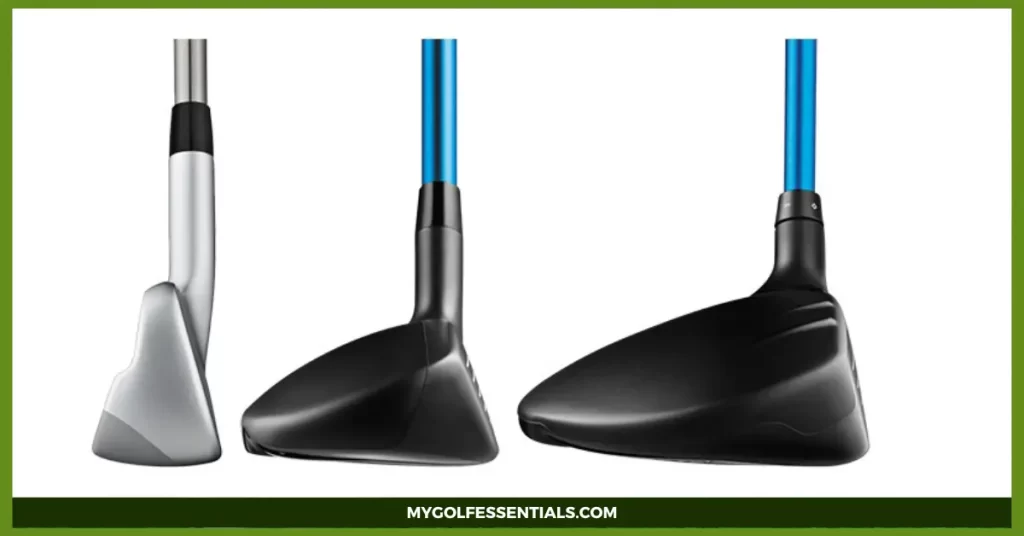

Choosing the right club for those long approach shots can make all the difference between landing on the green or ending up in the rough. Should you rely on a fairway wood, reach for a hybrid, or stick with a long iron? Each option has its strengths. And knowing which suits your game can help you play smarter and score lower.
In this guide, we’ll break down how these clubs differ, who benefits most from each, and how to build a balanced setup that gives you confidence from any lie. Keep reading to find out what really works best for your swing.
What Are Fairway Woods?
Fairway woods are clubs designed to hit the ball long distances, usually from the fairway or off the tee on shorter par 4s and long par 3s. They have larger clubheads and longer shafts than hybrids or irons, allowing golfers to generate more clubhead speed and distance.
A fairway wood typically comes in several lofts, like a 3-wood (around 15°), 5-wood (around 18°), or 7-wood (around 21°). The lower the loft, the farther the ball will travel, but with a lower launch angle.
- Role on the course: Fairway woods are best when you need maximum distance without using a driver. They’re reliable off the tee on tight holes and great for reaching long par 5s in two shots. The wide sole also helps the club glide through short grass, making it useful from the fairway.
What Are Hybrids?
Hybrids combine the best features of both woods and irons. They have a smaller head than a fairway wood but more forgiveness than a long iron. The name “hybrid” comes from their blended design, as it contains a rounded head shape of a wood with the shorter shaft and lie angle of an iron.
They usually replace the harder-to-hit long irons like the 3-iron or 4-iron. Hybrids are designed to launch the ball higher and land it softly on the green, even from tricky lies.
- Role on the course: Hybrids are extremely versatile. They perform well from the rough, fairway, or even light sand. Many golfers use them for approach shots into long par 4s, for advancing the ball on long par 5s, or for controlled tee shots when accuracy matters more than distance.
What Are Long Irons?
Long irons (typically the 2-iron through 4-iron) are clubs with less loft and a thinner clubface. They’re built for low, penetrating shots and maximum control over trajectory. However, they’re the hardest of the three types to hit consistently because of their small sweet spot and low launch angle.
- Role on the course: Long irons are favored by advanced players who want to shape shots or keep the ball flight low, especially in windy conditions. They’re often used for controlled tee shots or approach shots where precision is more important than carry distance. Skilled players also use them to “punch” the ball under trees or into greens that require a running shot.
Typical Uses on the Course for Each Club
| Club Type | Best Situations | Shot Characteristics |
| Fairway Woods | Off the tee on tight holes, long par 5s, sweeping fairway shots | Long carry, lower spin, moderate height |
| Hybrids | From the rough, fairway, or fairway bunkers; long approach shots | High launch, soft landing, forgiving |
| Long Irons | Windy conditions, tight fairways, stinger shots | Low launch, high control, less forgiveness |
Each club type fills a specific gap in your game. Fairway woods offer distance, hybrids bring versatility and forgiveness, and long irons provide control and precision for skilled players.
Fairway Woods vs. Hybrids vs. Long Irons: How they differ in performance
Choosing between fairway woods, hybrids, and long irons depends largely on how each performs in different parts of the game. While all three are designed to cover longer distances, their characteristics in launch, distance, forgiveness, and playability can vary greatly.
Below is a detailed comparison to help you understand how each type fits into your playing style and course conditions.
Launch and Ball Flight Differences
- Fairway Woods: Fairway woods generally produce a medium to high launch with a more penetrating ball flight. Their larger clubheads and shallow faces make it easier to sweep the ball off the turf rather than hit down on it. A 3-wood or 5-wood typically launches lower than a hybrid but with more carry when struck well. This makes them ideal for players looking to hit long shots that stay under the wind but still travel a considerable distance.
- Hybrids: Hybrids are designed to help golfers achieve a higher launch with less effort. The center of gravity (CG) is positioned low and deep, which promotes an easy, towering flight that lands softly on the green. This high launch makes hybrids excellent for approach shots into long par 4s or for carrying hazards such as bunkers or water. For players who struggle to get the ball airborne with long irons, hybrids offer a much more forgiving and consistent launch angle.
- Long Irons: Long irons produce the lowest launch and most penetrating trajectory among the three. Skilled players favor them because they can shape shots and control the height of the ball more precisely. However, for average golfers, this lower launch often results in shots that fall short or roll excessively, especially if contact isn’t perfect. In windy conditions, though, long irons shine by keeping the ball flight down and stable.
Distance and Roll-Out Differences
- Fairway Woods: These clubs are built for maximum distance. Thanks to their larger faces and longer shafts, they generate higher ball speeds, especially when hit from the tee or a tight fairway. Fairway woods tend to carry farther and roll more upon landing due to their lower spin rates. A well-struck 3-wood can sometimes rival a driver for distance, making it a valuable option for players who want long shots with better control.
- Hybrids: Hybrids fill the distance gap between fairway woods and long irons. They deliver a balance of carry distance and stopping power, producing a higher flight with moderate roll-out. Because of their higher spin rates compared to woods, hybrids stop more quickly on the greens, making them ideal for approach shots or holding firm greens.
- Long Irons: Long irons provide less carry distance but more roll once the ball lands. This makes them useful for hitting low, running shots that can chase up to the green. The total distance (carry plus roll) can be comparable to hybrids. But the way the ball travels and reacts on landing is quite different, more roll, less control.
Forgiveness and Ease of Contact
- Fairway Woods: While fairway woods offer distance, they are less forgiving than hybrids, especially from uneven lies. Their longer shafts make consistent contact challenging for many golfers. However, off the tee or from clean fairway lies, they are reliable and can deliver excellent results with solid contact.
- Hybrids: Hybrids are the most forgiving of the three. Their wider soles, shorter shafts, and balanced weight distribution make it easier to achieve solid contact, even on mishits. The design helps the club glide through rough or tight lies without digging into the ground. For mid to high handicappers, hybrids can dramatically improve consistency and confidence in long-range shots.
- Long Irons: Long irons require precision. Their smaller clubfaces and minimal offset leave little room for error, and mishits often result in low, weak shots. Only players with faster swing speeds and consistent ball-striking skills tend to use long irons effectively. For most golfers, they’re the hardest to hit well but provide unmatched feedback and control when struck cleanly.
Playability from Different Lies (Fairway, Rough, Tee)
- From the Fairway: Fairway woods work well on tight fairways when the ball is sitting cleanly. Their sweeping motion helps maximize distance. Hybrids also perform well here, launching easily and providing a softer landing. Long irons, on the other hand, are best used by players who can make precise contact, as they require a descending strike to get the ball airborne.
- From the Rough: Hybrids are the clear winners from the rough. Their rounded heads and lower centers of gravity allow them to cut through thick grass and launch the ball high. Fairway woods tend to struggle if the ball is buried, as their large faces can catch too much grass before impact. Long irons are the most difficult to use from the rough, often producing shots that come out low and short.
- From the Tee: Fairway woods and long irons are both dependable off the tee. Fairway woods offer distance with more forgiveness than a driver, while long irons provide control and a lower flight that’s useful in windy conditions. Hybrids can also be a great choice for tee shots on short par 4s or tight driving holes where accuracy matters most.
In short, fairway woods excel in distance, hybrids provide versatility and forgiveness, and long irons deliver precision and control for skilled players. Knowing how each club performs in different conditions helps you build a balanced set that matches your playing style and course strategy.
Which Types of Golfers Benefit from Each
Not every golfer will get the same results from fairway woods, hybrids, or long irons. The right club choice depends on your skill level, swing speed, and the kinds of shots you typically face on the course.
Here’s a detailed look at which golfers benefit most from each type of club, along with practical examples of when they shine.
1. For High Swing Speed / Low Handicap Players
Best Fit: Long Irons and Fairway Woods
Golfers with higher swing speeds, typically low handicappers or professionals, can generate the clubhead speed needed to strike long irons effectively. Their consistent ball-striking skills help them control launch angle, spin, and trajectory. Long irons allow them to shape shots both ways (fade or draw) and keep the ball flight low when needed.
Fairway woods also suit this group because they can deliver high ball speeds and long distances with precision. A low-handicap player might use a 3-wood off the tee or on a long par 5 when they need both distance and control.
Why It Works:
- Fast swing speeds produce enough lift for low-lofted irons.
- Better players can manage spin and ball flight.
- Long irons provide better workability for advanced shot shaping.
- Fairway woods deliver dependable distance with control off the tee or fairway.
Example: A scratch golfer might use a 3-iron for a low “stinger” shot into the wind, or a 5-wood to reach a par 5 in two shots.
2. For Mid Handicap / Moderate Swing Speed
Best Fit: Hybrids and Fairway Woods
Players with mid-range swing speeds often find the perfect balance using a mix of hybrids and fairway woods. Hybrids give them the ability to launch the ball high and land it softly without needing perfect contact, while fairway woods provide a dependable option for distance off the tee or fairway.
Most mid-handicappers benefit from replacing their long irons (like a 3-iron or 4-iron) with hybrids, as they’re far easier to hit consistently.
Why It Works:
- Hybrids make it easier to achieve consistent launch and distance.
- Fairway woods help fill the distance gap between hybrids and driver.
- Provides versatility for both approach and tee shots.
- Reduces mishits caused by thin or fat iron strikes.
Example: A 12-handicap golfer might carry a 3-wood for long shots and two hybrids (4H and 5H) to replace their long irons, giving them more confidence from the rough or fairway.
3. For Higher Handicap / Slower Swing Speed
Best Fit: Hybrids (and Higher Lofted Fairway Woods)
High-handicap players or golfers with slower swing speeds often struggle to get the ball airborne with long irons. Hybrids are the most forgiving option, helping them launch the ball easily with less effort. Many also benefit from using higher-lofted fairway woods (like a 7-wood or 9-wood) instead of traditional long irons.
These clubs are designed to help the ball climb into the air and stay straight, reducing sidespin and keeping shots more consistent.
Why It Works:
- Hybrids increase launch and add carry distance even on off-center hits.
- Larger sweet spots provide more forgiveness and confidence.
- Lightweight shafts and higher lofts help slower swingers get better results.
- Easier to use from rough, fairway, or even fairway bunkers.
Example: A senior golfer or beginner might use a 5-wood for distance and a 4-hybrid for long approach shots, completely skipping long irons for simplicity and consistency.
Specific Scenarios (Wind, Tight Lies, Narrow Fairways)
Different course situations can also affect which club performs best:
In the Wind:
- Long irons excel because of their low ball flight and reduced spin, helping the ball stay under the wind.
- Hybrids launch higher and may struggle in strong headwinds unless controlled properly.
Tight Lies:
- Fairway woods with shallow faces and smooth soles can sweep the ball cleanly from tight lies.
- Hybrids also perform well due to their compact heads and turf interaction.
- Long irons require precise contact. Only skilled players can consistently strike clean shots here.
Narrow Fairways or Tight Tee Shots:
- Hybrids and long irons are popular off the tee for accuracy.
- A 3-wood or 5-wood can be a good compromise when you still want distance but need more control than a driver.
From the Rough:
- Hybrids are the clear winner. Their rounded sole design cuts through grass easily, helping the ball pop up quickly.
- Fairway woods tend to get caught in thicker rough, while long irons can struggle to generate height.
Summary:
- Fairway Woods: Ideal for strong players and long-distance tee shots.
- Hybrids: Best for mid to high handicappers who want easy launch and versatility.
- Long Irons: Suited for advanced players seeking precision, low flight, and shot control.
By matching your club selection to your swing speed and playing style, you’ll fill the distance gaps in your bag more effectively and play with more confidence from any lie on the course.
How to Decide What Fits Your Game
Picking the right mix of fairway woods, hybrids, and long irons isn’t about following a one-size-fits-all formula. It’s about matching your clubs to your swing, skill level, and the kinds of shots you play most often. The goal is to build a set that gives you consistent distance gaps, reliable launch, and confidence in every situation on the course.
Here’s how to figure out which setup suits your game best:
1. Assess Your Swing Speed and Contact Quality
Your swing speed has a huge influence on how well you can hit different clubs.
- High Swing Speed (95+ mph with driver): You can generate enough power to make long irons and lower-lofted fairway woods perform well. You’ll likely benefit from clubs that offer control rather than extra help launching the ball.
- Moderate Swing Speed (80–95 mph): Hybrids and mid-lofted fairway woods (like 5-woods or 7-woods) often deliver better carry and consistency. They make it easier to achieve optimal launch without sacrificing distance.
- Slow Swing Speed (Below 80 mph): Hybrids are almost always the better choice here. They’re designed to help slower swingers get the ball airborne quickly and maximize carry distance.
Also, take note of your contact quality. If you often hit the ball thin or fat with long irons, it’s a strong sign that hybrids or fairway woods will serve you better. Hybrids, in particular, are more forgiving because their design helps lift the ball even on imperfect strikes.
Pro Tip: Many golf shops and fitting centers can measure your swing speed quickly using a launch monitor. Knowing your exact number helps match you with the right shaft flex and club type.
2. Track Gaps and Overlaps in Distances Between Clubs
Every club in your bag should serve a purpose. If two clubs travel nearly the same distance, one of them might be unnecessary.
Track your carry distance (the distance the ball flies before hitting the ground) with each club. You can do this using:
- A launch monitor during a fitting session.
- A GPS or rangefinder app on the course.
- Notes from practice sessions at the driving range.
Ideally, each club should have a consistent 10–15 yard gap between them. If your 3-hybrid and 4-iron both travel about the same distance, for example, it might be better to drop one and add another club to fill a different gap (maybe a 7-wood or 5-hybrid).
The goal: Create a balanced set that covers every yardage without unnecessary overlap.
3. Test Clubs: How Fairway Woods, Hybrids, and Long Irons Feel for You
Even with all the data in the world, the best test is how a club feels in your hands. Visit a golf store or club-fitting center and try hitting several clubs under similar conditions.
When testing:
- Focus on launch and consistency, not just distance.
- Pay attention to how confident you feel over each shot.
- Try each club from different lies (fairway, rough, and off a tee) to see which performs best across situations.
- Note the trajectory and landing angle, whether you are getting enough height and control to hold greens.
Many players find that hybrids feel more natural because of their shorter shafts and balanced weight, while others prefer the solid feedback of long irons or the smooth glide of fairway woods. Your comfort level matters more than brand or club number.
4. Consider Course Types and Typical Shots You Hit
The kind of course you play most often should also guide your choice.
- Open, Windy Courses: Long irons can help keep the ball flight down and steady. Fairway woods with lower lofts are also useful for distance while maintaining control.
- Tree-Lined or Tight Fairways: Hybrids and higher-lofted woods are ideal for accuracy and forgiveness. They make it easier to hit controlled tee shots without risking big misses.
- Courses with Thick Rough: Hybrids are clear winners here, their rounded soles and deeper centers of gravity help you get the ball up and out cleanly.
- Soft or Elevated Greens: Hybrids and fairway woods that produce higher launch angles help the ball land softly and hold the green better than long irons.
Think about the shots you face most often. If you frequently have long approaches into par 4s or need to carry water hazards, a hybrid or fairway wood is more practical. If you often play in windy conditions or need to hit low, running approach shots, a long iron could be a valuable tool.
In short:
- Analyze your swing speed to understand what lofts and club types you can handle.
- Track distance gaps to avoid overlap and build a balanced set.
- Test and feel each option because comfort and consistency matter most.
- Match your clubs to the course conditions and shot types you face regularly.
When you take the time to fit clubs to your personal game instead of copying what others use, you’ll hit more consistent shots, score better, and enjoy playing even more.
Golf Bag Building Suggestions
Building the perfect golf bag is about more than just filling the slots with random clubs. It’s about creating a balanced setup that gives you full coverage across all yardages, without overlaps or unnecessary gaps. Fairway woods, hybrids, and long irons each serve different roles, but choosing the right combination depends on your skill level, swing speed, and the courses you play most often.
Here’s how to structure your set so every club earns its place:
1. When to Replace a Long Iron with a Hybrid or Fairway Wood
For many golfers, replacing long irons with hybrids or fairway woods is one of the most effective ways to improve consistency and confidence.
Replace a long iron when:
- You struggle to launch it high enough for consistent carry.
- The ball tends to fly low and roll too much instead of landing softly.
- You often hit thin or mishit shots, especially from the rough.
- The distance difference between your long iron and the next club in your bag is small.
Hybrids are the most common replacements for long irons because they offer:
- Easier launch thanks to a lower and deeper center of gravity.
- More forgiveness on off-center hits.
- Better performance from a variety of lies (fairway, rough, or even light sand).
Fairway woods are ideal replacements for long irons if:
- You need more distance at the top of your bag.
- You’re confident hitting off the tee or from clean lies.
- You prefer sweeping the ball rather than striking down on it.
For example, if you struggle with a 3-iron or 4-iron, try replacing it with a 4-hybrid or 7-wood. Both will give you a higher launch and softer landing, making long approach shots much easier to control.
2. How to Mix Fairway Woods, Hybrids, and Long Irons for Best Coverage
A smart setup blends these three club types so you can handle every long-distance situation, from tight tee shots to high approach shots into par 5s.
A typical balanced setup might look like this:
- Driver (for maximum distance off the tee)
- 3-Wood (long shots from fairway or tee)
- 5-Wood or 7-Wood (fills gap between hybrid and 3-wood)
- 3-Hybrid or 4-Hybrid (replaces 3- or 4-iron)
- 5-Iron through Wedges (for approach and short game)
This combination gives you distance options while ensuring that each club has a specific role.
For slower or moderate swing speeds:
- Consider more hybrids and higher-lofted woods (like a 7-wood or 9-wood) to replace longer irons.
- These launch higher, fly farther, and land softer, ideal for holding greens or carrying hazards.
For faster swing speeds or lower handicaps:
- You can keep one or two long irons for control in windy conditions.
- Combine them with a fairway wood and a hybrid for versatility and distance gapping.
Ultimately, the best setup is the one that gives you confidence across all yardages and ensures you have a go-to club for every situation.
3. Avoid Too Much Overlap: Maintaining Proper Loft and Distance Gaps
One of the biggest mistakes golfers make is carrying multiple clubs that travel nearly the same distance. This “distance overlap” wastes a slot in your bag that could be used for a more useful club, like an extra wedge or specialty hybrid.
How to check for overlap:
i. Record your carry distances for each club using a launch monitor or range session.
ii. Look for gaps smaller than 10–15 yards. If two clubs are almost identical in distance, you likely don’t need both.
iii. Check loft progression. Clubs should increase in loft by roughly 3–4 degrees as you move down the set.
For example:
- 3-Wood: 15°
- 5-Wood: 18°
- 4-Hybrid: 22°
- 5-Iron: 26°
If your lofts are too close together, adjust your setup. You can replace one club, adjust the loft (using adjustable hosels if available), or choose a different shaft length to create a more even distance spread.
Tip: Always test your clubs under real conditions. Loft and carry numbers from the driving range don’t always translate directly to on-course performance due to wind, temperature, and lie differences.
In short:
- Replace hard-to-hit long irons with hybrids or higher-lofted woods for easier launch and forgiveness.
- Blend your fairway woods, hybrids, and irons to cover all distances without redundancy.
- Maintain clear loft and distance gaps so each club serves a specific purpose.
By fine-tuning your bag setup this way, you’ll eliminate confusion, make more confident club choices, and see more consistent results across the course.
Common Mistakes and What to Watch Out For
Even experienced golfers can make costly mistakes when it comes to choosing between fairway woods, hybrids, and long irons. A poorly balanced setup can lead to inconsistent yardages, poor course management, and unnecessary strokes.
Here are the most common errors golfers make, and how to avoid them.
1. Carrying Too Many Long Irons or Too Many Woods/Hybrids Without Gap Control
One of the biggest issues in many golf bags is distance overlap, carrying multiple clubs that perform almost the same.
- Too many long irons: Many golfers keep all their long irons (2-iron, 3-iron, 4-iron) even though they rarely hit them well. Long irons require high swing speeds and precise contact to perform as intended. For most players, this leads to inconsistent distance and trajectory. If your 4-iron travels the same distance as your 5-iron, it’s not adding value. It’s just taking up space.
- Too many woods or hybrids: On the other hand, some golfers carry multiple hybrids or fairway woods with similar lofts. For example, a 5-wood (18°) and a 3-hybrid (19°) may go nearly the same distance, depending on your swing. Without careful loft and distance spacing, your bag can become redundant.
How to fix it:
- Space your clubs so each has a clear purpose.
- Aim for consistent 10–15-yard gaps between each club’s carry distance.
- Replace a long iron or fairway wood with a hybrid if it gives you more consistent launch and control.
- During a fitting session, use launch monitor data to confirm you’re not carrying clubs with overlapping performance.
Proper gapping ensures that every club fills a role (no wasted slots, no confusion during a round).
2. Using a Club You Don’t Hit Well Just Because of Brand or Number
Another common mistake is sticking with a club because of pride, habit, or marketing, rather than performance. Some golfers keep a 3-iron or 3-wood in their bag simply because “good players use them,” even though those clubs don’t fit their swing.
Golf is about results, not labels. If you can’t make consistent contact with a certain club, regardless of the number or brand, then it’s not the right fit for you.
What to do instead:
- Focus on performance, not prestige. Use the club that gives you confidence and results, even if it’s a higher lofted hybrid instead of a long iron.
- Test multiple models. Two 4-hybrids from different brands might feel completely different in terms of launch, forgiveness, and control.
- Be honest about your game. If a certain club consistently lets you down, there’s no reason to keep it in the bag. Replace it with something you strike well every time.
Golfers who play clubs they’re confident in make better swings, and confidence leads to lower scores.
3. Ignoring Lie Type or Shot Conditions (Rough, Tight Fairway, etc.)
Every club performs differently depending on where the ball is sitting and what kind of shot you’re trying to hit. Ignoring the lie or course condition is a common reason for poor results.
- From the fairway: Fairway woods and hybrids work well from tight lies, but only if the ball is sitting cleanly. A shallow-faced fairway wood is great for sweeping shots, while hybrids perform best with a slightly descending strike. Long irons require near-perfect contact. So if the lie isn’t ideal, they’re risky.
- From the rough: This is where many golfers go wrong. Fairway woods tend to snag in thicker grass, and long irons struggle to cut through it. Hybrids are the best choice here, as their rounded soles and lower centers of gravity help lift the ball out easily.
- From the tee: Fairway woods are excellent for tight tee shots where accuracy matters more than maximum distance. Hybrids can also work well for short par 4s or long par 3s. Long irons are great for controlled, low “stinger” shots, but only if you have the skill to strike them cleanly.
- In windy conditions: Long irons and lower-lofted woods are ideal for keeping the ball flight low. Hybrids launch higher, which can make them harder to control in strong headwinds.
Key tip: Always match the club to the lie and the shot you’re facing. The same club won’t perform equally well in every condition. That’s why having a balanced mix of fairway woods, hybrids, and irons is so valuable.
Additional Tips To Avoide Mistakes
- Don’t fill your bag with clubs that overlap in distance.
- Play clubs that fit your swing and comfort level, not what others use.
- Always consider the course, the lie, and the shot before choosing a club.
By paying attention to these details, you’ll make smarter equipment choices, improve your consistency, and have more confidence in every shot you take, whether it’s from the fairway, the rough, or the tee.
Final Thoughts
Choosing between fairway woods, hybrids, and long irons isn’t just about preference. It’s about matching your equipment to your game, swing speed, and the conditions you play in most often.
Each club type has a unique purpose:
- Fairway woods give you long-distance power and consistency off the tee,
- Hybrids offer forgiveness and versatility from almost any lie,
- Long irons deliver precision and control for experienced players who can strike the ball cleanly.
The best setup is the one that makes you confident on every shot. If you find yourself struggling to hit long irons consistently, replacing them with hybrids or higher-lofted woods can instantly improve your performance. Likewise, maintaining proper distance gaps between clubs ensures that each one serves a clear purpose in your bag.
Ultimately, it’s not about having the same clubs as the pros. Instead, it should be about choosing the right mix that works for you. Take the time to test different options, track your distances, and build a set that complements your swing and playing style.
When every club in your bag has a defined role, you’ll hit more consistent shots, manage the course more effectively, and enjoy the game at a whole new level.
Key Takeaways
- Fairway woods offer excellent distance and are ideal for long shots off the tee or fairway when you need power and a higher launch.
- Hybrids combine the best of woods and irons, providing forgiveness, easy launch, and versatility from almost any lie.
- Long irons give skilled players more precision and control but are harder to hit consistently, especially from rough lies.
- Launch and ball flight vary. Woods produce higher, longer shots, hybrids offer mid-height, controlled trajectories, and irons fly lower with more spin.
- Distance and roll-out depend on club choice. Woods travel the farthest, hybrids fill the gap, and irons offer more stopping power.
- Forgiveness and ease of contact favor hybrids, making them perfect for golfers who struggle with consistent ball striking.
- Playability differs by lie. Woods work best from the tee or fairway, hybrids handle roughs and uneven lies, while irons perform well from tight lies.
- Your swing speed and handicap play a key role: fast, skilled players often benefit from long irons, while moderate or slower swing speeds suit hybrids and fairway woods.
- Bag setup matters. Replace difficult long irons with hybrids or fairway woods to create smooth distance gaps and improve confidence.
- Test before deciding. Try each club type on the course or at a fitting session to see what truly fits your swing, shot shape, and course conditions.
FAQs
Can hybrids replace long irons in a golf bag?
Yes, many golfers replace long irons (3, 4, 5 irons) with hybrids because hybrids are easier to hit consistently and provide higher launch and better forgiveness.
Which club offers the most distance: fairway wood, hybrid, or long iron?
Fairway woods generally provide the most distance due to longer shafts and larger clubheads, followed by hybrids, then long irons which offer less distance but greater control.
How does swing speed affect the choice between these clubs?
Higher swing speeds often suit long irons to get penetrating trajectories, mid-handicap players can choose between hybrids or fairway woods depending on control versus distance needs, and lower swing speeds benefit from higher lofted fairway woods for easier launch.