
Every golfer wants more distance off the tee. The Callaway XR Driver arrived with a bold promise: faster ball speed, easy distance, and real forgiveness for everyday players. Over a decade later, it still turns heads on the used market and earns a place in many bags.
Callaway XR Driver Review: Is It Still Worth Buying in 2026?
 Written byJustin Wilcox, Founder and editorLast updated May 6, 2026
Some links in this review earn us a commission at no cost to you. It never changes what we recommend.
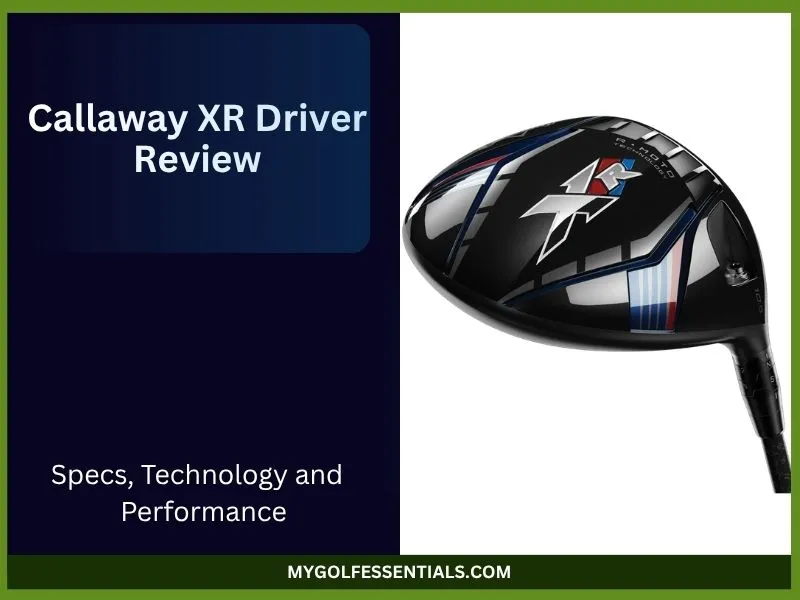
This review covers every feature, spec, and performance area you need to know. By the end, you will have a clear answer on whether the Callaway XR Driver belongs in yours.
What Is the Callaway XR Driver?
The Callaway XR Driver launched in 2015 as Callaway’s distance-first driver for recreational golfers. Callaway built the XR line around one clear goal: help mid-to-high handicap players hit the ball farther without making the club harder to swing. Speed, lightweight construction, and a forgiving face became the foundation of the entire design.
At address, the XR looks clean and confidence-inspiring. The matte crown sits square behind the ball with minimal visual bulk. Most golfers feel ready to swing with authority the moment they step over it.
The XR was never built for tour-level precision. Callaway designed it for players who want the club to do more of the work. It is a workhorse, not a precision instrument.
Technologies Used in the Callaway XR Driver
The Callaway XR Driver packs three core technologies into its design. Each one targets a specific part of your distance. Together, they create a fast, forgiving package that holds up impressively for its era.
1. Speed Step Crown Technology
Speed Step Crown Technology cuts aerodynamic drag during your downswing. The crown features a stepped shape that slices through the air more efficiently than a standard smooth crown.
Less air resistance allows the clubhead to accelerate faster through the impact zone. That extra speed transfers directly into ball speed and more carry distance on every drive.
2. R-MOTO Face Technology
The R-MOTO Face boosts ball speed by flexing aggressively at impact and returning energy into the ball more efficiently. Callaway forged this ultra-thin face to compress and release, creating a trampoline-like effect across a wide hitting area.
This technology keeps ball speeds competitive on off-center hits, not just dead center strikes. On slight heel or toe misses, the R-MOTO Face recovers speed where thicker, stiffer faces lose it fast.
3. Lightweight Construction
Callaway trimmed weight from both the shaft and the clubhead throughout the XR’s design. A lighter total weight makes it easier to swing faster without adding extra physical effort. For players with moderate swing speeds, that design choice directly adds carry distance. It transforms an average drive into a consistently strong one round after round.
Full Callaway XR Driver Specs
Before buying any driver, the specs tell you a lot about fit and performance expectations. Here is the complete specification breakdown for the Callaway XR Driver:
| Spec | Details |
| Release Year | 2015 |
| Clubhead Size | 460cc |
| Loft Options | 9°, 10.5°, 13.5° (Draw) |
| Club Length | 45.5 inches |
| Stock Shaft | Project X SD |
| Flex Options | Senior, Regular, Stiff |
| Hosel Adjustability | Fixed (no loft adjustment) |
| Hand Options | Right-hand and Left-hand |
The fixed hosel is the most important spec to note. The standard Callaway XR Driver offers zero loft or face angle adjustment. You select your loft at purchase and play it exactly as designed. This simplicity works well for beginners and high handicappers who do not need setup complexity.
Callaway XR Driver Performance on the Course
The XR delivers strong results across several key categories. Each performance area below breaks down what the average golfer can realistically expect.
1. Distance Output
Distance is where the XR earns its strongest marks. The Speed Step Crown and R-MOTO Face combine to produce consistent ball speed for average golfers. Both technologies outperformed many drivers from the same era at a comparable price point.
The lightweight build adds swing speed for moderate-tempo players who struggle to generate pace on their own. Golfers upgrading from an older or heavier driver typically notice a genuine carry distance improvement from the very first round.
2. Forgiveness on Mishits
Forgiveness on the XR is strong for a driver from this era. The low, deep center of gravity stabilizes the head on heel and toe strikes. Shots that miss the sweet spot still carry with reasonable distance and an acceptable ball flight.
The XR will not completely save a severely mishit shot, but it reduces the penalty far better than low-forgiveness, tour-style designs that punish off-center contact aggressively.
3. Launch and Spin
The XR launches high with moderate spin, which suits most recreational golfers well. The low CG promotes a strong launch angle, helping players who struggle to get the ball airborne off the tee. Spin rates stay in a workable range and do not cause the ball to balloon excessively in normal wind conditions.
Golfers with high swing speeds may produce slightly more spin than ideal, but for the majority of players the launch and spin combination performs exactly as intended.
4. Sound and Feel at Impact
Sound at impact is loud, sharp, and confidence-building. The XR produces a powerful crack that many golfers find motivating on every drive. Players who prefer a softer, more muted impact sound should note this before buying. Feel through the hands is firm without being harsh. Off-center hits provide clear enough feedback to help you diagnose your contact without punishing you with painful vibration.
Pros and Cons of the Callaway XR Driver
Pros
- Strong, consistent distance output for moderate swing speeds
- Good ball speed retention across the full face, not just center
- Easy, high launch trajectory without needing steep swing mechanics
- Lightweight construction boosts clubhead speed for slower swingers
- Widely available at very affordable used prices in 2026
Cons
- No loft or face angle adjustability on the standard model
- Technology is dated compared to drivers released from 2022 onwards
- Limited workability and shot-shaping control for low handicap players
- Very high swing speed players may generate too much spin
Who Should Actually Use the Callaway XR Driver?
Not every driver fits every golfer, and the XR has a clear sweet spot in terms of its ideal audience. Knowing whether you match that profile is the most valuable insight this review can offer.
Best suited for:
- Beginners seeking a forgiving, high-launch driver that punishes mishits less severely
- Mid-to-high handicappers who prioritize distance and consistency over shot-shaping precision
- Moderate swing speed players who need lightweight construction to generate more speed
- Budget-focused golfers hunting for proven performance at a low used market price
Not the right fit for:
- Low handicap players who need trajectory control and workability on approach drives
- High swing speed players who already self-generate plenty of ball speed naturally
- Golfers who want loft, face angle, or weight adjustability built into their driver setup
Here’s the thing: if you are building your game and want a driver that works hard for you on every tee box, the Callaway XR Driver delivers above its price point in ways that matter for recreational golfers.
How Does the Callaway XR Driver Compare to Similar Models?
Comparing the XR against similar drivers helps clarify exactly what you are buying and where it sits in the wider market. Several models sit close to it in price, era, and target audience.
1. Callaway XR vs Callaway XR Pro
The XR Pro serves a different type of golfer. Callaway equipped the XR Pro with an adjustable OptiFit hosel, giving you loft adjustment options for a more customized ball flight.
The XR Pro also delivers a firmer, more workable feel and a lower, more penetrating trajectory. Better players who want flexibility and control should look at the XR Pro. High handicappers who want maximum forgiveness and an easy, high launch will get more value from the standard XR.
Callaway XR vs Callaway Rogue
In most measurable areas, the Rogue outperforms the XR. Callaway launched the Rogue in 2018 with Jailbreak Technology, which stiffens the crown and sole to redirect more energy into the face at impact. This produces faster ball speeds and more refined forgiveness across the full hitting area.
If your budget stretches to the Rogue on the used market, it represents a stronger long-term investment. That said, the XR remains a competitive performer for casual golfers and budget buyers watching their spend.
Callaway XR vs Modern Drivers
Modern drivers from 2022 to 2026 have moved well ahead of the XR in raw technology. AI-designed faces, moveable weight systems, and advanced carbon crowns give newer models a clear performance edge across every measurable category. That gap matters most for competitive golfers chasing every extra yard.
For recreational players and beginners, the XR still delivers more than enough performance at a fraction of the cost of a brand new driver. Get this: at current used market prices, the XR may be one of the strongest value drivers available for high handicappers today.
Is the Callaway XR Driver Worth Buying Today?
The Callaway XR Driver holds up as a genuine, high-value option for the right golfer. It delivers on its core promise: consistent distance, strong forgiveness, and easy launch for mid-to-high handicap players. The lightweight construction and R-MOTO Face continue producing real, tangible results more than a decade after the original release.
The limitations are real and worth knowing upfront. The fixed hosel removes all customization options. Newer technology has pulled well ahead of it across most performance categories. Low handicap players will find the XR lacks the precision and workability their game demands.
But for beginners, high handicappers, and budget-focused golfers, the Callaway XR Driver gives you more than enough. Buy it used, trust the design, and put your energy into improving your swing instead of chasing the latest releases.
Final Thoughts
The Callaway XR Driver is not the newest club on the market. It is not the most adjustable, and it will not compete with modern AI-engineered faces on raw technology alone. It is what it does do: it delivers real, consistent distance and genuine forgiveness for golfers who need both.
For beginners and high handicappers, those two things matter more than any spec sheet comparison. The Speed Step Crown, R-MOTO Face, and lightweight build still work together to produce a driver that punches well above its current price point on the used market.
Low handicap players and competitive golfers will outgrow it quickly. The fixed hosel, limited workability, and dated technology are real drawbacks for players who demand precision from every drive.
But if you are building your game and your budget is tight, the Callaway XR Driver remains one of the smartest buys available today. Pick it up used, fit it to your swing speed, and spend your energy on your game rather than the gear. That is where improvement actually lives.
Key Takeaways
- The Callaway XR Driver launched in 2015 and targets mid-to-high handicap golfers seeking easy, accessible distance
- Speed Step Crown Technology reduces aerodynamic drag to increase clubhead speed through the impact zone
- The R-MOTO Face flexes aggressively at impact to push ball speed higher across a wide area of the face
- Lightweight shaft and clubhead construction helps moderate swing-speed players swing faster with less effort
- Loft options include 9°, 10.5°, and 13.5° Draw, with a 460cc clubhead at 45.5 inches standard length
- The fixed hosel on the standard model means zero loft or face angle adjustability after purchase
- Forgiveness on mishits is strong, supported by a low and deep center of gravity placement
- The XR Pro improves on the standard XR with an adjustable OptiFit hosel for better players wanting customization
- The Callaway Rogue outperforms the XR in distance and face technology but carries a higher used market price
- The Callaway XR Driver delivers the best value for beginners, high handicappers, and budget-focused golfers in 2026
FAQs
What handicap is the Callaway XR Driver designed for?
The Callaway XR Driver suits mid-to-high handicap golfers best. Its forgiving face, high-launch CG design, and lightweight construction make it ideal for recreational players with moderate swing speeds. Beginners and high handicappers consistently see the strongest distance and forgiveness benefits from the XR’s easy-to-hit design.
What is the difference between the XR and XR16 Driver?
The XR16 is the refined 2016 version of the original 2015 Callaway XR Driver. Callaway updated the aerodynamics, face construction, and weight distribution in the XR16 for slightly better ball speed and feel. Both models serve the same audience, but the XR16 represents a modest performance upgrade over the original.
What shaft works best with the Callaway XR Driver?
The stock Project X SD shaft performs well for most golfers using the XR. Regular flex suits average swing speeds, while stiff flex benefits faster swingers who need better control. Golfers chasing more distance can explore lighter aftermarket graphite options in the 45-55g range to help maximize clubhead speed.
Does the Callaway XR Driver make you slice?
The Callaway XR Driver is not particularly prone to causing a slice. Its forgiving face and high-launch design promote straighter ball flights for most recreational golfers.