

Best Golf Swing Analyzers: Top 5 Recommendations for 2026
May 20, 2026 · By Justin Wilcox
Some links in this review earn us a commission at no cost to you. It never changes what we recommend.
Struggling to fix your swing despite hours of range time? Most golfers repeat the same mistakes because they practice without any real feedback.
Swing analyzers change that by tracking your wrist angles, club path, and tempo with data you can actually use. When the numbers are right in front of you, improving your game stops feeling like guesswork.
The 2026 market has options for every budget and every part of the game. Some devices clip to your grip, others strap to your wrist, and a few track every shot you hit on the course. This guide covers the five best swing analyzers available today and shows you how to find the right fit.
What Are the Best Swing Analyzers in 2026?
The five best swing analyzers in 2026 cover a wide range of needs and price points.
Before diving into the full breakdown, here is a quick snapshot of all five:
| Product | Type | Best For |
| HackMotion | Wrist Sensor | Wrist mechanics |
| Blast Golf | Club Sensor | Tempo and timing |
| Arccos Caddie | GPS Shot Tracker | On-course stats |
| Shot Scope V5 | GPS Watch | Subscription-free tracking |
| FlightScope Mevo Plus | Launch Monitor | Full swing data |
1. HackMotion Golf Swing Analyzer
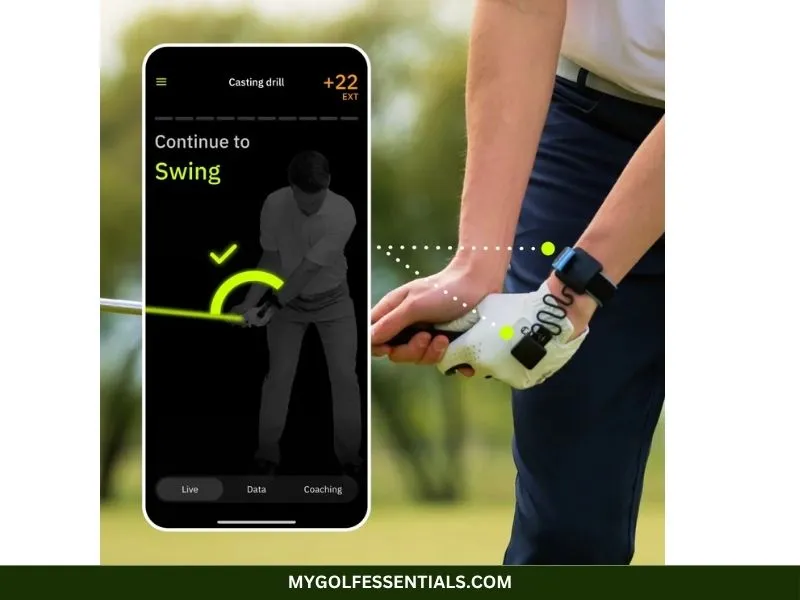
HackMotion is one of the most focused swing analyzers you can buy today. It zeroes in entirely on wrist mechanics, which many teaching professionals consider the most overlooked part of a consistent swing.
The sensor straps to your lead hand and measures flexion, extension, and radial deviation through the swing. You receive real-time audio feedback during each session, so you self-correct your wrist position without stopping to stare at a screen.
Key Features
- Tracks wrist angles at address, top of backswing, and impact
- Delivers real-time audio cues during every swing
- Syncs with a mobile app for detailed post-session review
- Covers both full swing mechanics and the putting stroke
Pros
- Precise, targeted data on one of golf’s most common swing faults
- Audio feedback keeps your eyes on the ball, not a screen
- Clean and intuitive app interface for reviewing sessions
Cons
- Covers wrist mechanics only, not full body movement
- Higher price point for a single-focus device
Best For: Golfers with wrist-related swing issues who want precise, mechanical feedback backed by real data.
2. Blast Golf Swing Analyzer
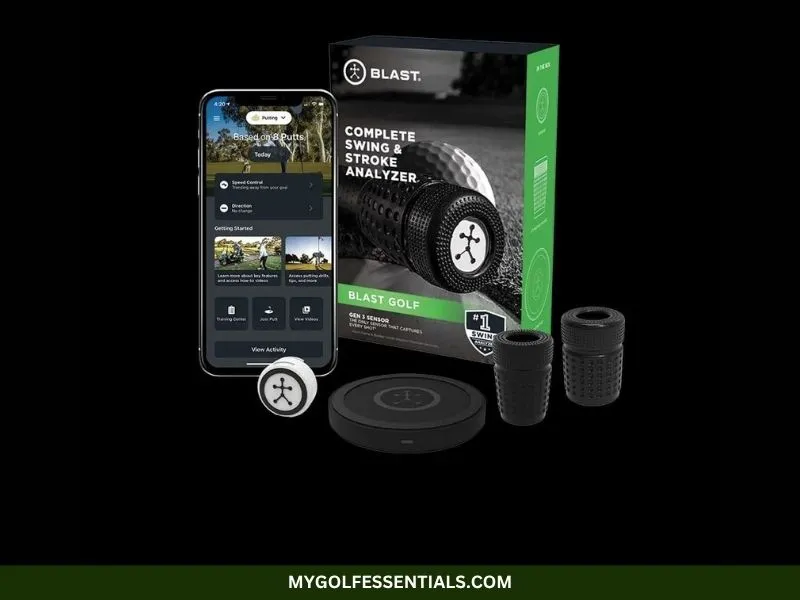
Blast Golf makes swing data accessible without overwhelming you with numbers. It clips to your club grip and captures tempo, timing, and rotation across every part of your game.
The compact sensor pairs with the Blast Golf app, which displays your metrics alongside synced slow-motion video, connecting every number to what you actually see on the screen.
Key Features
- Measures tempo ratio, backswing time, and rotation speed
- Syncs slow-motion video directly to each swing’s data
- Works with every club in the bag, including the putter
- Holds a solid charge across a full range session
Pros
- Strong value at an approachable price point
- Video sync adds clear visual context to every data point
- Quick, simple setup right out of the box
Cons
- Does not track ball flight or carry distance
- Data depth is limited compared to higher-end options
Best For: Beginners and mid-handicap players who want simple, affordable swing feedback without overcomplicating their practice.
3. Arccos Caddie Smart Sensors
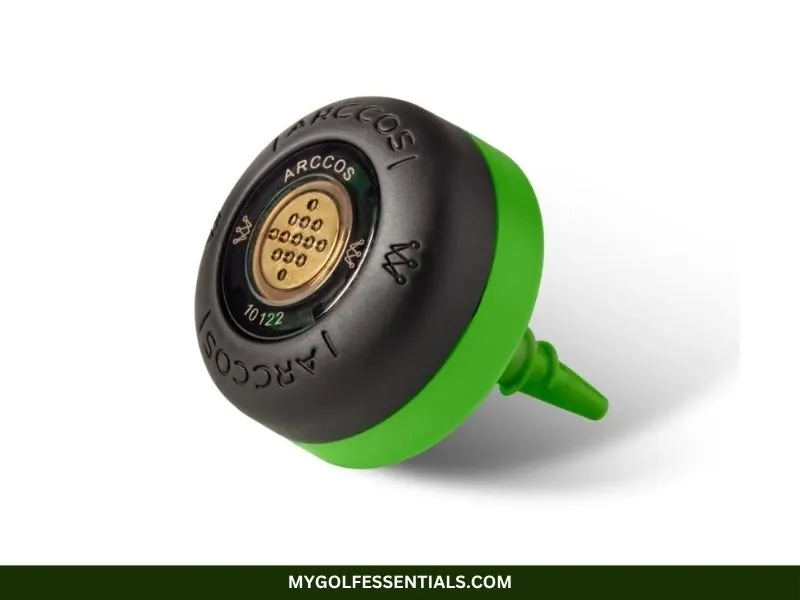
Arccos Caddie turns your clubs into smart tracking devices. GPS and AI work together to record every shot and build a complete, long-term picture of your game.
The system includes 14 sensors that screw into the grip end of each club, and an AI caddie feature uses your historical data to recommend the right club for each situation during a round.
Key Features
- Automatic GPS shot detection with no manual logging needed
- AI caddie suggests clubs based on your personal performance history
- Tracks strokes gained across putting, approaches, and tee shots
- Pairs with Apple Watch for completely hands-free operation
Pros
- Covers full on-course performance, not just range sessions
- Strokes gained data shows exactly where your game loses shots
- AI caddie adds genuine strategic value during competitive rounds
Cons
- Annual subscription required after buying the sensors
- GPS accuracy can vary slightly depending on the course layout
Best For: Golfers who want complete on-course performance tracking and data-driven club selection during rounds.
4. Shot Scope V5
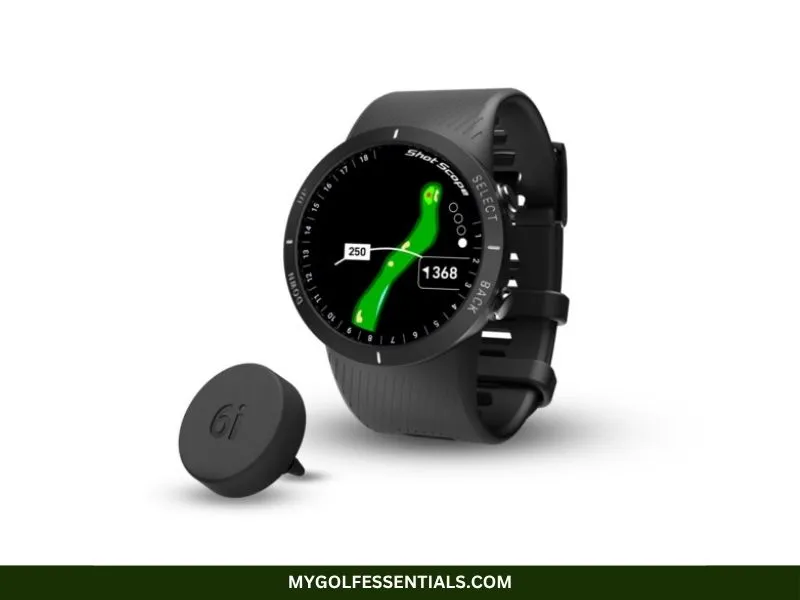
Shot Scope V5 tracks your shots automatically during rounds without needing a phone or a subscription fee.
It gives you GPS distances, performance stats, and round analysis straight from your wrist. Built-in sensors detect your swing and log each shot’s location on the course, then sync everything to the Shot Scope app after your round.
Key Features
- Automatic shot detection with zero manual input required
- GPS distances to front, center, and back of every green
- Over 40,000 preloaded courses worldwide
- Post-round performance statistics and trend tracking
- No subscription fee, ever
Pros
- Subscription-free model saves real money over the long term
- Hands-free operation keeps your focus on the round
- Preloaded courses mean no extra prep before you play
Cons
- On-course tracking only, no swing mechanics data
- Short game detection can occasionally miss chips and pitches
Best For: Golfers who want reliable automatic shot tracking without any recurring subscription costs.
5. FlightScope Mevo Plus
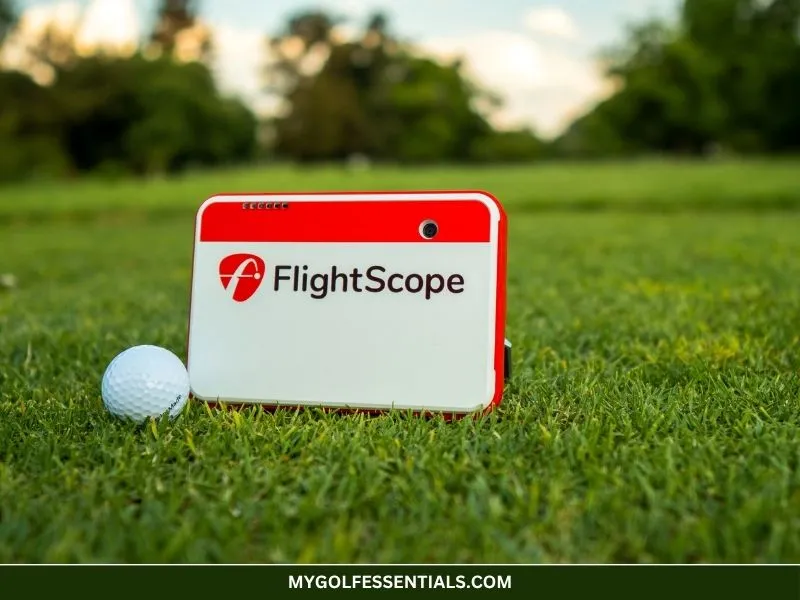
FlightScope Mevo Plus delivers comprehensive swing and ball data in a device small enough to carry in your bag.
It uses Doppler radar to capture detailed data on every shot you hit, and it works outdoors on the range and indoors with a net, making it one of the most flexible training tools at this price point.
Key Features
- Measures ball speed, club speed, smash factor, launch angle, spin rate, and carry distance
- Indoor and outdoor functionality with simulation software compatibility
- Connects to iOS and Android via Bluetooth
- Captures data for all club types, including the putter
Pros
- Widest data range of any device on this list
- Indoor and outdoor use makes it a true year-round training tool
- Works with major simulation software platforms
Cons
- The price is well beyond casual golfer range
- Outdoor use requires reflective sticker dots on the ball for full accuracy
- Needs more setup space than a clip-on sensor
Best For: Serious golfers, instructors, and club fitters who need a full picture of swing mechanics and ball flight data.
What Are Swing Analyzers and How Do They Work?
Swing analyzers are devices that capture performance data from your swing and display it in a readable format through a connected app or screen. The technology powering them varies depending on what each device is built to measure.
Three main technologies drive the devices reviewed here:
- Inertial sensors (IMU): Measure rotation, acceleration, and body movement. HackMotion and Blast Golf both use this approach.
- GPS tracking: Records the location of each shot on the course to build a performance profile over time. Arccos Caddie and Shot Scope V5 rely on this method.
- Doppler radar: Measures ball and club speed by detecting frequency changes in the radar signal. FlightScope Mevo Plus uses radar for its ball flight data.
Each technology has its own strengths. GPS builds a broad on-course picture over many rounds. Radar delivers precise, real-time ball measurements. Inertial sensors zero in on the mechanics of the swing itself.
What Are the Different Types of Golf Tracking Technology?
There are four distinct categories of swing analyzers, and each one targets a different area of the game. Knowing the difference saves you from buying the wrong tool for your goals.
1. Wearable Swing Analyzers
Wearable analyzers strap to your wrist or body and track movement patterns through the swing. They focus on body mechanics like wrist angles and timing rather than ball data or course statistics.
HackMotion is the most specialized wearable option currently available.
2. Club Sensor Analyzers
Club sensors attach to your grip or shaft and capture the club’s movement through the swing. They measure tempo, rotation speed, and backswing timing.
Blast Golf is the most widely used club sensor for amateur golfers looking for accessible feedback.
3. On-Course Tracking Systems
These tools use GPS to automatically record every shot during a round. They build a statistical profile across multiple rounds and reveal performance patterns you would never spot without data.
Both Arccos Caddie and Shot Scope V5 fall into this category.
4. Launch Monitor Systems
Launch monitors measure what happens after you make contact. They capture ball speed, spin rate, launch angle, and carry distance using radar or camera technology.
FlightScope Mevo Plus is the portable launch monitor on this list. Larger fixed units appear in professional club fitting studios and on tour-level practice facilities.
What Features Should You Look for Before Buying?
Not every swing analyzer delivers the same level of value. A few key factors separate a device that genuinely improves your practice from one that collects dust after two sessions.
1. Accuracy
Inaccurate data leads to the wrong corrections. Look for devices with strong real-world user reviews, not just manufacturer specs. For launch monitors that measure ball data, accuracy directly affects how much you can trust the numbers.
2. Ease of Use
A confusing setup or cluttered app kills motivation fast. The best swing analyzers connect in seconds and display your data clearly. If troubleshooting takes longer than swinging, the device is working against you.
3. Data That Actually Helps
Actionable metrics beat impressive-looking dashboards every time. Prioritize devices that track things you can directly improve, like tempo ratio, wrist angle, or strokes gained. A focused set of meaningful numbers outperforms a screen full of stats you cannot act on.
4. Compatibility and Battery Life
Always confirm the device works with your phone’s operating system before buying. Battery life matters equally, especially for GPS watches that need to run for a full three to five hours on the course.
How Do You Choose the Right Swing Analyzer for Your Game?
The right swing analyzer depends on your skill level, your main goal, and where you practice most. There is no single correct choice for every golfer, but these four factors will narrow it down quickly.
1. By Skill Level
Beginners benefit most from devices with simple interfaces and limited metrics. Information overload early on creates confusion rather than improvement.
Blast Golf and Shot Scope V5 both work well for newer players. Advanced golfers who already understand their faults can handle the deeper data inside HackMotion or Mevo Plus.
2. By What You Want to Fix
Match your device directly to your goal:
- Wrist mechanics problems: HackMotion
- Inconsistent tempo and timing: Blast Golf
- On-course performance and strategy: Arccos Caddie or Shot Scope V5
- Full swing and ball flight measurements: FlightScope Mevo Plus
3. Indoor vs Outdoor Use
Most wrist sensors and club sensors work anywhere you can swing a club. FlightScope Mevo Plus stands out because it works indoors with a hitting net and simulation software, making it a practical tool year-round regardless of weather.
4. Budget
Set a clear number before you start researching. Solid swing feedback is available at an accessible price point with Blast Golf. Professional-grade data costs significantly more but delivers a fundamentally different level of insight for serious players.
Swing Analyzer vs Launch Monitor: What Is the Difference?
A swing analyzer and a launch monitor are built for entirely different purposes. Confusing the two often leads golfers to invest in the wrong device for their needs.
A swing analyzer tracks your body and club movement during the swing. It focuses on mechanics like wrist position, tempo, and club path from takeaway through impact. A launch monitor measures what happens after contact. It records ball speed, spin rate, launch angle, and carry distance.
| Feature | Swing Analyzer | Launch Monitor |
| Tracks swing mechanics | Yes | No |
| Measures ball flight data | No | Yes |
| Suitable for indoor use | Yes | Some models |
| Best use case | Mechanics and tempo | Ball fitting and data tracking |
If fixing your swing technique is the priority, start with a swing analyzer. For accurate ball flight data used in equipment fitting or simulation, a launch monitor is the right call. Many serious golfers use both, but choose based on your single most important goal if budget is a concern.
What Are Common Mistakes Golfers Make With These Devices?
Most golfers who fail to improve with a swing analyzer are making one of three avoidable mistakes. The device itself is almost never the problem.
1. Chasing Too Many Metrics at Once
Data overload blocks real progress. When you target eight different metrics in a single session, none of them actually move. Pick one or two measurements per practice session and commit to improving those numbers. Progress compounds when you tackle improvements one step at a time.
2. Using the Data Once, Then Ignoring It
One session with a swing analyzer will not transform your game. Real improvement comes from tracking trends across weeks and months of consistent use. Review your data after every session and look for the patterns that build over time.
3. Skipping the Fundamentals
Technology identifies your faults. It does not fix a poor grip, bad alignment, or weak posture for you. Build solid fundamentals first, then use data to fine-tune your mechanics. Swing analyzers deliver their best value when your basic technique is already sound.
Final Thoughts
Swing analyzers are one of the smartest training investments in golf right now. They cut through guesswork and give you a data-backed path toward real improvement. The five devices reviewed here range from affordable tempo sensors to professional-grade launch monitors, covering the full spectrum of golfer needs.
Start with your biggest weakness. HackMotion is the best choice for wrist mechanics. Blast Golf delivers outstanding value for budget-conscious golfers. Arccos Caddie and Shot Scope V5 both excel at on-course performance tracking. When full swing and ball data is the priority, FlightScope Mevo Plus stands in a class of its own.
Match the device to your goal, use it consistently, and let the data do the work.
Key Takeaways
- Swing analyzers replace guesswork with real, actionable data that gives you a clear path toward game improvement.
- HackMotion is the top pick for golfers who need precise wrist mechanics feedback during practice sessions.
- Blast Golf is the most accessible option on this list with solid tempo and video sync features.
- Arccos Caddie automatically tracks every shot on the course using GPS and AI-powered performance analysis.
- Shot Scope V5 is the best no-subscription option for automatic shot tracking across full rounds of golf.
- FlightScope Mevo Plus covers the widest range of data metrics, from club speed to spin rate and carry distance.
- Match your analyzer to your specific improvement goal, not the device with the longest feature list.
- Swing analyzers measure swing mechanics and movement, while launch monitors measure ball flight after contact.
- The most common mistake is chasing too many metrics at once rather than focusing on one improvement at a time.
- Consistent use across multiple sessions, not a single trial, is what turns swing data into lasting improvement.
FAQs
Do Pro Golfers Use Swing Analyzers?
Yes, many touring professionals use swing analyzers and launch monitors as part of their regular practice routine. These tools give pros an objective layer of data that supports coaching sessions and tracks mechanical changes over time
Can a Swing Analyzer Fix a Slice?
A swing analyzer identifies the root causes of a slice, like an outside-in swing path or an open club face. It cannot correct the fault for you, but it gives you and your coach precise data to work with.
Can You Use a Swing Analyzer Without a Smartphone?
Most swing analyzers need a paired smartphone to display and store your data. Shot Scope V5 is the exception, with a built-in watch display that records shots without a phone nearby. For all other devices on this list, an iOS or Android phone is required for full data access.