If you are searching for the best cavity back irons in 2026, you have landed in the right place. Cavity back irons are the most popular iron design on the market today, and for good reason. They help golfers of every level hit more greens, lose less distance on mishits, and feel more confident over the ball.
Whether you are a beginner building your swing or a single-digit player wanting a touch more forgiveness, there is a cavity back iron built for your game. Here is what this guide covers: the top picks for every handicap range, a clear breakdown of how cavity backs work and everything you need to choose the right set. Let us get into it.
What Are Cavity Back Irons?
Cavity back irons work by removing material from the back of the clubhead and redistributing that weight around the perimeter. That perimeter weighting raises the MOI (moment of inertia), which simply means the clubhead resists twisting more on off-center strikes. The result is straighter, more consistent shots even when you miss the sweet spot.
A traditional blade or muscleback iron keeps most of its mass centered behind the hitting area. It gives you outstanding feel and feedback on a perfect strike, but it punishes any contact that is not dead center. Most amateur golfers do not consistently hit the center of the face, which is exactly why cavity back irons exist.
What Are the Best Cavity Back Irons in 2026?
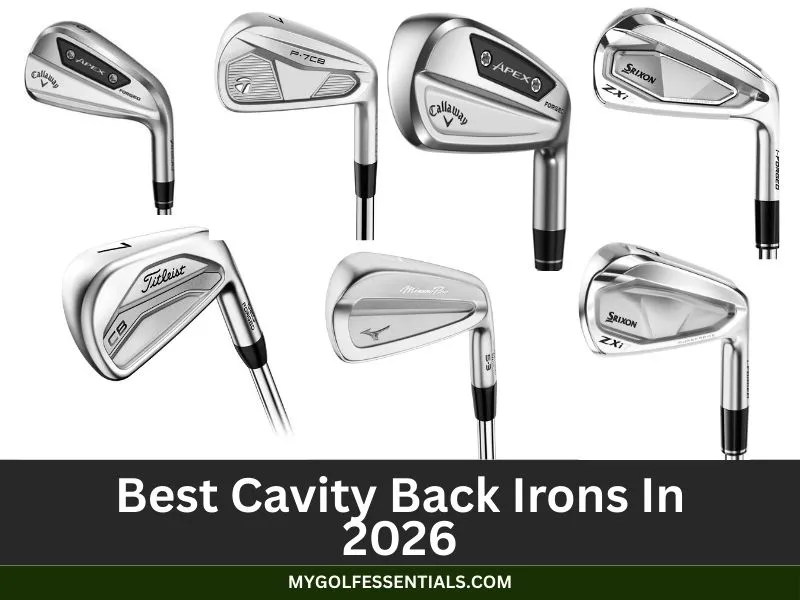
The best cavity back irons in 2026 are the Srixon ZXi5 (Best Overall), Titleist 620 CB (Best for Low Handicappers), Mizuno Pro S3 (Best Forged), Callaway Apex Ai200 (Best Players Distance), TaylorMade P7CB (Best for Mid Handicappers), Callaway Apex Ai300 (Best for High Handicappers), and the Srixon ZXi7 (Best Value).
Here is a quick overview before we break each one down:
| Iron | Best For | Handicap Range | Price Range |
| Srixon ZXi5 | Best Overall | 5-18 | ~$999-$1,099 (steel/graphite) |
| Titleist 620 CB | Low Handicappers | +5 to 8 | ~$175 per club |
| Mizuno Pro S3 | Best Forged Feel | +5 to 5 | ~$215 per iron |
| Callaway Apex Ai200 | Players Distance | 0-12 | ~$1,400 (7-piece steel) |
| TaylorMade P7CB | Best Mid Option | +5 to 5 | $1,399 |
| Callaway Apex Ai300 | High Handicappers | 10-25 | ~$1,199 (steel) |
| Srixon ZXi7 | Best Value Players Iron | 3-15 | ~$199.99 per iron |
1. Srixon ZXi5 Irons: Best Overall
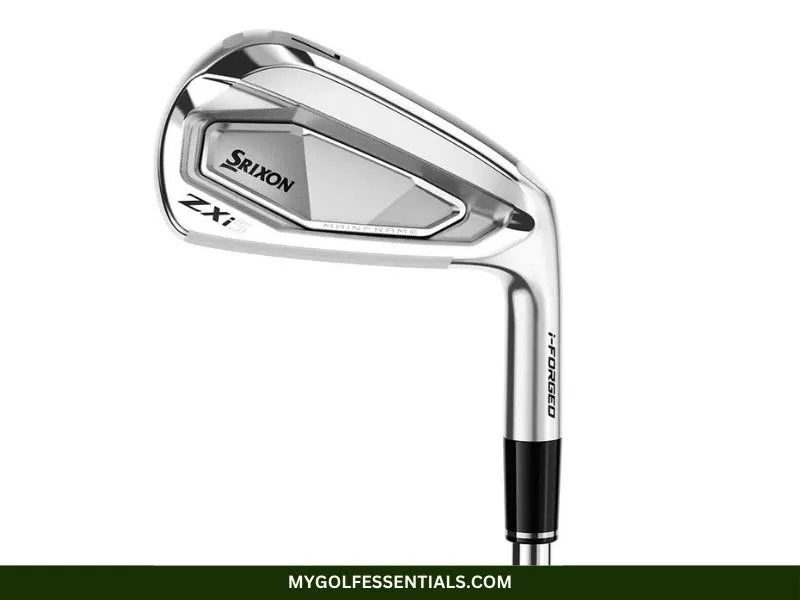
The Srixon ZXi5 is the best all-around cavity back iron you can buy right now. It threads the needle between a true players iron and a game improvement iron better than almost anything in 2026.
Srixon built the ZXi5 using their new i-FORGED technology, which combines a forged face in SUP10 steel with an S20C steel body. The face material on the ZXi5 is 14 percent softer than the previous ZX5 Mk II generation.
On top of that, the MainFrame design mills a network of AI-optimized channels behind the face to boost ball speed and add forgiveness on off-center hits.
The Tour V.T. Sole uses a combination of sole widths, bounce angles, and notches to help the club glide cleanly through all types of turf. Tungsten weighting fine-tunes CG placement for consistent launch and spin.
Pros:
- Outstanding feel and feedback for a mid-cavity iron
- Works as a combo set with the ZXi4 or ZXi7
- Clean, premium look that does not scream game improvement
- Very consistent ball speed across the face
Cons:
- Players who want a large, confidence-inspiring top line may prefer the ZXi4
- Spin rates on the lower side for naturally low-spin players
Best For: Mid-handicap golfers (handicap 5-18) who want player looks, forged feel, and real forgiveness in one package.
2. Titleist 620 CB Irons: Best for Low Handicappers
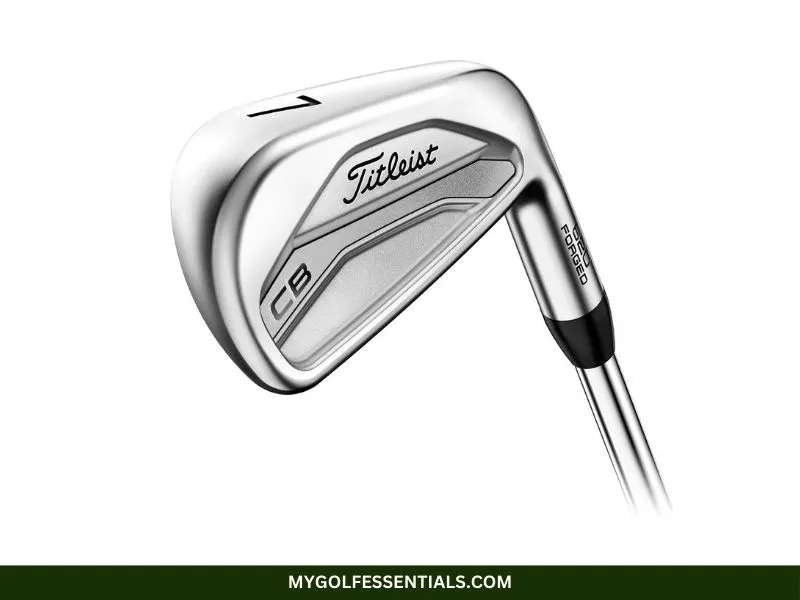
The Titleist 620 CB is what a proper cavity back blade iron looks like. This is a serious club for serious players, and it makes no apologies for that.
The 620 CB sits in a very specific category: it is a classic cavity back with a modern cavity back blade iron profile, positioned between the pure muscleback 620 MB and the more tech-forward T100.
Titleist uses a progressive blade length design, so the long irons carry slightly longer blades while the scoring clubs stay compact. The 3 and 4-iron feature co-forged high-density tungsten in the heel and toe to improve ball speed and MOI in the longest irons.
The remaining clubs are one-piece carbon steel forgings for pure, direct feedback. Reduced offset and a thinner topline compared to previous generations give the 620 CB that clean, minimal address look that low handicappers love. Titleist also refined the variable bounce sole design, which they describe as their best-feeling turf interaction ever.
Pros:
- Exceptional feel and feedback at impact
- Great shot-shaping ability and ball flight control
- Compact, elegant look that low handicappers will love
- Blends well with 620 MB for a mixed set
Cons:
- Very little forgiveness, not suitable for higher handicappers
- Not designed for distance; lofts are traditional, not strengthened
Best For: Single-digit handicappers and skilled ball strikers who want a classic cavity back feel with precise feedback.
3. Mizuno Pro S3 Irons: Best Forged Option
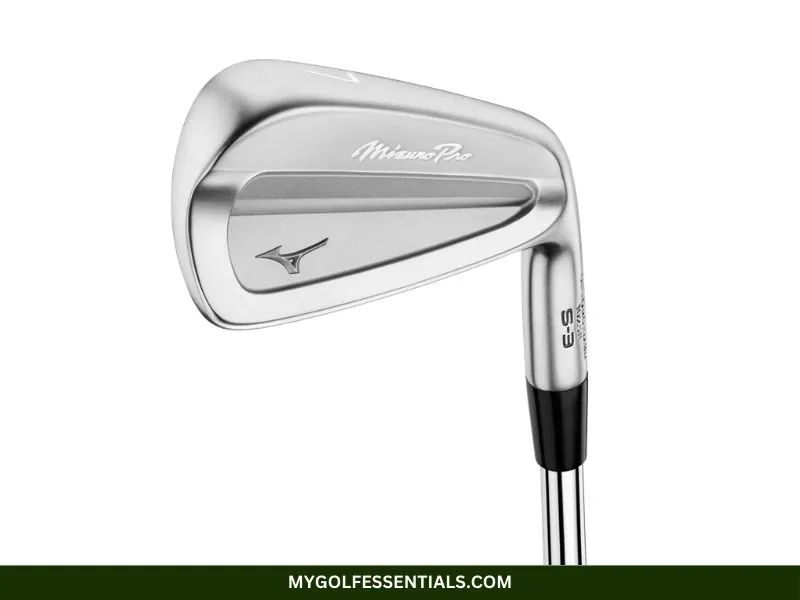
If pure feel is what you chase, the Mizuno Pro S3 is the iron to try. These are a premier example of what forged cavity back irons can deliver when the entire focus is on craftsmanship and feedback.
The Pro S3 irons are forged from 1025E Pure Select Mild Carbon Steel through Mizuno’s Grain Flow Forged HD process, performed at their Hiroshima plant. A copper underlay beneath the chrome finish adds another layer of vibration control, refining the feel even further.
The Triple Cut Sole is one of the standout features: a beveled leading edge glides into the turf smoothly, a hard-cut trailing edge helps the club exit cleanly, and the optimized sole geometry makes them consistent from a variety of lies.
The profile is compact with a thin topline, thin sole, and barely any offset in the scoring clubs. Mizuno designed the Pro S3 with two goals in mind: feel and control. Distance is not the priority here, and low handicappers who value workability will respect that.
Pros:
- Among the best-feeling irons in golf, full stop
- Excellent workability and shot-shaping control
- Consistent, predictable ball flight
- Clean, surgical look that better players will love
Cons:
- Off-center strikes are punishing, feedback is unforgiving
- Conservative lofts mean no artificial distance gains
- Not suited for handicaps above 5-6
Best For: Low handicappers and scratch golfers who put feel and precision above everything else.
4. Callaway Apex Ai200 Irons: Best Players Distance Iron
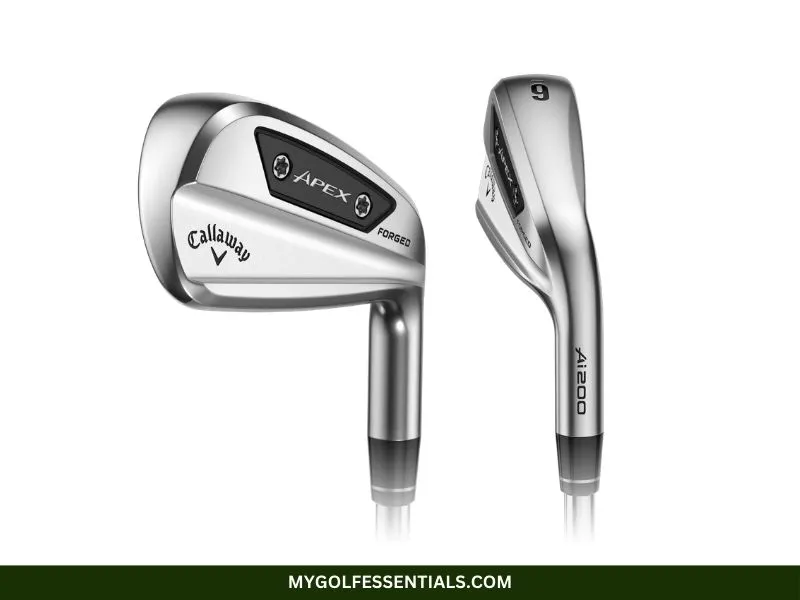
The Callaway Apex Ai200 is the most complete players distance iron Callaway has ever made. It brings a forged hollow-body design, an AI-designed face, and premium feel into one very sleek package.
Callaway built the Ai200 with a forged 1020 carbon steel hollow body paired with a forged 455 Carpenter steel face. The Ai Smart Face technology is the headline feature. Using real swing data from thousands of golfers combined with artificial intelligence.
Callaway engineered the face to deliver consistent ball speed, spin, and dispersion across the hitting zone, reducing hot spots that cause inconsistency.
Strategically placed MIM weighting dials in the CG for the best launch windows through the set. A dynamic sole design improves turf interaction and adds forgiveness through the ground. The 7-iron loft sits at 30 degrees, which puts it clearly in the players distance category.
Pros:
- Exceptional feel for a hollow-body iron
- High, controlled ball flight with strong consistency
- Works well from 4-iron all the way through the wedges
- Clean, compact look at address that low-to-mid handicappers will appreciate
Cons:
- More offset than some low handicappers prefer
- Sits between the Apex Pro and Ai300, which can make choosing the right model confusing
Best For: Low-to-mid handicappers (0-12) who want distance and forgiveness in a compact, great-looking iron.
5. TaylorMade P7CB Irons: Best for Mid Handicappers
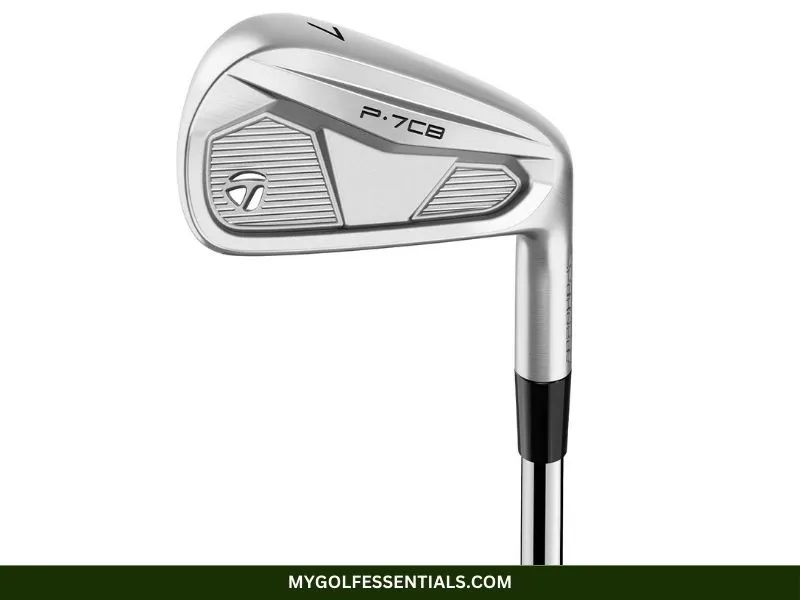
The TaylorMade P7CB is the iron Rory McIlroy put in his bag before winning the Wells Fargo Championship in 2024. That tells you everything you need to know about the quality on offer here.
TaylorMade built the P7CB using their Compact Grain Forging process, forging each head five times from 1025 carbon steel, with the final forge applying 2,000 tons of pressure for the purest feel possible. The head is then milled out through the sole to create two internal pockets.
One material fills those pockets: a co-forged tungsten weight for stability, combined with a Metal Matrix Composite (MMC) that is seven times lighter than steel. This saves weight in the long irons that is relocated toward the sole to boost peak height and improve landing angles on approach shots.
In the short irons, the MMC frees up more weight for perimeter weighting, increasing consistency. Precise milled face and grooves deliver optimal launch and spin for shot control. A constant CG through the set means consistent launch windows from every iron.
Pros:
- Exceptional, soft feel at impact even on slight mishits
- Very consistent ball flight shot to shot
- One of the best-looking irons TaylorMade has produced in years
- Forgiveness is noticeably improved over the previous P7MC
Cons:
- Not suitable for handicaps above single digits
- Mid and long irons can be demanding on off-center strikes
Best For: Scratch to 5-handicap golfers and strong single-digit players who want precision, control, and world-class feel.
6. Callaway Apex Ai300 Irons: Best for High Handicappers
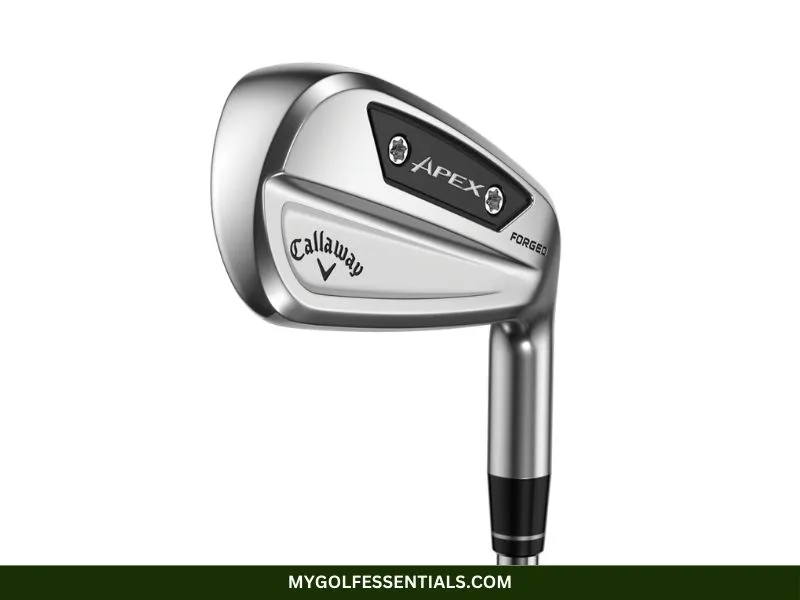
If you are a mid-to-high handicapper who wants forgiving cavity back golf irons without giving up feel, the Callaway Apex Ai300 is your answer.
The Ai300 shares the same Ai Smart Face technology as the Ai200 but sits in a noticeably different profile. The head is slightly larger, the sole is wider, and the CG sits lower and deeper to promote easier launch. Lofts run 1 degree stronger through the set compared to the Ai200.
The forged cavity-back design uses the same forged 455 Carpenter steel face in a body that prioritizes forgiveness and high ball flight. Shots from the center and near-center of the face carry long, climb high, and hold greens well. This is not an iron for working the ball. It is built to go high, go straight, and get you to the green consistently.
Pros:
- Highly forgiving, even on poor strikes
- Excellent feel and sound for a game improvement iron
- High, easy launch that holds greens well
- Can be blended with the Ai200 in a combo set
Cons:
- Not suitable for players who want to work the ball
- Stronger lofts mean yardage gapping to specialty wedges needs attention
Best For: Mid-to-high handicappers (10-25) who want maximum help without sacrificing feel..
7. Srixon ZXi7 Irons: Best Value
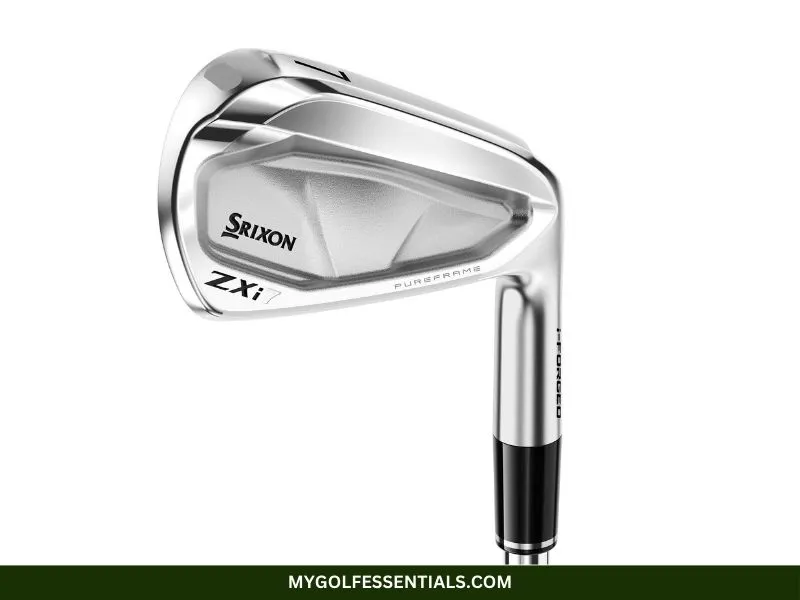
The Srixon ZXi7 won MyGolfSpy’s 2025 Most Wanted Player’s Iron test with a 9.4 score, finishing first for accuracy and forgiveness and sweeping the subjective awards for sound, feel, and looks. For the price, nothing comes close.
The ZXi7 is Srixon’s most player-oriented iron in the ZXi family, using an even softer S15C steel than previous generations. That steel is 7 percent softer than the prior generation, enabled by Condensed Forging that adds localized strength in the hosel area.
The expanded PureFrame sits higher in the body directly behind the sweet spot, improving stability, feel, and ball speed.
The Tour V.T. Sole glides cleanly through turf in all conditions. Progressive grooves run wider in the 3-7 irons and deeper in the 8-iron through pitching wedge for consistent spin through the bag. A tungsten plug in the toe of the mid and long irons improves feel on both quality strikes and mishits.
Pros:
- Arguably the best feel in the players iron category for the price
- Excellent accuracy and workability
- Works perfectly in combo with the ZXi5 for more forgiveness in long irons
- Clean, minimal look that tour players and low handicappers love
Cons:
- Not the longest iron in this category, lofts are traditional
- Better suited to single-digit to mid-handicap range (not for beginners)
Best For: Low-to-mid handicappers (3-15) who want elite feel, solid workability, and excellent value.
What Should You Look for Before Buying Cavity Back Irons?
Here is a breakdown of the factors that matter most when choosing a set:
- Forgiveness and MOI come first for most golfers. A higher MOI means more resistance to twisting on off-center hits. Game improvement irons have a higher MOI than players cavity irons. Be honest about how often you miss the sweet spot.
- Feel and feedback at impact are crucial, especially if you are working on your ball striking. You want irons that tell you where you hit the ball without punishing every slight mishit. Forged irons like the Srixon ZXi7 and Mizuno Pro S3 excel here.
- Launch and ball flight need to match your swing. If you naturally launch the ball low, a lower CG iron will help you. If you already launch high, a players distance iron with a neutral CG might suit you better.
- Shaft options play a bigger role than most golfers realize. Steel shafts give you more feedback and control. Graphite shafts are lighter and can help players with slower swing speeds or joint issues get more distance and launch. Most irons on this list offer both.
- Budget and value matter too. The Srixon ZXi7 at around $199.99 per iron competes directly with options priced at $230-$250 per iron. You do not always need to spend the most to get the best performance.
Which Cavity Back Irons Are Right for Your Game?
Here is a simple guide to point you toward the right pick based on your handicap:
- Handicap 0 and below (scratch and better): Look at the TaylorMade P7CB, Titleist 620 CB, or Mizuno Pro S3. All three reward precision and give you the feedback and workability you need to score at a high level.
- Handicap 1-10 (single digits): The Srixon ZXi7 and Callaway Apex Ai200 are both strong options. The ZXi7 gives you a more traditional feel and look. The Ai200 adds a bit more distance and forgiveness in a hollow-body design.
- Handicap 10-18 (mid handicap): The Srixon ZXi5 is the top pick at this level. It looks like a players iron, performs like one, and gives you enough protection to save strokes when your ball striking slips.
- Handicap 18 and above (high handicap): Go with the Callaway Apex Ai300. It is the easiest iron to launch on this list, and its Ai Smart Face technology keeps ball speed and dispersion consistent even on less-than-perfect strikes.
One final piece of advice:
Get fitted. No matter which iron you are leaning toward, a proper fitting session will confirm the right shaft weight, flex, lie angle, and loft makeup for your swing. Even a great iron becomes a poor choice if the specs do not match your game.
Final Thoughts
Picking the right set of cavity back irons is one of the best things you can do for your game. The irons on this list cover every type of golfer, from the high handicapper who needs help launching the ball to the scratch player who demands precise feedback on every shot.
The Srixon ZXi5 takes the top spot overall for its blend of feel, forgiveness, and looks. The ZXi7 offers incredible value in the players iron category. The Mizuno Pro S3 sets the standard for pure feel. The Callaway Apex Ai300 is the go-to option for high handicappers. And for elite players, the Titleist 620 CB and TaylorMade P7CB both deliver at the top of the game.
Do not buy based on the brand alone. Buy based on your game. Get a fitting, try a few options, and trust what your hands tell you at impact.
Key Takeaways
- Cavity back irons redistribute weight to the perimeter, raising MOI and reducing the penalty for off-center strikes.
- The Srixon ZXi5 is the best overall cavity back iron in 2026 for mid-handicap players.
- Forged cavity back irons like the Mizuno Pro S3 and TaylorMade P7CB are built for low handicappers who prioritize feel and control.
- The Callaway Apex Ai300 is the top choice for high handicappers wanting forgiveness and easy launch.
- The Titleist 620 CB is a classic cavity back blade iron that suits scratch golfers and elite amateurs.
- Callaway’s Ai Smart Face uses real golfer data and AI to deliver consistent ball speed across the entire face.
- The Srixon ZXi7 won MyGolfSpy’s 2025 Most Wanted Player’s Iron test with a 9.4 score.
- A combo set, such as the ZXi5 in the long irons blended with ZXi7 in the short irons, is a great way to balance forgiveness and feel.
- Shaft selection matters: steel suits players who want feedback and control, graphite suits those wanting more launch or have swing speed concerns.
- Always get a proper fitting before buying irons, regardless of budget.
FAQs
What is the difference between a cavity back iron and a muscle back iron?
A cavity back iron has material removed from the back of the clubhead and redistributed around the perimeter, which increases forgiveness on off-center hits. A muscle back iron keeps that mass centralized behind the hitting area for more direct feel and feedback, but is far less forgiving. Cavity backs suit the majority of golfers, while muscle backs are designed for elite players.
Are cavity back irons good for beginners?
Cavity backs are a smart choice for beginners, specifically game improvement models like the Callaway Apex Ai300. These irons are designed to launch the ball easily, reduce dispersion on mishits, and help golfers get the ball in the air consistently. A true players cavity back like the Mizuno Pro S3 or Titleist 620 CB would be too demanding for a beginner.
What does MOI mean on cavity back irons?
MOI stands for Moment of Inertia. On irons, a higher MOI means the clubhead resists twisting more when the ball is struck away from the sweet spot. Game improvement cavity back irons are engineered with a higher MOI than players irons. The result is that off-center strikes fly closer to their intended target rather than veering significantly left or right.
Do You Lose Distance With Cavity Back Irons?
No, cavity back irons actually increase distance. Higher launch angles, stronger lofts, and a lower center of gravity all work together to produce longer shots. Many cavity back models feature lofts 3 to 4 degrees stronger than traditional blade irons.