Starting golf means you’ll need the right golf equipment, but here’s the good news: you don’t need to buy everything at once or spend thousands of dollars. Most beginners waste money on gear they don’t actually need while skipping the essentials that would genuinely improve their game.
In this guide, we’ll break down exactly what golf equipment you need as a beginner, what you can skip for now, and how to spend your money wisely. You’ll learn about must have golf equipment that belongs in every beginner’s bag, plus the other golf essentials that make playing easier and more enjoyable.
What Golf Equipment Do Beginners Actually Need?
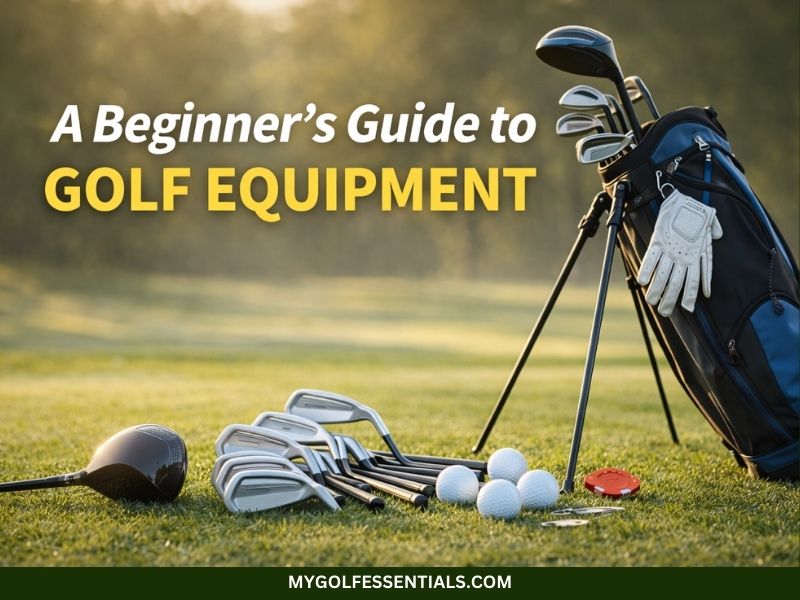
Golf equipment includes everything you use during a round. The essentials break down into a few main categories. You’ve got your clubs, balls, bag, shoes, and gloves. Then there are smaller items like tees and markers.
Beginners don’t need tour-level gear. You must have golf equipment that’s forgiving and easy to use. Think of it this way: would you buy a race car to learn how to drive? Same logic applies here. Start simple. Upgrade as your skills improve.
Your first setup should focus on learning fundamentals. Distance matters less than consistency when you’re starting out.
Which Golf Clubs Should Beginners Start With?
New players need clubs that forgive mistakes and build confidence.
A full golf bag holds 14 clubs. Beginners don’t need all of them. You can play solid rounds with just 7-8 clubs in your bag.
Types of Golf Clubs Every Beginner Should Know
1. Driver
The driver launches balls off the tee on long holes. It’s the longest club in your bag with the biggest head.
Beginners struggle with drivers at first because the long shaft and low loft create challenges. You’ll want one for par 4s and par 5s. Choosing the best drivers for beginners helps improve launch and accuracy off the tee.
Look for drivers with at least 10.5 degrees of loft. Higher loft helps get the ball airborne easier.
2. Fairway Woods
These clubs work from the fairway or tee. The 3-wood and 5-wood are most common.
A 5-wood makes a better starting choice. It’s shorter and easier to control than a 3-wood. You’ll hit it more consistently while learning.
3. Hybrids
Hybrids replace long irons. They combine wood forgiveness with iron precision.
Most beginners should carry at least one hybrid. They’re easier to hit than 3-irons or 4-irons. The club head design helps get balls up quickly.
4. Irons
Irons handle approach shots to the green. They’re numbered 3 through 9, with lower numbers going farther.
Start with irons 5 through 9. Skip the 3-iron and 4-iron completely. They’re tough to hit and hybrids do the job better.
Game-improvement irons have larger sweet spots. They help mishits fly straighter and farther.
5. Wedges
Wedges specialize in short shots and tricky situations.
You need at least two wedges: a pitching wedge and sand wedge. The pitching wedge comes with most iron sets. Add a sand wedge for bunkers and soft landings.
Gap wedges and lob wedges can wait. Learn the basics first.
6. Putter
Every golfer needs a putter. This club rolls balls on the green into the hole.
Putters come in blade and mallet styles. Mallets offer more forgiveness for beginners. The larger head provides better alignment.
What Features Make Golf Clubs Beginner-Friendly?
1. Club Head Size
Bigger club heads create larger sweet spots. You’ll make solid contact more often, even on off-center hits.
Oversized drivers (460cc) and cavity-back irons give maximum forgiveness. Tour players use smaller heads for control. You need forgiveness right now.
2. Shaft Material
Shafts come in steel or graphite.
Graphite shafts are lighter and easier to swing. They help generate more club head speed with less effort. Steel shafts cost less but require more strength.
Go with graphite for woods and hybrids. Either works for irons, but graphite reduces fatigue during practice sessions.
3. Shaft Flex
Flex describes how much the shaft bends during your swing.
Options include regular, stiff, and senior flex. Most beginners need regular flex. It matches moderate swing speeds perfectly.
4. Forgiveness
Forgiving clubs minimize bad shots.
Perimeter weighting and cavity-back designs push weight to the club edges. This increases stability on mishits. Game-improvement irons use this technology extensively.
Offset club heads help square the face at impact. They reduce slices, which plague most beginners.
Should You Buy a Complete Golf Set or Individual Clubs?
Complete sets make perfect sense for beginners.
Here’s why: they’re cheaper, matched for your skill level, and include everything you need. One purchase gets you started.
Complete Golf Set Benefits
- Costs $300-600 for everything
- Clubs designed to work together
- Includes bag and headcovers
- No guesswork about what to buy
- Ready to play immediately
Individual clubs make sense later. Once you identify your strengths and weaknesses, you can upgrade specific clubs.
Top complete sets for beginners include Callaway Strata, Wilson Ultra, and Tour Edge Bazooka. These packages balance quality with affordability.
How Do Golf Balls Affect Your Game?
Golf balls impact distance, control, and feel more than most beginners realize.
The ball you choose matters. Construction, compression, and cover material all affect performance.
- Two-piece balls work best for new players. They’re durable and designed for distance. The simple construction maximizes ball speed off the club face.
- Multi-layer balls offer more spin and control. Tour players love them. Beginners don’t need them yet. They cost more and won’t improve your scores.
Soft vs Hard Golf Balls
Soft balls compress easier on impact. They feel better and give more control around greens. Hard balls fly farther but feel like hitting rocks.
Compression ratings range from 40 to 100+. Lower numbers mean softer balls.
Beginners should use balls with 60-80 compression. They match slower swing speeds perfectly. You’ll get better distance without sacrificing too much feel.
Popular beginner balls include Titleist Velocity, Callaway Supersoft, and TaylorMade Distance+. These cost $20-30 per dozen.
Budget balls work fine too. You’ll lose balls while learning. Buy cheaper options until your shots get more predictable.
What Type of Golf Bag Do You Need?
Your golf bag carries clubs, balls, and accessories for 4-5 hours on the course.
Weight and functionality matter more than looks. The right golf equipment includes a bag that matches how you play.
Types of Golf Bags
1. Carry Bags
Carry bags are lightweight and minimal. They hold 6-8 clubs comfortably.
These bags work for short practice sessions or par-3 courses. The single strap design keeps weight manageable. Most weigh 3-4 pounds empty.
Skip carry bags if you plan to play full 18-hole rounds regularly.
2. Stand Bags
Stand bags feature built-in legs that prop up the bag. They’re the most versatile option for beginners.
You can carry them or use a push cart. The dual-strap system distributes weight evenly across your shoulders. Storage pockets hold balls, tees, snacks, and rain gear.
Stand bags weigh 4-6 pounds. They hold a full set of clubs without feeling bulky.
3. Cart Bags
Cart bags are designed for golf carts only. They’re heavier and offer maximum storage.
Multiple pockets organize everything perfectly. Clothing, shoes, umbrellas, and extra accessories all fit. Some models include cooler pockets and towel rings.
Cart bags weigh 7-10 pounds empty. Don’t buy one if you plan to walk courses frequently.
What Size and Weight Works for Beginners?
Go with a stand bag for maximum flexibility.
Look for these features:
- 5-7 dividers to separate clubs
- 4-6 storage pockets
- Comfortable dual straps
- Rain hood included
- Total weight under 5 pounds
Full-length dividers prevent club tangling. Your grips won’t get damaged banging against each other.
Water-resistant materials protect your gear during unexpected rain. Reinforced bottoms prevent wear from setting the bag down repeatedly.
Do You Really Need Golf Shoes and Gloves?
Yes, both improve your performance significantly.
Golf shoes and gloves aren’t just accessories. They’re golf essentials that affect every shot you hit.
Golf Shoes: Spiked or Spikeless?
1. Spiked Golf Shoes
Traditional spiked shoes use removable cleats. They dig into turf for maximum traction.
Pros use spiked shoes for a reason. The grip prevents slipping during aggressive swings. You’ll maintain balance better on wet grass or slopes.
Modern spikes are plastic and won’t damage greens. They replace easily when worn.
2. Spikeless Golf Shoes
Spikeless shoes look like regular athletic shoes. Rubber nubs on the sole provide traction.
They’re more comfortable and versatile. Beginners often prefer spikeless options. They’re easier to walk in and cost less. Traction works fine for moderate swing speeds.
Comfort and Grip Considerations
Try shoes before buying. You’ll walk 4-5 miles during 18 holes.
Features to prioritize:
- Waterproof materials
- Cushioned insoles
- Breathable uppers
- Flexible soles
- Snug heel fit
Why Golf Gloves Matter
Gloves prevent the club from slipping during your swing.
Moisture builds up on your hands naturally. Grip pressure varies throughout 18 holes. A glove creates consistent friction between your hand and the club.
Most players wear one glove on their lead hand (left hand for right-handed golfers). Some wear two in wet conditions.
Proper Glove Fit
The glove should feel like a second skin.
No wrinkles across the palm or fingers. The material stretches slightly over time, so buy snug. Excess material bunches up and creates blisters.
Cabretta leather offers the best feel. Synthetic gloves cost less and last longer in humid conditions.
Replace gloves when they get stiff or develop holes. Most players go through 3-4 gloves per season.
What Other Golf Equipment Do Beginners Need?
Small accessories make your rounds smoother and more enjoyable. These items cost little but provide big value on the course:
1. Golf Tees
Tees elevate your ball for driver and fairway wood shots. Wooden tees cost pennies and work perfectly fine.
Plastic tees last longer but cost more. Some have distance markers printed on them. Others reduce friction for extra yards.
Start with 2.75-inch tees for your driver. Grab some 1.5-inch tees for fairway woods. Keep 20-30 tees in your bag.
2. Ball Markers
Markers identify your ball position on the green when you lift it.
Poker chips, coins, or specialty markers all work. You’ll mark your ball dozens of times per round. Keep 2-3 markers in your pocket.
3. Divot Repair Tools
These small tools fix ball marks on greens. Your shots create indentations when they land.
Every golfer should repair their marks plus one extra. It takes 10 seconds and keeps greens smooth.
4. Towels
A towel cleans clubs, balls, and hands throughout your round.
Clip one to your bag. Wipe club faces before shots to maintain spin. Clean balls on the green for better rolls.
Microfiber towels work best. They’re absorbent and dry quickly.
How Much Should You Spend on Golf Equipment?
Beginners should budget $520-880 for complete golf equipment. This covers clubs, bag, shoes, balls, and accessories needed for your first 1-2 years of playing. Here’s the realistic breakdown:
Budget Range for Beginners
- Complete club set: $300-500
- Golf bag: $80-150
- Golf shoes: $60-100
- Glove: $10-20
- Balls (3 dozen): $40-60
- Accessories: $30-50
Total investment: $520-880
That gets you everything needed to play comfortably for 1-2 years.
Where Should Beginners Save Money?
Skip these expensive purchases early:
- Premium golf balls (you’ll lose them)
- Custom club fitting (your swing changes rapidly)
- Designer golf bags (function over fashion)
- Multiple gloves (buy 1-2 initially)
- Launch monitors and tech gadgets
Buy used clubs if the budget is tight. Quality sets from 3-5 years ago perform nearly as well as new ones.
What Mistakes Do Beginners Make When Buying Golf Equipment?
New players often waste money on wrong purchases. Avoid these common golf equipment mistakes:
1. Buying Advanced Clubs Too Early
Tour-level clubs demand precise swings. Blade irons punish off-center hits severely.
Beginners need maximum forgiveness, not workability. Game-improvement clubs help you learn faster and enjoy the game more.
Wait until you consistently break 90 before considering player’s irons or compact drivers.
2. Choosing the Wrong Shaft
Shaft flex dramatically affects ball flight. Regular flex suits most beginners perfectly.
Stiff shafts require faster swing speeds (95+ mph with driver). Using stiff shafts with slower swings creates weak, fading shots.
Senior or ladies flex works for swing speeds below 75 mph. There’s no shame in using appropriate equipment.
3. Spending Too Much at the Start
Expensive gear won’t fix swing flaws. A $600 driver in beginner hands performs similarly to a $200 driver.
Your swing changes dramatically during the first year. Clubs that feel perfect initially might feel wrong after 20 rounds. Start modestly. Upgrade individual clubs as your game improves and preferences develop.
The player matters more than the equipment. Tour pros could shoot under par with beginner sets. Focus on fundamentals first.
Final Thoughts
Getting started in golf doesn’t require breaking the bank or buying every club available.
Focus on golf equipment that matches your current skill level. Complete sets offer everything beginners need at fair prices. Add comfortable shoes and a quality glove to improve your experience on the course.
Remember: forgiving clubs help you learn faster. Soft golf balls match beginner swing speeds better. Used equipment saves money without sacrificing performance.
Start simple. Play regularly. Upgrade specific clubs as your game improves.
The most important equipment? Your commitment to learning and enjoying this amazing game. Get out there and start swinging.
Key Takeaways
- Golf equipment should match your skill level, not professional standards
- Beginners can play effectively with 7-8 clubs instead of a full 14-club set
- Forgiving clubs with larger sweet spots help new players hit better shots consistently
- Complete golf sets provide the best value and eliminate guesswork for beginners
- Soft golf balls with lower compression rates work better for slower swing speeds
- Comfort and functionality matter more than brand names when choosing equipment
- Proper golf shoes and gloves improve grip, stability, and overall shot control
- Tour-level gear creates unnecessary challenges for players still learning fundamentals
- Quality instruction provides better improvement than expensive equipment upgrades
- Starting with basic, forgiving equipment helps beginners enjoy the game and progress faster
FAQs
What is the difference between men’s and women’s golf clubs?
Women’s golf clubs typically feature lighter shafts, more flexible flex ratings, shorter lengths, and smaller grips designed for smaller hands. The club head designs remain similar, but these adjustments help match the average physical differences in strength and stature between men and women golfers.
Should I get fitted for golf clubs as a beginner?
Full club fitting isn’t necessary when you’re just starting golf. Your swing changes rapidly during the first year, making early fittings less valuable. Focus on proper shaft flex and club length initially. Consider professional fitting once you develop a consistent swing and play regularly.
What golf accessories do I really need as a beginner?
Essential golf accessories include golf tees, ball markers, a divot repair tool, and a towel. You’ll also want sunscreen, a water bottle, and extra golf balls since you’ll likely lose several during early rounds. These inexpensive items make your time on the course more comfortable and prepared.