
Top flite golf balls might be the most underrated option in recreational golf right now. If you play casual rounds, lose a few balls every time out, or just want solid performance without draining your wallet, Top Flite is one brand worth considering.
Are Top Flite Golf Balls Good? Full Review & Buyer’s Guide
 Written byJustin Wilcox, Founder and editorLast updated April 9, 2026
Some links in this review earn us a commission at no cost to you. It never changes what we recommend.
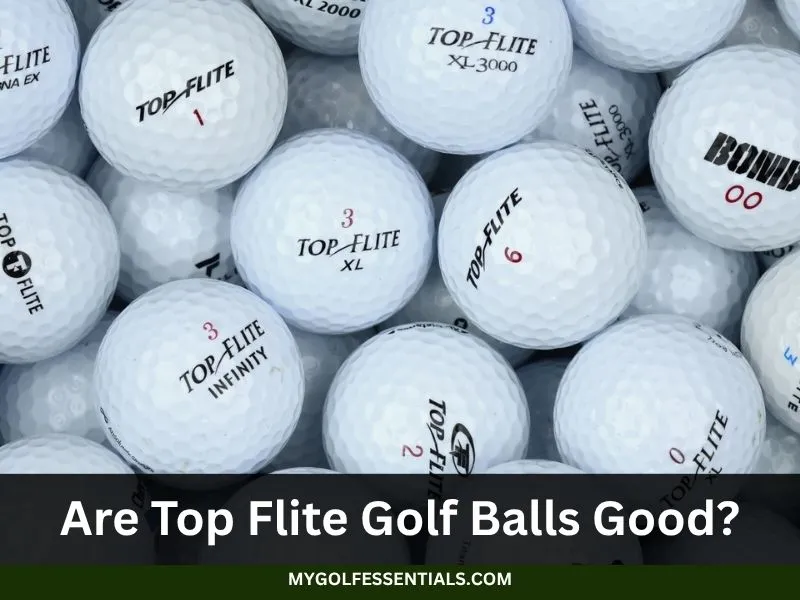
This Review covers every major model, real performance across all key areas, brand comparisons, and a straight verdict on who should actually buy them. Let’s get to it.
What Are Top Flite Golf Balls and Who Makes Them?
Top Flite launched under Spalding Sports in the 1970s and quickly built a reputation for affordable, distance-focused golf balls. The brand changed hands several times before Callaway Golf acquired it in 2003. Then in 2012, Dick’s Sporting Goods purchased Top Flite outright, taking over full manufacturing and distribution.
Today, Dick’s Sporting Goods produces and sells top flite golf balls exclusively through their stores and website. This retail-owned model eliminates extra layers in the supply chain and keeps prices extremely competitive. Most packs retail for $15 to $20 per dozen, which sits well below any premium brand.
Top Flite builds their balls around 2-piece construction focused on distance, straight flight, and tough durability. They do not chase tour-level performance or compete with premium brands on spin. Instead, they target the massive recreational segment where value matters most.
Who Should Use Top Flite Golf Balls?
These balls work best for a specific group of golfers.
Best suited for:
- Beginners developing consistent ball striking
- High handicappers (18 and above) who prioritize distance
- Casual golfers playing three to six rounds per year
- Budget-conscious players who buy in bulk
- Anyone who regularly loses multiple balls per round
Not well suited for:
- Low handicappers who depend on precise spin control
- Competitive or near-scratch golfers
- Players who want soft feel around the greens
- Anyone preparing for serious tournament play
Key Features of Top Flite Golf Balls
Top Flite builds around a few defining principles. Here is how each core feature contributes to performance on the course.
1. Large Energy Core
Top Flite uses a large-diameter, high-energy core that transfers impact energy into ball speed efficiently. Golfers with swing speeds between 70 and 90 mph benefit the most from this design.
The ball compresses well at moderate impact speeds, so you do not need a fast swing to get solid distance results off the tee. This makes it a practical, consistent performer for the majority of recreational golfers.
2. Surlyn Ionomer Cover
The Surlyn ionomer cover separates Top Flite’s durability from most budget competitors. Surlyn resists cuts and scuffs far better than urethane covers used on premium balls.
You can hit cart paths, rough terrain, and tree bark without worrying much about cover damage. The tradeoff is a firmer feel and reduced greenside spin response, which is worth understanding before you buy.
3. Low to Mid Compression
Top Flite balls run at low to mid compression. Lower compression means the core deforms more at impact, converting swing energy into ball speed more efficiently for slower swingers.
The feel off the driver is firm and powerful. Around the greens, that same stiffness limits feedback on delicate chip and pitch shots, so expect less touch on shorter finesse play.
Types of Top Flite Golf Balls
Top Flite offers several models targeting different needs. Here is a breakdown of the main lineup with pricing.
1. Top Flite XL Distance
The XL Distance is Top Flite’s flagship and best-selling model. It features a high-energy distance core built to generate maximum ball speed off the tee.
The low-spin dimple pattern reduces sidespin and keeps shots straight and long. This ball targets beginners and high handicappers who want more yards above everything else, and it typically retails for around $15 per dozen.
2. Top Flite XL Straight
The XL Straight focuses on accuracy for golfers who fight a consistent slice or hook. Top Flite designs this model with an aerodynamic dimple pattern engineered to cut sidespin on mishits.
Off-center shots fly noticeably straighter compared to most other budget options. Pricing sits around $15 to $17 per dozen, putting it in line with the XL Distance without any major cost difference.
3. Top Flite Hammer
The Hammer series shifts slightly toward feel and control without abandoning 2-piece construction. Top Flite tunes the core on this model for a softer, more responsive feel on iron shots.
Mid-handicap golfers who want more feedback than a pure distance ball tend to prefer this option. Pricing typically lands around $17 to $20 per dozen, making it a small step up within an already affordable lineup.
4. Top Flite Gamer
The Gamer sits at the top of the Top Flite performance lineup. It features a more responsive core and a softer cover blend for better short game performance.
Availability varies by market, so check your local Dick’s Sporting Goods or their website before counting on it. Where available, pricing generally runs from $18 to $22 per dozen, keeping it firmly in budget territory.
How Do Top Flite Golf Balls Perform on the Course?
Here is a full breakdown of how top flite golf balls perform across every key category on the course.
1. Driver Distance
Top flite golf balls punch well above their price off the tee. The large energy core generates solid ball speed, and the low-spin flight pattern keeps shots in the fairway even on off-center contact.
Recreational golfers report consistent carry distances without the dramatic curves that plague other budget balls. Premium brands like Titleist Pro V1 still offer better launch optimization, but the gap narrows considerably at this price point.
2. Accuracy and Ball Flight
These balls deliver solid accuracy for the golfers they target. The low-spin design reduces sidespin, keeping mishits from curving dramatically left or right.
You will not achieve the surgical shot shaping that high-end balls allow for skilled players. For straight, consistent ball flight on drives and mid-irons, top flite golf balls outperform expectations within the budget category.
3. Feel and Sound at Impact
Off the driver, the feel is firm, explosive, and confidence-building at address. Many golfers describe the impact sound as a sharp crack that signals good contact.
Around the greens, the experience changes noticeably. The hard Surlyn cover mutes feedback on chip shots and pitches, which players accustomed to soft urethane balls will notice immediately.
3. Spin and Short Game Control
This is the weakest area of any top flite golf ball. Low spin limits the ability to stop approach shots and chips on the green, and the ball releases and rolls out more than most golfers expect.
Players who favor a bump-and-run style cope better with this limitation. Golfers who rely on spinning the ball back will find Top Flite genuinely frustrating around the greens.
4. Cover Durability
The Surlyn cover handles rough conditions better than softer urethane balls at much higher price points. Most golfers report playing multiple full rounds with the same Top Flite ball without significant cover damage.
For wooded courses, cart-path-heavy layouts, or rocky terrain, this durability is a real game-changer. It saves meaningful money over a full season, especially for golfers who play in demanding conditions regularly.
How Do Top Flite Golf Balls Compare to Other Brands?
Knowing how top flite golf balls stack up against competitors makes the buying decision a lot easier.
Here’s a side by side breakdown:
| Feature | Top Flite | Titleist Pro V1 | Callaway Supersoft | Wilson Ultra |
| Price Per Dozen | $15-$20 | $55-$60 | $25-$30 | $15-$18 |
| Construction | 2-piece | 3-piece | 2-piece | 2-piece |
| Cover Material | Surlyn | Urethane | Surlyn | Surlyn |
| Spin Level | Low | High | Low-Mid | Low |
| Feel | Firm | Soft | Soft | Firm |
| Best For | Beginners/Budget | Low Handicappers | All Levels | Beginners/Budget |
Top Flite vs Titleist
Titleist Pro V1 balls deliver world-class spin, feel, and consistency. That performance comes at $55 to $60 per dozen, roughly three to four times more than Top Flite.
Competitive golfers shooting in the low 70s justify that investment through short game precision. For recreational players shooting 90 or above, the performance gap does not come close to justifying the price difference, and Top Flite wins the value argument clearly.
Top Flite vs Callaway Supersoft
Callaway Supersoft offers notably better greenside feel and a softer response throughout. The ultra-low compression core performs especially well for very slow swing speeds under 70 mph.
A budget stretching to $25 to $30 per dozen makes the Supersoft a worthwhile step up in feel. For pure distance off the tee and maximum cover durability, top flite golf balls still compete effectively at their lower price point.
Top Flite vs Wilson Ultra
Wilson Ultra and Top Flite compete at nearly identical price points and target almost the same golfer. Wilson Ultra tends to feel slightly softer at impact, while Top Flite leans firmer with a marginal distance advantage.
Both use 2-piece Surlyn constructions with similar low-spin characteristics. The choice between them truly comes down to personal feel preference since the price difference is negligible.
How Do You Choose the Right Top Flite Golf Ball?
Picking the right model starts with knowing your biggest priority on the course. Here is a simple guide to match the right ball to your game.
- Shoot above 100 and want more distance? Go with the XL Distance for maximum yardage off the tee.
- Battle a slice or hook consistently? The XL Straight reduces sidespin and keeps shots on a straighter path.
- Sit between 80 and 95 and want better feedback? The Hammer gives you a more responsive feel on iron shots.
- Want the best performance Top Flite offers? Try the Gamer if it is available in your local market.
Also consider your course conditions. Wooded layouts, rocky rough, and cart-path-heavy courses reward maximum durability, and every Top Flite model covers that base well.
Are Top Flite Golf Balls Worth the Money?
For their target golfer, yes, they are absolutely worth it. Here is a quick rundown of the real pros and cons.
Pros:
- Priced at $15 to $20 per dozen
- Strong distance performance for moderate swing speeds
- Excellent cover durability on tough courses
- Straight flight reduces damage from off-center hits
- Practical, reliable option for beginners and budget golfers
Cons:
- Limited spin makes short game control difficult
- Firm feel that some players find uncomfortable
- Not designed for competitive or low-handicap play
- Less greenside feedback compared to premium options
Here is the thing: no $15 golf ball competes with a $55 Pro V1 on raw performance but top flite golf balls do not try to. They serve their target golfer genuinely well and make recreational golf more accessible and affordable for millions of players.
Final Thoughts
Top flite golf balls deliver exactly what they promise: distance, durability, and strong value at a price almost no golfer can argue with. Beginners benefit from forgiving flight and a tough cover that survives careless handling. High handicappers gain practical distance improvements and straight ball flight without overspending per round.
The Surlyn construction outlasts budget competitors in raw durability, and the low-spin design keeps mishits manageable on full shots. Short game control and soft feel are genuine limitations, but the golfers who play Top Flite are not shopping for those qualities.
For recreational golfers who value their money and want a reliable ball that performs well off the tee and through tough conditions, Top Flite earns a clear, confident recommendation.
Key Takeaways
- Top flite golf balls are manufactured and sold exclusively by Dick’s Sporting Goods.
- Most models retail between $15 and $20 per dozen, well below any premium brand.
- The 2-piece Surlyn construction prioritizes distance and durability over spin and feel.
- Low spin reduces curve on mishits, directly helping beginners and high handicappers stay in play.
- Surlyn covers resist cuts and scuffs better than urethane covers on premium balls.
- Beginners and high handicappers get the best overall value from Top Flite’s design and price.
- Low handicappers and competitive golfers will find the short game performance too limited.
- The XL Distance maximizes yardage; the XL Straight specifically targets accuracy issues like slicing.
- Short game spin and soft feel represent the biggest performance gaps versus premium alternatives.
- For recreational golfers on a budget, Top Flite delivers consistent, practical value every round.
FAQs
Are Top Flite Golf Balls Legal for Tournament Play?
Yes, Top Flite golf balls conform to USGA and R&A equipment standards. All standard models meet the required size, weight, and velocity regulations for legal competitive play. You can use them in amateur tournaments and official rounds without any rule violations. Check directly with specific tournament organizers if you want complete confirmation.
Do Pro Golfers Use Top Flite Golf Balls?
No professional tour golfers play Top Flite balls during competitive events. Tour players require high spin, exceptional short game feel, and precise control that Top Flite’s budget construction does not match. Tour professionals use premium multi-layer urethane balls from brands like Titleist, Callaway, and TaylorMade, which align with their elite performance demands.
Are Top Flite Golf Balls Good for Seniors?
Yes, Top Flite suits many senior golfers well. Seniors with swing speeds under 85 mph compress the low-compression core efficiently, generating solid distance without needing extra power. The durable cover also reduces how frequently seniors need to replace their ball. Seniors who prioritize distance, value, and toughness over short game feel get genuine benefits from these balls.