Skip to content
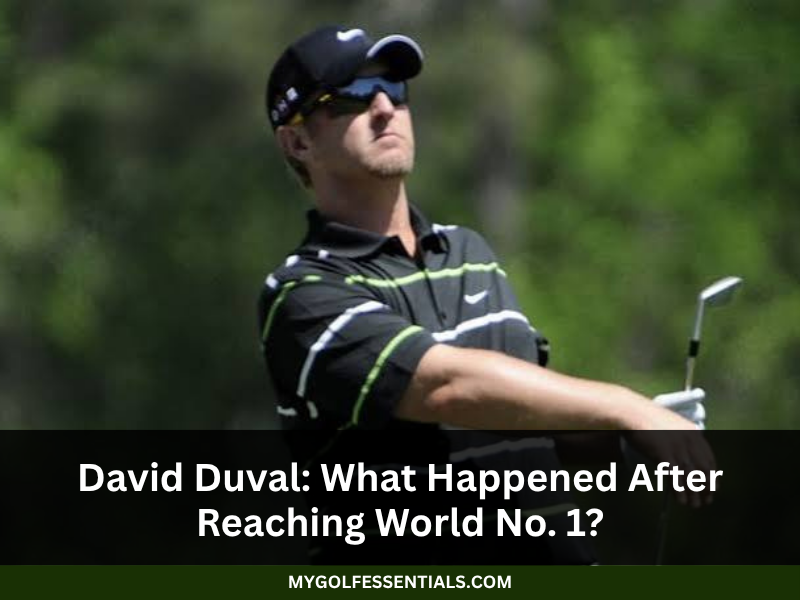
For a brief moment in 1999, something remarkable happened in golf. David Duval looked like he might actually give Tiger Woods a real fight.
The timing made it even wilder. Woods had already made himself impossible to ignore, but Duval? He was winning everywhere. And I mean everywhere. Then came the day that turned everything into golf legend: a 59 at the Bob Hope Chrysler Classic, capped with an eagle on 18. He had joined an impossibly small club.
Two months later, he won The Players Championship and moved to world No. 1. He stayed there for 15 weeks. The question everyone was asking: what’s stopping this guy?
The answer got complicated.
The Rise of David Duval
David Duval turned pro in 1993, coming out of Georgia Tech with serious credentials. The early years? Solid. Not spectacular. Lots of second-place finishes before he finally broke through in 1997.
Once it clicked, it clicked hard.
Between 1997 and 2001, he won 13 times on the PGA Tour. What made him dangerous was different from the other guys. Sure, he could bomb the ball. But his iron game was the real weapon, he could attack pins other players had to treat with respect. That precision became everything he was about.
By 1998, David Duval wasn’t some interesting young talent anymore. He was one of the best golfers alive. Four wins that year. Vardon Trophy. Byron Nelson Award. The guy was making a statement.
Then 1999 arrived and changed everything.
That Number on the Card
He started 1999 absolutely stupid good. Nine-shot win at Sentry. 52 under par through nine rounds. Just crushing everything. But the Bob Hope Chrysler Classic? That’s the one people remember.
David Duval needed a big final round to win. He delivered 11 birdies, an eagle, zero bogeys. Seventeen of 18 greens hit. And he finished with an eagle on 18 after a 5-iron from 218 yards to six feet.
The scorecard read 59.
Only Al Geiberger and Chip Beck had gone lower than 60 on the PGA Tour before. David Duval became the third, and the first to do it and actually win on Sunday. That matters more than people realize.
Here’s what’s wild: it wasn’t some putting clinic. His ball-striking did the heavy lifting. Nine approach shots inside five feet. Fifteen within 20 feet. His playing partner Jeff Maggert said afterward it was almost unreal.
The 59 did something bigger than put a number in the record book. It changed who David Duval was. He wasn’t just collecting wins anymore. He was producing golf that belonged in history.
The Week He Was the Best
David Duval became world No. 1 in March 1999 after winning The Players at TPC Sawgrass. Simple fact. But it meant something.
He’d won 10 times in his previous 33 starts. The Players victory pushed him past Tiger Woods. Period. And for 15 weeks, He held a spot every golfer dreams about: nobody ranked higher.
Woods was already becoming golf’s gravity. So His brief reign at the top gave the sport something it needed, a genuine rivalry. Two different kinds of excellence. Woods: the explosive young phenomenon. David Duval: the methodical, technically perfect guy who could take a course apart one iron at a time.
It never turned into the long battle everyone imagined. But for those 15 weeks? He owned it.
Finally, a Major
Being No. 1 was extraordinary. It wasn’t enough though.
David Duval had come close before, painfully close at St Andrews in 2000, when a quadruple bogey at the Road Hole basically ended him. He came back a year later to Royal Lytham & St Annes.
The first two rounds didn’t scream “champion coming.” Scores of 69 and 73. Level par. Seven shots behind Colin Montgomerie. The Open had him 35th on the leaderboard at the halfway point. Just another guy hanging around.
Saturday changed everything.
A 65. Six birdies in the first 13 holes. Suddenly David Duval wasn’t the outsider anymore, he was in the picture. The leaderboard lit up his name.
Sunday needed something different. Control. He shot 67 and held off Niclas Fasth by three. His final 36 holes totaled 132, a Royal Lytham record at the time.
The image of his lifting the Claret Jug is burned into his career. And it was fitting too, he won the way he’d built his reputation: precision. No mistakes when they mattered. Nothing like what St Andrews had done to him.
The major drought was over.
And that was it. His last PGA Tour win.
The Unraveling
Here’s the thing: it didn’t happen all at once. The decline wasn’t dramatic. It was slow.
Physical stuff first. Back problems. A wrist injury. Vertigo that wouldn’t quit. Then his confidence just… evaporated. His relationship with competitive golf got weird. He took time away. He struggled to find the rhythm that had made him special.
The numbers were brutal.
From 1999 through 2001, David Duval missed three cuts. Three. In 2002: eight. In 2003: missed 14 of 18 tournaments. By 2005, he was playing 20 events and missing 18 cuts. The guy who used to hit every iron exactly where he wanted was suddenly fighting just to make cuts.
Nobody shot a medical bulletin explaining everything. Golf doesn’t work that way. A bad back changes your swing. A changed swing kills your confidence. Bad results make you practice weird. More practice aggravates the injury. The cycle grinds and grinds.
David Duval’s personality made it interesting to watch. He wasn’t exactly chatty in interviews. The wraparound sunglasses added mystery. People started guessing why he was falling apart. Some guesses were right. Most were just noise.
What’s clear: David Duval couldn’t find the consistency, physical or mental, that had made him unstoppable.
2009: One Last Glimpse
By 2009, most people had forgotten David Duval existed.
Then Bethpage Black happened.
He showed up at the U.S. Open ranked 882nd in the world. The USGA basically said he’d vanished from professional golf between 2003 and 2009.
By Monday, he was tied for second.
Lucas Glover won the thing. He finished at 2-under 268 alongside Phil Mickelson and Ricky Barnes. The comeback was remarkable, especially coming from how far down he’d been.
The final round almost went even crazier. A triple bogey at three put him six back. He clawed it together, birdies at 14, 15, 16. Back in the hunt.
After it was over, David Duval said he felt like that’s where he belonged. That line mattered. It wasn’t luck or a hot week. He believed the old golfer was still there.
That runner-up finish moved him 740 places up the rankings. From 882 to 142.
It didn’t restore his career to 1999. But it changed the ending.
The Second Act
Eventually, Hel found another way to stay connected to golf.
Broadcasting. Golf Channel brought him on in 2015, and it makes sense when you think about it. He’d been the guy hunting the lead. He’d been the guy protecting it. He’d been No. 1. He’d been hurt. He’d missed cuts. He’d stood over majors. He’d tried to rebuild when the game seemed done with him.
That experience can’t be taught. When a player is struggling with a swing change, David Duval gets it. When a young golfer faces Sunday at a major, he knows how different the pressure is. When a veteran starts questioning if it’s worth the fight, he’s lived through that exact moment.
The broadcast booth lets him be useful without needing to chase results every week. That distinction matters. A former world No. 1 could’ve just disappeared. He didn’t. He found another way in.
Where Things Stand?
David Duval still shows up in professional golf through the senior tour and broadcasting. Denver, Colorado is home. The broadcast role became the big thing, it keeps him connected without the grind of being a full-time player.
That’s the thing about his story. It’s not just about reaching the top and crashing. It’s about what happens after the crash. He had the knowledge, the credibility, the real experience. Guys like him don’t disappear. They become something else.
He knows what it’s like to be expected to win. Knows what it’s like when expectations become chains. Knows majors from both sides of the ropes.
That’s what makes his commentary actually mean something.
Why Is It Still Important?
Everyone wants to frame David Duval’s career as this dramatic before-and-after story. No. 1 to struggling. Major champion to absent.
That’s too simple.
The real story lives in the middle. He experienced the physical uncertainty of injuries. The psychological weight of poor results. He stepped away. He came back. He kept looking for a swing that trusted itself. And when one week gave him something impossible, he took it.
The 2009 result didn’t make him world No. 1 again. It did something more personal. It reminded him that the player he’d been hadn’t completely vanished.
That’s why David Duval’s career still gets attention. Not because it’s a cautionary tale about how fast success disappears. But because of what remains after it does. A career can change shape without becoming meaningless. The trophies stay. The memories stay. The experience stays.
Sometimes that experience becomes the foundation for a second career.
Final Thoughts
The simple version goes like this: David Duval hit the top, won a major, lost it, and moved to broadcasting. Reality’s bigger than that. He reached the summit during one of golf’s most competitive eras. Shot a 59 when sub-60 rounds were basically mythology. Won The Players. Lifted the Claret Jug at Royal Lytham after starting the weekend seven shots back.
Then the game got hard. His body broke. His head broke. His results fell off a cliff. For years, the guy who looked like Woods’ biggest American threat couldn’t even resemble himself. But the story didn’t end there.
Bethpage gave everyone one last look at the old David Duval. The runner-up finish couldn’t bring back what was lost, but it proved something still lived inside him. Eventually the broadcast booth provided another answer. Today, His legacy is bigger than those 15 weeks at No. 1. It includes the 59. The Open Championship. The brutal years. The ability to stay connected after competitive golf stopped being easy.
That’s what happened when David Duval reached world No. 1. He discovered that maybe the hardest part of a sports career isn’t reaching the top. Maybe it’s figuring out who to be when you’re not there anymore.
Key Takeaways
- David Duval reached world No. 1 in the official rankings in 1999.
- His 59 remains one of golf’s most iconic scoring moments.
- He was the first player ever to shoot 59 and win on Sunday.
- The Players Championship victory pushed him past Tiger Woods to the top ranking.
- His 2001 Open Championship was his only major championship.
- That Open Championship also turned out to be his last PGA Tour victory.
- Back issues, vertigo, and confidence problems derailed his career afterward.
- His 2009 U.S. Open runner-up finish became an extraordinary comeback moment.
- He found a new role in professional golf through broadcasting.
- His career proves that sporting identity can survive what comes after success.
Frequently Asked Questions
How much is David Duval worth?
David Duval’s net worth isn’t publicly verified information. Online estimates vary wildly and shouldn’t be trusted. His 13 PGA Tour wins, the Open Championship, career earnings, endorsements, and broadcasting work have all contributed to his finances. But his personal wealth remains private. The financial details of professional athletes’ lives are rarely as transparent as the internet suggests. He has chosen privacy on this topic and that’s fair.
Where does David Duval live now?
His official residence is Denver, Colorado, according to PGA Tour records. His connection to Colorado runs deep, his family life and marriage are rooted there. It’s been his home for many years, connecting to his time before his major championship and his years afterward. He maintains Colorado as his base while working in broadcasting. Public records don’t pinpoint his specific address, and his private residential details aren’t disclosed anywhere. Denver remains his professional residence of record.
Who is David Duval’s wife?
David Duval married Susan Persichitte, known professionally as Susie Duval, in 2004. They built a family together during the period when his relationship with competitive golf was getting complicated. His wife became important to his stability during years when his career was uncertain. Susie supported him through the struggles that followed his peak years. The couple has children together and maintain their family life primarily in Colorado. Her presence became a grounding force during his most difficult transitions away from professional competition.
What happened to David Duval’s golf career?
His career declined after his 2001 Open Championship due to physical and mental factors working together. Back issues, vertigo, and injuries made consistent competition difficult. Confidence disappeared when results stopped coming. He missed cuts at alarming rates after dominating from 1997 to 2001. The decline wasn’t one dramatic collapse but a slow, grinding deterioration. Physical problems changed his swing. Changed swings killed confidence. Bad results made everything worse. He stepped away from competition for periods. The 2009 U.S. Open provided a brief comeback, but full recovery never came. Broadcasting became his eventual path forward.
Why did David Duval wear sunglasses?
His wraparound sunglasses became his signature look during his best years. Eye protection was the practical reason, they shielded his eyes from course conditions. But they also became part of his image and mystery. Even in poor weather, the sunglasses stayed on. They gave him a recognizable appearance that fans and broadcasters associated with him. The wraparound style wasn’t a fashion statement so much as personal choice. They became so identified with David Duval that removing them would’ve seemed strange. The sunglasses represented both function and identity throughout his career.