
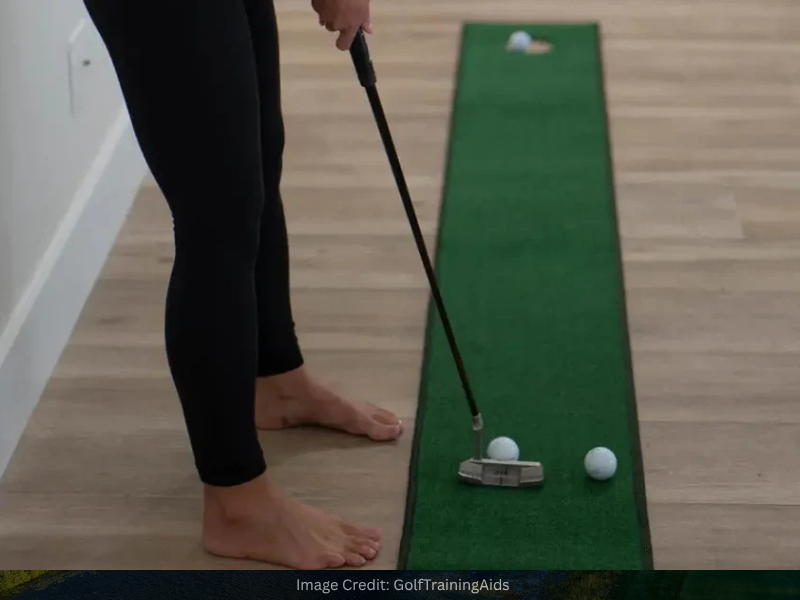
Golf improvement often feels impossible without regular course access. However, learning how to practice golf at home creates consistent improvement opportunities every single day.
A home setup removes several common barriers. Travel time disappears. Practice becomes more affordable. More importantly, golfers gain the ability to repeat focused drills daily instead of occasionally.
Professional players understand the value of repetition. Small adjustments repeated consistently often produce better results than long, inconsistent practice sessions. That explains why many coaches encourage players to learn how to practice golf at home before chasing expensive lessons or memberships.
The good news? The living room might be the best training ground golfers never considered.
Is There a Way to Practice Golf at Home?
Yes, there is absolutely a way to practice golf at home effectively. Modern training tools and structured drills allow golfers to sharpen accuracy, tempo, posture, and mental focus without visiting a course.
A productive home practice setup does not require a massive budget or professional simulator. Even a small indoor area supports meaningful improvement when golfers focus on fundamentals.
A simple home setup usually includes:
- A putting mat for alignment and stroke control
- A golf net or impact bag for swing work
- A full-length mirror for posture and mechanics
Players who understand how to practice golf at home often improve faster because they train more consistently. Short daily sessions create stronger habits than occasional marathon practices.
Setting Up a Home Practice Space
Creating the right practice environment matters more than expensive equipment. A clean, organized setup encourages consistency and helps golfers focus on skill development.
Choosing the Right Indoor Space
Most homes contain at least one usable practice area. Garages, basements, spare rooms, and backyards work surprisingly well for golf drills.
Garages offer enough room for swing training and impact work. Basements provide quieter environments for putting practice and mirror drills. Backyards allow chipping and net sessions with more freedom.
Ceiling height remains important for indoor swing work. Most golfers need at least nine feet of clearance for comfortable practice swings. Compact swings still help when space feels limited.
Lighting also affects practice quality. Bright rooms help golfers notice alignment mistakes and posture flaws faster.
Learning how to practice golf at home starts with creating a distraction-free environment. Even ten focused minutes can improve mechanics significantly.
Essential Equipment for Home Golf Practice
The right equipment supports skill development without overwhelming beginners. Many affordable tools provide professional-level feedback during practice sessions.
| Equipment | Purpose | Cost Range |
| Putting mat | Stroke and alignment drills | $30–$150 |
| Golf net | Full swing practice | $80–$300 |
| Impact bag | Tempo and impact position | $25–$60 |
| Alignment sticks | Stance and path training | $10–$25 |
| Full-length mirror | Posture and swing checks | $20–$80 |
Most golfers begin with putting mats and alignment sticks because these tools provide immediate value. Advanced setups may later include launch monitors or swing analyzers.
The smartest approach involves gradual upgrades. Golfers who learn how to practice golf at home effectively usually prioritize discipline over expensive gadgets.
How to Practice Golf at Home: Putting Drills That Work
Putting determines scoring more than any other golf skill. Fortunately, putting practice works extremely well indoors.
Many golfers underestimate the impact of daily putting drills. However, even fifteen focused minutes improve distance control and accuracy over time.
1. Gate Drill
The gate drill improves stroke consistency and face control. Two tees or small objects create a narrow gate slightly wider than the putter head.
The golfer strokes putts through the gate without touching either side. This drill trains square impact and smoother mechanics.
2. Clock Drill
The clock drill builds confidence around the hole. Golfers place balls in a circle around a target from different angles.
This exercise sharpens short-range accuracy and teaches players to trust their stroke under pressure.
3. Distance Control Ladder Drill
Distance control separates average putters from elite players. In this drill, golfers attempt to stop balls at different target distances.
Each successful putt lands slightly farther than the previous attempt. The drill improves touch and speed awareness quickly.
Golfers researching how to practice golf at home often focus too heavily on swing speed. Yet lower scores usually begin on the putting surface.
Swing and Accuracy Drills for Home Practice
Home swing practice improves mechanics when golfers focus on quality over power. Controlled repetitions produce better habits than aggressive practice swings.
Mirror Work and Posture Checks
Mirror drills expose swing flaws instantly. Most golfers never realize how posture affects consistency until they watch themselves carefully.
A full-length mirror helps golfers monitor:
- Spine angle
- Ball position
- Shoulder alignment
- Swing path consistency
Professional coaches frequently recommend mirror work because visual feedback accelerates improvement. Small setup adjustments often transform ball striking dramatically.
Golfers learning how to practice golf at home should spend several minutes daily checking posture positions.
Slow-Motion Swing Repetitions
Slow swings build stronger mechanics than rushed movements. Tempo training allows golfers to understand each stage of the swing more clearly.
Many professionals practice partial-speed swings regularly. Controlled movement improves balance, sequencing, and coordination.
A slower swing also prevents injury during indoor sessions. Golfers maintain rhythm while reducing unnecessary tension.
“Rhythm is everything in golf,” legendary golfer Ben Hogan once explained. That principle still shapes modern coaching today.
Impact Bag Training
Impact bags teach proper contact positions safely. Golfers strike the bag while focusing on hand position, weight transfer, and body rotation.
This drill builds muscle memory quickly because the bag exaggerates poor impact habits immediately.
Impact work helps golfers:
- Improve compression
- Eliminate scooping motions
- Develop stronger wrist positioning
- Create cleaner strike patterns
Players often notice stronger contact after only several practice sessions.
Swing Drill Tips for Better Accuracy
- Focus on balance before adding swing speed during practice sessions
- Practice shorter swings first before attempting full-motion repetitions indoors
- Maintain relaxed grip pressure throughout every drill repetition consistently
- Record practice swings occasionally to track mechanical progress accurately
Learning how to practice golf at home becomes far more effective when golfers prioritize precision over intensity.
What Is the 90% Rule in Golf?
The 90% rule in golf refers to golf cart usage on courses. It requires players to keep carts on designated paths until reaching a point directly beside the ball. The cart then enters the fairway at a 90-degree angle.
Many courses use this rule to protect turf conditions and reduce unnecessary damage.
Although this rule seems unrelated to home training, it reflects a larger principle within golf: discipline matters. Successful players respect structure, consistency, and smart habits both on and off the course.
Golfers who practice structured routines at home often carry that same discipline into competitive rounds.
Mental Practice and Visualization at Home
Physical practice matters, but mental training shapes performance equally. Elite golfers frequently rehearse shots mentally before tournaments begin.
Visualization strengthens confidence and decision-making. A golfer imagines ball flight, swing rhythm, and target direction before hitting actual shots.
Jack Nicklaus famously credited visualization for much of his success. He once explained that every great shot started in his mind before reaching the course.
Home visualization routines may include:
- Imagining approach shots into difficult greens
- Practicing breathing before important putts
- Rehearsing pre-shot routines consistently
- Mentally managing pressure situations calmly
These exercises improve focus without requiring physical effort.
Golfers studying how to practice golf at home sometimes ignore mental preparation completely. However, strong concentration often separates skilled players from inconsistent ones.
How to Practice Golf at Home Using Technology
Technology has transformed golf training dramatically. Modern tools now provide professional-level feedback from home setups.
Affordable launch monitors measure ball speed, spin, launch angle, and carry distance accurately. Devices such as the Garmin Approach R10 help golfers analyze swing performance indoors or outdoors.
Video analysis also improves mechanics quickly. Recording swings allows golfers to compare positions and identify recurring mistakes.
Several golf apps now offer detailed putting analysis and swing tracking as well.
Recommended Golf Technology Tools
- Garmin Approach R10 for launch monitor data and swing tracking
- Skillest app for online coaching and video feedback sessions
- Blast Golf sensor for putting stroke analysis and tempo improvement
Golf technology continues evolving rapidly. Yet even basic recording tools help golfers understand how to practice golf at home more efficiently.
Building a Weekly Home Practice Routine
Consistency always beats intensity in golf improvement. Short sessions repeated regularly outperform random practice marathons.
A structured routine prevents golfers from neglecting important skills.
| Day | Focus | Duration |
| Monday | Putting drills | 20 minutes |
| Wednesday | Swing tempo and mirror work | 25 minutes |
| Friday | Chipping and impact bag practice | 20 minutes |
| Weekend | Full routine and visualization work | 30 minutes |
This schedule keeps practice balanced while avoiding burnout.
Golfers often expect instant improvement. However, meaningful progress usually appears after several consistent weeks. The players who master how to practice golf at home understand the value of patience and repetition.
Small improvements compound over time. Better posture leads to cleaner strikes. Cleaner strikes create confidence. Confidence eventually lowers scores.
Advanced Accuracy Drills for Home Golf Practice
Accuracy separates reliable golfers from inconsistent players. Distance attracts attention, but precision lowers scores. Golfers who understand how to practice golf at home often focus heavily on accuracy drills because these exercises translate directly onto the course.
Small spaces still allow highly effective precision training.
Alignment Stick Target Drill
Alignment sticks improve body positioning and target awareness. Golfers place one stick along the feet and another toward the intended target line.
This setup trains proper alignment repeatedly. Many amateur golfers unknowingly aim incorrectly during rounds. Home drills expose those mistakes quickly.
A golfer may also place small targets around the room for controlled chip shots. Soft practice balls work best indoors because they reduce damage risk.
Towel Contact Drill
The towel drill improves strike quality and consistency. A folded towel sits several inches behind the golf ball.
The golfer swings without touching the towel. Contact with the towel usually signals poor weight transfer or early release patterns.
This drill develops cleaner contact naturally. Better impact positions eventually create straighter shots and improved distance control.
One-Handed Swing Practice
One-handed swings strengthen balance and body coordination. Golfers practice slow swings using only the lead hand or trail hand.
The drill highlights weaknesses immediately. Poor sequencing becomes difficult to hide during one-handed movement patterns.
Golf coaches often recommend this exercise because it sharpens tempo awareness without requiring full power swings.
Golfers learning how to practice golf at home should include at least one precision-based drill during every session.
Common Mistakes During Home Practice
Home practice offers convenience, but several mistakes limit improvement. Many golfers accidentally reinforce poor habits instead of building better mechanics.
Awareness prevents wasted practice sessions.
Practicing Too Quickly
Rushed swings create sloppy movement patterns. Many golfers practice aggressively because they mistake speed for progress.
However, slower repetitions improve muscle memory far more effectively.
Professional instructors frequently encourage controlled swings during technical practice sessions. Precision matters more than force.
Ignoring Setup Fundamentals
Grip, posture, and alignment determine swing quality. Yet many golfers skip setup checks completely.
Mirror work solves this problem quickly. Golfers who regularly monitor setup positions usually develop more repeatable swings over time.
Using Incorrect Equipment
Heavy practice aids or unrealistic gadgets sometimes create bad habits. Simple tools often work best for long-term improvement.
Alignment sticks, putting mats, and mirrors usually provide enough feedback for most players.
Practicing Without Structure
Random practice sessions rarely produce measurable improvement. Golfers benefit most from structured routines and targeted drills.
A focused twenty-minute session often outperforms two hours of unfocused swings.
Learning how to practice golf at home requires patience and discipline. Improvement happens gradually through repeated quality practice.
How Flexibility Improves Golf Accuracy
Flexibility affects every stage of the golf swing. Limited mobility often creates inconsistent contact and poor balance.
Simple stretching routines improve movement quality significantly.
Shoulder Mobility Exercises
Golf swings demand rotational movement through the shoulders and upper back. Tight muscles restrict motion and reduce consistency.
Stretch bands and slow rotation exercises improve mobility safely.
Hip Rotation Training
Strong hip rotation helps golfers transfer energy efficiently. Restricted hips often force compensations during the downswing.
Simple bodyweight movements strengthen rotation patterns while improving stability.
Wrist Flexibility Drills
Wrist mobility influences clubface control directly. Stiff wrists make it difficult to square the club consistently through impact.
Gentle stretching exercises improve range of motion gradually.
Golfers studying how to practice golf at home sometimes overlook physical preparation completely. However, flexibility training often produces noticeable improvements within several weeks.
Creating Competitive Pressure at Home
Pressure changes performance dramatically. Many golfers perform well during casual practice but struggle under competitive conditions.
Home practice should occasionally simulate pressure situations.
Score-Based Putting Challenges
Golfers may assign points to successful putts from different distances. Missing certain putts creates penalties or restarts.
This method introduces accountability into simple drills.
Time-Limited Drills
Timers create urgency during practice sessions. Golfers complete specific challenges within short time limits.
The pressure increases focus while improving decision-making speed.
Consequence Practice
Some golfers add small consequences after failed drills. For example, missing three short putts may require restarting the entire sequence.
These exercises strengthen mental toughness naturally.
Golf improvement depends heavily on emotional control. Players who understand how to practice golf at home often develop stronger confidence because they train under simulated pressure consistently.
Does Golf Lower Blood Pressure?
Yes, golf may help lower blood pressure over time. Walking, swinging, and controlled breathing support cardiovascular health naturally.
Several studies suggest regular golf activity improves heart health while reducing stress levels. The game also promotes mental relaxation and outdoor activity.
Home golf practice contributes to these benefits as well. Putting drills and visualization exercises encourage calm breathing patterns and focused concentration.
Stress management plays an important role in golf performance. Players who remain relaxed often swing more freely and make smarter decisions during rounds.
Mental calmness also improves accuracy under pressure situations.
Building Better Tempo Through Home Practice
Tempo influences consistency more than raw swing speed. Many amateur golfers swing too aggressively during important shots.
Smooth rhythm creates better sequencing and cleaner contact.
Counting Tempo Drills
Some coaches teach golfers to count silently during the swing. A simple “one-two” rhythm helps maintain consistent timing.
The backswing begins on “one,” while impact arrives on “two.”
This exercise prevents rushed transitions.
Metronome Swing Practice
Golfers increasingly use metronome apps during practice sessions. The steady beat encourages repeatable timing patterns.
Professional players often rely on rhythm-based drills because tempo affects every part of the swing.
Pause-at-the-Top Drill
This drill teaches transition control. Golfers pause briefly at the top before beginning the downswing.
The pause reduces rushed movement while improving body sequencing.
Golfers exploring how to practice golf at home should prioritize rhythm drills regularly. Better tempo usually produces straighter ball flight almost immediately.
Short Game Practice Without a Backyard
Not every golfer owns outdoor practice space. Fortunately, several short-game drills work effectively indoors.
Creativity matters more than square footage.
Carpet Chipping Drills
Soft foam balls allow safe indoor chipping practice. Golfers chip toward laundry baskets, towels, or small targets.
These drills sharpen touch and trajectory control.
Landing Spot Practice
Golfers place markers on the floor to simulate landing zones. The goal involves landing each shot precisely on target.
This exercise improves distance awareness quickly.
Coin Putting Drill
A coin acts as an extremely small putting target. Golfers attempt to roll putts directly over the coin repeatedly.
The drill develops precise start-line control.
Many players underestimate indoor short-game practice. Yet golfers who consistently learn how to practice golf at home often develop stronger touch than players relying only on occasional course rounds.
Recovery and Rest for Better Golf Performance
Practice matters greatly, but recovery supports improvement equally. Overtraining creates fatigue, tension, and inconsistent mechanics.
Smart golfers balance work and recovery carefully.
Sleep and Muscle Recovery
Sleep supports coordination, focus, and physical recovery. Tired golfers often struggle with tempo and concentration.
Even technical practice becomes less effective without proper rest.
Stretching After Practice
Light stretching reduces muscle tightness after repetitive drills. Flexible muscles support smoother movement patterns during future sessions.
Mental Recovery
Golf places heavy demands on concentration. Mental breaks help golfers maintain focus and motivation over longer periods.
Balanced routines prevent frustration and burnout.
Golfers who understand how to practice golf at home usually improve faster because they create sustainable practice habits instead of exhausting themselves.
Final Thoughts
Golf improvement no longer depends entirely on expensive memberships or endless driving range sessions. Modern drills, simple equipment, and structured routines allow meaningful progress from almost any home environment.
Players who commit to daily repetition often experience dramatic changes in consistency, posture, and confidence. Small sessions performed regularly create stronger long-term habits than occasional marathon practices.
Learning how to practice golf at home also builds discipline. Home routines sharpen focus, improve tempo, and strengthen mental preparation without requiring constant course access.
The greatest advantage of home practice involves accessibility. A golfer no longer needs perfect weather, unlimited free time, or professional facilities to improve.
Most importantly, golfers who master how to practice golf at home usually carry greater confidence onto the course. Repetition creates trust. Trust creates better swings under pressure.
The next breakthrough round may begin with a putting mat, a mirror, and twenty focused minutes inside the house.
Key Takeaways
- Practicing golf at home consistently helps players improve accuracy without leaving the house.
- A putting mat remains one of the most effective home training tools available.
- Mirror drills reveal posture and swing flaws that golfers often overlook on the course.
- Slow-motion swing repetitions build muscle memory faster than high-speed swings at full power.
- Impact bag training corrects impact position, which directly improves ball-striking accuracy every round.
- Mental visualization at home sharpens course management skills and builds pre-shot routine confidence.
- Technology like launch monitors helps golfers track data and measure progress from their homes.
- The 90% rule governs cart path use and reflects the importance of understanding course etiquette.
- A structured weekly practice schedule ensures golfers target every skill area consistently over time.
- Learning how to practice golf at home transforms everyday spaces into powerful personal training grounds.
FAQs
What Is the Most Effective Way to Practice Golf?
The most effective golf practice combines putting drills, swing mechanics, and mental training consistently. Golfers improve faster when they focus on short, structured sessions instead of random practice.
How Should a Beginner Practice Golf?
A beginner should start with grip, posture, and alignment fundamentals before focusing on power. Putting drills, slow swings, and mirror work help beginners build solid mechanics at home.
How to Practice Golf at Home With Low Ceilings?
Golfers with low ceilings should focus on putting, chipping, posture drills, and half swings. Slow-motion swing practice and impact bag drills also work well in smaller indoor spaces.
How Many Times a Week Should Someone Play Golf?
Most golfers benefit from practicing or playing golf three to four times weekly. Consistent short sessions usually produce better improvement than one long weekly practice round.
Can Golf Be Self-Taught?
Yes, golf can be self-taught with the right drills, video analysis, and practice routines. Many golfers improve significantly through home practice, online lessons, and consistent repetition.