Golf launch monitors have completely changed the way golfers train, and the difference shows up fast. For decades, range sessions meant hitting balls and hoping something clicked. Today, you get real numbers after every swing, telling you exactly what’s working and what isn’t.
Whether you’re a high handicapper or a serious competitor, this guide covers everything you need to know about launch monitors, from how the technology works to which device fits your game and budget.
What Is a Golf Launch Monitor?
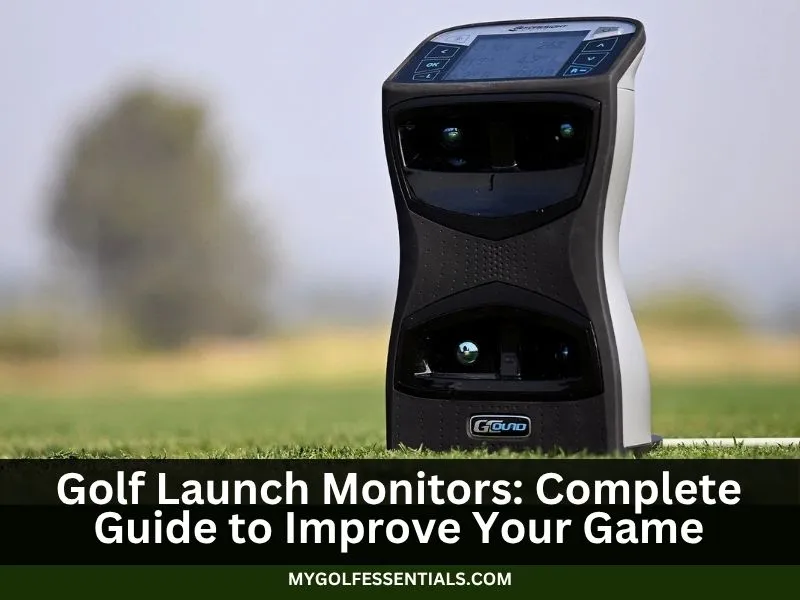
A golf launch monitor is an electronic device that captures and analyzes ball and club data in real time after every shot.
It uses radar or camera technology to measure flight characteristics and impact data the moment the club strikes the ball. Think of it as a personal performance analyst sitting right beside you at the range.
These devices range from compact, portable units that fit in your golf bag to full-scale professional systems installed in high-end fitting studios. Coaches, club fitters, Tour professionals, and serious amateur golfers all use launch monitor data to make evidence-based decisions about their technique and equipment.
The core purpose is simple: remove guesswork from practice and replace it with measurable, repeatable information.
How Do Golf Launch Monitors Actually Work?
The technology inside these devices splits into two main approaches. Understanding the difference helps you choose the right system for your environment and goals.
1. Radar-Based Systems
Radar monitors use Doppler technology to track the ball through its full flight path. They emit radio waves that bounce off the ball as it travels and feed back precise data about speed, direction, and spin.
TrackMan and FlightScope are the most recognized radar-based brands on the market. These systems perform best outdoors, where the ball has room to travel and the device can capture a complete arc of flight data.
2. Camera-Based Systems
Camera monitors use high-speed photometric sensors to capture images of the club and ball at the exact moment of impact. From those images, the system calculates ball speed, launch angle, spin, and club delivery data.
Foresight Sports and SkyTrak are the leaders in this category. Camera systems analyze what happens at impact rather than tracking ball flight, they perform exceptionally well indoors without needing a full shot to generate accurate readings.
Here is a clear side-by-side breakdown of how these two technologies compare:
| Feature | Radar-Based | Camera-Based |
| Best Environment | Outdoor | Indoor |
| Full Ball Flight Tracking | Yes | Simulated indoors |
| Club Data Accuracy at Impact | Good | Excellent |
| Known Brands | TrackMan, FlightScope | Foresight Sports, SkyTrak |
| Typical Price Range | Mid to very high | Mid to high |
What Data Does a Golf Launch Monitor Measure?
These devices capture a wide set of metrics that expose what’s actually happening during your swing, not just what it feels like.
Core Ball Data
- Ball Speed: The velocity of the ball leaving the club face after impact
- Launch Angle: The angle at which the ball lifts off the face
- Spin Rate: Total ball revolutions per minute, which directly influences flight shape and distance
- Carry Distance: How far the ball travels through the air before landing
- Total Distance: Combined carry plus roll distance
Core Club Data
- Club Head Speed: The speed of the club at the moment of contact
- Smash Factor: Ball speed divided by club speed; a direct measure of impact efficiency
- Attack Angle: Whether the club moves upward or downward through the hitting zone
- Face Angle: The direction the club face points at impact, which determines initial ball direction
Higher-end golf launch monitors also measure spin axis, dynamic loft, and face-to-path relationship. That level of detail helps coaches pinpoint exactly why a shot curves, launches too high, or loses distance.
What Are the Different Types of Golf Launch Monitors?
Golf launch monitors fall into three broad categories. Your situation, goals, and budget all play a role in which type belongs in your setup.
1. Portable Consumer Monitors
These compact devices are built for golfers who want data driven practice at the range, in a backyard, or inside a garage. They’re lightweight, quick to set up, and accessible in price compared to professional-grade systems.
Popular options include the Garmin Approach R10, FlightScope Mevo+, and Rapsodo MLM2PRO. Prices in this category typically range from around $600 to $3,000.
The accuracy won’t match professional systems, but the data is actionable and genuinely useful for improvement. For the vast majority of amateur golfers, a portable consumer monitor is the smartest starting point.
2. Indoor Simulator Systems
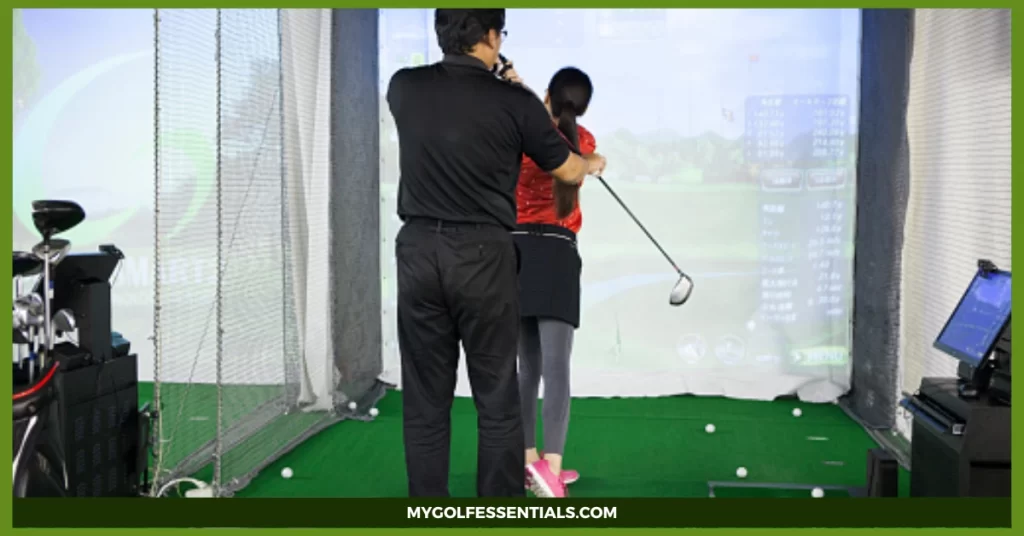
Simulator setups pair a launch monitor with a high-speed projector, impact screen, and simulation software. You hit into the screen, and the software recreates ball flight on digital versions of famous courses around the world.
SkyTrak and the Foresight Sports GC3 are two of the most popular choices for home simulator builds. Complete setups run from around $5,000 at the entry level to well over $20,000 depending on screen size, enclosure quality, and software package.
3. Professional and High-End Systems
TrackMan, the Foresight Sports GCQuad, and the Foresight GCHawk sit at the top of the market. PGA Tour coaches, elite club fitters, and performance centers use these systems as their standard.
The data output is the deepest available, and the accuracy margin is exceptionally tight. Systems in this category typically range from $15,000 to over $25,000.
Which Golf Launch Monitor Brands Are Worth Knowing?
The market has several strong players, each with distinct strengths. Here is what sets the most recognized brands apart.
1. TrackMan is the industry benchmark for radar-based accuracy. PGA Tour professionals, coaches, and fitting studios around the world rely on it more than any other system. Its outdoor accuracy, software depth, and data reliability have made it the default choice for high-level instruction and fitting for over a decade.
2. Foresight Sports leads the camera-based category with the GCQuad, GC3, and GCHawk. Their club data accuracy at impact is among the finest available, which makes Foresight equipment the dominant choice for indoor fitting bays and serious simulator setups.
3. SkyTrak built its reputation on delivering strong accuracy at a fraction of professional prices. The original SkyTrak became a bestseller in the home simulator market through genuine value. The newer SkyTrak+ improved club data capture significantly and strengthened its standing in the mid-range space.
4. FlightScope uses both radar and fusion technology depending on the model. The Mevo and Mevo+ are well-regarded portable devices that compete strongly in the mid-range market. The Mevo+ is particularly respected for its outdoor accuracy relative to its price.
5. Garmin brought launch monitor technology to a broader audience with the Approach R10. It pairs with the Garmin Golf app, delivers solid fundamental metrics, and sits at one of the lowest price points in the category. For beginners stepping into data-driven practice for the first time, it’s a natural entry point.
How Do You Choose the Right Golf Launch Monitor for Your Game?
Four practical questions drive the right decision here. Work through each one honestly before spending a dollar.
1. Budget
Set a ceiling first, because the budget narrows the field quickly. Consumer devices under $1,000 deliver solid practice data for casual and recreational golfers. Mid-range options between $2,000 and $7,000 suit serious amateurs and small instruction operations.
Professional-grade systems above $15,000 make financial sense for full-time coaches, commercial simulator businesses, and fitting studios with consistent client volume.
2. Indoors or Outdoors
Environment shapes your technology choice significantly. Camera-based monitors suit indoor use because they analyze impact data directly without needing the ball to travel.
Radar systems produce their best results outdoors with open space for tracking full flight. Planning a home simulator? A camera-based device is the more reliable choice for consistent indoor accuracy.
3. Skill Level
Beginners get the most from basic data: ball speed, carry distance, and launch angle. Those three numbers alone can reshape how you practice and understand your distances.
Advanced players need deeper metrics like attack angle, spin axis, and face-to-path numbers to make meaningful technical adjustments. Match the data depth to where your game actually is, not where you hope it will be.
4. Accuracy
For club fitting or performance coaching, small data differences matter enormously and justify a higher investment. For personal range sessions and general improvement tracking, a mid-range consumer device is more than sufficient.
Are Golf Launch Monitors Worth the Money?
For any golfer who practices regularly and genuinely wants to improve, yes, the investment pays off. Practicing without data often reinforces bad habits quietly, because you don’t realize a “good” feeling swing is producing poor numbers.
A launch monitor gives you immediate feedback on whether a swing change is actually working, and that kind of real-time confirmation accelerates improvement faster than almost any other method.
That said, these devices have limits worth keeping in mind. They measure output, not the root cause of a swing fault. Numbers reveal what happened at impact, but they don’t explain the underlying body movement that caused it. The most productive approach is using launch monitor data alongside coaching from a qualified instructor, not as a replacement for it.
Who Gets the Most Out of a Golf Launch Monitor?
Consider where you fall across these profiles:
- Serious amateurs who practice regularly and want measurable, trackable progress over time
- Home simulator builders looking for year-round indoor practice regardless of weather
- Club fitters and instructors who need reliable, repeatable data for client sessions
- Data-driven beginners who want to build correct habits from the very first session
If you play a handful of times per year and rarely practice, a launch monitor won’t dramatically change your game. But if lowering your handicap is a real goal and you’re willing to put in range time, golf launch monitors are among the most high-return training tools available at any price point.
Final Thoughts
Golf launch monitors have moved well beyond Tour-level exclusivity. Today, devices at every price point deliver genuine, actionable data for golfers at every skill level.
The right choice depends on your budget, your practice environment, and how much data depth your game actually needs right now. Start by identifying what matters most to you, match the technology to those priorities, and let real numbers drive your improvement from here.
Key Takeaways
- Golf launch monitors measure ball and club data in real time using radar or camera technology
- Radar-based systems suit outdoor use; camera-based systems perform better indoors
- Core metrics include ball speed, club speed, launch angle, spin rate, and carry distance
- Consumer devices range from roughly $600 to $3,000; professional systems exceed $25,000
- TrackMan leads the professional radar segment; Foresight Sports leads in camera-based accuracy
- SkyTrak delivers strong value for home simulator setups at mid-range pricing
- Choosing the right monitor depends on budget, indoor vs. outdoor use, and skill level
- Launch monitors eliminate guesswork and show you exactly what changes in your swing are working
- They produce the best results when used alongside qualified coaching, not instead of it
- For golfers serious about improvement, a golf launch monitor is one of the highest-value practice investments available
FAQs
Can You Use a Golf Launch Monitor Without a Subscription?
Most golf launch monitors capture basic shot data, like ball speed and carry distance, without a subscription. However, full simulator access, detailed analytics, and premium course libraries almost always require a paid plan.
What Is the Lifespan of a Golf Simulator?
A well-built golf simulator lasts a decade or more with proper care. High-wear components like hitting mats and impact screens will need replacing after several hundred hours of use, but the core system is built for long term durability.
What Is the Difference Between Doppler Radar and Camera-Based Golf Launch Monitors?
Doppler radar systems track the ball through its actual flight path by bouncing radio waves off it as it travels. Camera systems capture high-speed images at impact and calculate ball and club data from those frames.
Do Golf Launch Monitors Work in Cold or Wet Weather Conditions?
Most outdoor radar-based monitors function in varied weather, though cold temperatures can affect ball compression and produce slightly shorter distance readings than warmer conditions. Many consumer devices are not fully weatherproof and perform best in dry environments.