Choosing the wrong driving range golf mat can quietly damage your technique and punish your joints with every swing. Most golfers grab the cheapest option they find online, hit balls for a few weeks, and wonder why nothing improves.
The right mat, though, transforms your home practice. This guide covers every type, the features that matter most, and how to match the right mat to your game and budget.
What Is a Driving Range Golf Mat?
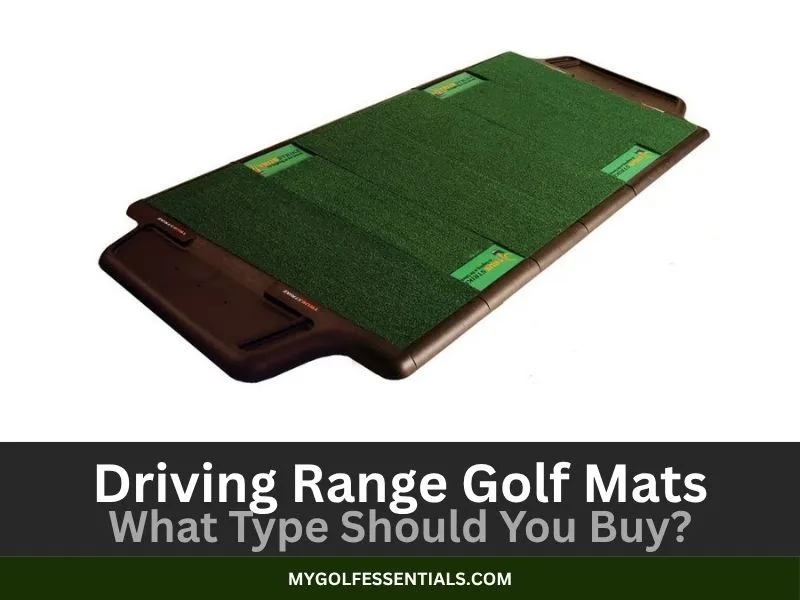
A driving range golf mat is a synthetic turf surface designed to replicate hitting off real grass. Set it on any flat surface, place your ball, and swing exactly as you would at a real course or practice facility. It creates a consistent, repeatable hitting surface whether you are in your garage, backyard, or living room.
Here’s the main difference from real grass: natural turf shows you exactly where your clubhead contacted the ground through a visible divot. A mat does not dig up, so that feedback disappears. Quality mats compensate through realistic fiber resistance and adjustable tee systems. The feedback works differently, but a good mat still tells you a great deal about your ball striking.
Driving range golf mats work best for:
- Beginners building their swing mechanics from the ground up
- Golfers without nearby access to a practice facility
- Anyone setting up a home simulator or impact net
- Players who want to practice indoors year-round
What Are the Different Types of Driving Range Golf Mats?
Five main types of driving range golf mats exist on the market. Each suits a different golfer, budget, and practice goal.
1. Range Mats (Commercial Mats)
Commercial range mats are the thick, heavy-duty surfaces you hit off at public driving ranges. These mats absorb thousands of swings per week without breaking down. They use dense nylon turf bonded to a firm rubber base built for long-term heavy use.
Pros:
- Extremely durable and built to last under punishment
- Handles heavy daily use without degrading quickly
- Requires minimal maintenance over time
Cons:
- Very firm surface that transfers shock directly to your joints
- Not portable or practical for home setups
- Provides the least realistic feel of any mat type
2. Residential Mats (Home Use Mats)
A residential driving range golf mat is lighter and more compact than its commercial counterpart. These mats fit comfortably on a patio, inside a garage, or on any living room floor. They deliver practical durability for casual to moderate home practice sessions.
Pros:
- Affordable entry-level price point for most budgets
- Lightweight and easy to move or store away
- Works on most flat indoor and outdoor surfaces
Cons:
- Wears out faster than commercial mats under regular use
- Thinner padding provides less joint protection over time
- Can slide on smooth hard surfaces without a non-slip backing
3. Premium Turf Mats
Premium turf mats replicate real fairway grass more accurately than any other type on the market.
They use high-quality polyethylene fibers that compress and recover like natural turf on every swing. Serious golfers and home simulator enthusiasts choose this style of driving range golf mat most often. Brands like TrueStrike are well regarded in this category for their dual-layer construction and realistic feel.
Pros:
- Most realistic hitting feel of any mat category available
- Delivers better feedback on fat and thin ball strikes
- Longer lifespan than standard residential options
Cons:
- Significantly higher cost than basic mats
- Heavier and less portable than entry-level options
- More than most casual golfers actually need
4. Hitting Strip Mats
A hitting strip mat features a narrow, replaceable turf section as the main striking zone. When that strip wears through, you swap it for a fresh one instead of replacing the entire mat. This design saves real money for golfers who practice at high volume.
Pros:
- Cost-effective investment over the long term
- Replaceable strip extends overall mat lifespan significantly
- Ideal for golfers who practice daily or multiple times weekly
Cons:
- Smaller hitting zone limits stance variation during practice
- Replacement strips create an ongoing recurring cost
- Can feel slightly less stable than full-surface mats
5. Fiberbuilt-Style Mats
Fiberbuilt-style mats replace flat turf sheets with individual standing fiber bristles. Each bristle compresses under the club on impact and springs back immediately, closely mimicking how real turf reacts. This design reduces impact shock better than any other driving range golf mat available.
Pros:
- Exceptional shock absorption on every single swing
- Easiest on wrists, elbows, and shoulder joints over time
- Delivers the closest experience to divot-style feedback
Cons:
- Sits at the premium end of the price spectrum
- Requires specific cleaning care to maintain bristle performance
- Less widely available in physical retail locations
Driving Range Golf Mat Comparison Table
| Mat Type | Best For | Durability | Approx. Price Range | Joint Protection |
| Range Mat | Commercial driving ranges | Very High | $150–$400+ | Low |
| Residential Mat | Casual home practice | Moderate | $30–$120 | Moderate |
| Premium Turf Mat | Serious home golfers | High | $150–$500+ | High |
| Hitting Strip Mat | High-volume daily practice | High | $80–$250 | Moderate |
| Fiberbuilt-Style Mat | Injury prevention | Very High | $300–$700+ | Very High |
Key Features in a Driving Range Golf Mat
Focusing on these core features saves you from one of the most common and frustrating buying mistakes.
1. Ideal Mat Thickness
Aim for at least 1 inch of total mat thickness, including the base layer beneath the turf. Anything thinner transfers too much impact energy directly to your wrists and elbows with every swing. Most quality residential mats measure between 1 and 1.5 inches of total thickness.
Commercial mats tend to run thicker overall but feel much firmer because of their dense rubber base. For home practice, a slightly softer and thicker mat protects your body far more effectively than a firmer commercial-grade surface. If you plan to practice daily, prioritize padding thickness above everything else.
2. Best Turf Materials for Home Practice
Two materials dominate the turf surface market for driving range golf mats:
- Nylon turf: More durable and firm. Holds up well under heavy commercial use.
- Polyethylene turf: Softer and more lifelike. The better option for serious home practice.
Polyethylene fibers flex on impact, giving you cleaner, more honest feedback on fat and thin strikes. Nylon holds up longer under punishing use but gives back very little feedback feel. For home practice, polyethylene wins every time.
3. Shock Absorption
This matters more than most golfers expect. Poor shock absorption causes the most common mat-practice injuries: wrist strain, tennis elbow, and shoulder soreness. A mat without proper cushioning forces your joints to absorb the full force of every mis-hit.
Look for mats with a foam or rubber underlayer beneath the turf. That base layer absorbs the energy your joints would otherwise take. Some premium options layer multiple materials for maximum impact protection. If you practice at high volume, shock absorption becomes the most critical feature on this entire list.
4. Choosing the Right Mat Size
Standard residential mats range from 2×4 feet up to 5×5 feet. Match the size to your available space and practice goals:
- Small mats (2×3 ft): Ideal for iron and wedge work in tight indoor spaces
- Medium mats (3×5 ft): The most versatile option for the majority of home setups
- Large mats (5×5 ft or bigger): Best suited for full simulator setups paired with an impact net
Always measure your practice area before making any purchase. A mat too large for your space becomes a safety hazard and eventually collects dust in a corner.
5. Tee Compatibility and Height Options
Some mats let you press real wooden tees directly into the turf fibers without any special insert needed. Check whether the mat includes a built-in rubber tee hole or an adjustable tee system. Better mats offer multiple height settings that mimic different teeing conditions across club types.
The ability to use real wooden tees delivers the most realistic tee shot experience possible on a synthetic surface. If you practice your driver frequently, this feature becomes non-negotiable in your selection process.
Which Driving Range Golf Mat Is Right for Your Game?
Skill level influences what you need from a driving range golf mat more than almost any other buying factor.
Beginners need a forgiving mat with solid padding above everything else. Your swing path is still developing, which means plenty of fat shots during practice. A thick residential mat or hitting strip mat absorbs those mis-hits without punishing your body during the learning curve.
Intermediate golfers benefit from better turf quality and more realistic feedback. At this stage, you want to feel the difference between a clean strike and a fat one as honestly as possible. A premium turf mat or Fiberbuilt-style option starts delivering real value here.
Advanced golfers demand the most accurate feedback a mat can provide. A Fiberbuilt-style or high-end premium driving range golf mat gives you the closest experience to hitting off real fairway grass. Serious players also practice more frequently, so durability becomes just as important as feel.
How Does a Driving Range Golf Mat Compare to Real Grass?
Each option carries distinct advantages depending on your situation and goals. Neither beats the other across every scenario.
| Factor | Golf Mat | Real Grass |
| Strike Feedback | Limited divot feedback | Full divot and lie feedback |
| Consistency | Same surface every session | Varies with weather and conditions |
| Availability | Practice anytime, anywhere | Depends on weather and facility access |
| Joint Impact | Depends on mat quality | Natural ground cushioning |
| Cost | One-time mat purchase | Ongoing course or range fees |
Real grass rewards clean ball-striking immediately. You see the divot, feel the turf release through the club, and get honest feedback on every shot. But grass depends on weather, daylight, and proximity to a course or range.
A quality driving range golf mat gives you consistent, accessible practice volume whenever you need it. Use your mat to build muscle memory and repetitions. Use real grass sessions to calibrate your feel and test your swing under actual playing conditions.
What Mistakes Should You Avoid When Buying a Golf Mat?
Most golfers regret their mat purchase within a few months. These are the five mistakes that cause it most often.
- Buying too thin: Any mat under 1 inch thick puts your joints at real risk over time. This is not a place to compromise.
- Ignoring shock absorption: A cheap foam base seems fine until you hit 300 balls in a session and your elbow aches the next morning.
- Getting the wrong size: Measure your practice space before buying. A mat that does not fit your area ends up unused.
- Going too cheap: Budget mats wear out within months, feel unnatural, and mask fat shots. That builds the wrong habits into your swing.
- Forgetting tee compatibility: Confirm the mat works with your preferred tee type before completing the purchase.
How Do You Set Up a Driving Range Golf Mat at Home?
Setting up your mat correctly takes a few minutes but makes a significant difference in safety and performance. Start with the right surface beneath the mat and build from there.
Best surfaces for placement:
- Concrete or asphalt: Most stable option available. Add a rubber anti-fatigue mat underneath for foot and knee comfort.
- Short-pile carpet: Works well indoors and provides natural grip to prevent mat sliding.
- Grass: Fine for outdoor use, but watch for shifting. Secure mat edges with sandbags or ground stakes.
Alignment and safety basics:
- Place an alignment rod or spare club shaft parallel to your target line behind the mat.
- Face the mat toward an impact net, screen, or a safe open area with no foot traffic.
- Clear enough swing room on your lead side so nothing interrupts your follow-through.
- Never swing toward any area where people could walk through unexpectedly.
How Do You Maintain Your Driving Range Golf Mat?
A well-maintained driving range golf mat outlasts a neglected one by years. The upkeep is genuinely simple and takes almost no extra time.
Cleaning:
- Brush turf fibers regularly with a stiff-bristle brush to restore them to an upright position.
- Rinse outdoor mats with water after dusty or dirty practice sessions.
- Avoid harsh chemical cleaners that break down synthetic turf fibers over time.
Storage:
- Roll the mat rather than folding it to prevent permanent crease damage to the base.
- Store it indoors during extreme heat or prolonged freezing conditions when possible.
- Keep the rubber base away from extended UV exposure, which causes cracking and separation.
When to replace it:
- Replace when turf fibers flatten out and stop bouncing back after brushing.
- Swap hitting strip sections on strip-style mats as soon as bald patches appear.
- Replace any mat where the base layer cracks or separates from the turf surface.
Are Expensive Driving Range Golf Mats Worth the Money?
For most golfers who practice regularly, yes. A quality driving range golf mat from a reputable brand outlasts several cheap replacements while protecting your body in the process.
Here’s the thing: cheap mats deteriorate within months under regular use. A premium mat lasts several years under the same conditions. That extended lifespan makes the higher upfront cost more economical over any reasonable time horizon.
More importantly, a better mat protects your joints. A wrist or elbow injury from a bad mat costs far more in lost practice time than any price difference between budget and premium options.
The one exception is casual golfers who swing a club once or twice per week. A mid-range mat in the $80 to $150 range handles that level of use perfectly well without the premium investment.
Final Thoughts
Choosing the right driving range golf mat starts with three questions. How often do you practice? Where do you practice? What does your body need from a hitting surface?
Beginners do well with a solid residential mat that balances padding and affordability. Intermediate and advanced golfers gain measurable value from premium turf or Fiberbuilt-style options that replicate real fairway conditions.
Never sacrifice thickness or shock absorption to save a few dollars. Your joints pay that price later. Match the mat to your game, set it up right, and you have a home practice setup that delivers real results year-round.
Key Takeaways
- A driving range golf mat delivers a consistent, accessible practice surface at home or indoors without depending on weather or facility access.
- Five main types exist: range mats, residential mats, premium turf mats, hitting strip mats, and Fiberbuilt-style mats, each built for different goals.
- Aim for at least 1 inch of total mat thickness to protect your joints during any regular practice volume.
- Polyethylene turf feels more realistic than nylon and gives more honest ball-strike feedback on every shot.
- Fiberbuilt-style mats deliver the strongest shock absorption and put the least strain on your wrists and elbows long term.
- Beginners should prioritize padding and affordability over premium turf feel when starting out.
- Advanced golfers gain the most from mats that closely replicate real fairway grass conditions and divot-style feedback.
- Cheap mats wear out fast and can build bad swing habits by masking fat shots that real grass would immediately expose.
- Always measure your practice area before purchasing to confirm the right mat size for your specific setup.
- Regular brushing and proper storage extend the lifespan of any driving range golf mat by years.
FAQs
Do Golf Mats Damage Your Clubs?
A quality driving range golf mat does not damage your clubs under normal use conditions. Very firm commercial-style mats may cause minor wear to iron soles over time with repeated heavy striking. Choosing a mat with realistic turf fibers and proper shock absorption keeps both your clubs and your joints safe through regular practice sessions.
What Is the Difference Between a Hitting Mat and a Driving Range Golf Mat?
A hitting mat covers any synthetic surface used for practice swings in a broad sense. A driving range golf mat specifically replicates commercial range surfaces with a structured base and a larger hitting area. Both serve the same general purpose, but driving range mats typically offer more durability and a wider stance zone for full swing work.
How Long Does a Driving Range Golf Mat Last?
Most residential driving range golf mats last between two and five years under regular use. Daily practice sessions shorten that lifespan, especially in the central hitting zone where wear concentrates. Hitting strip mats extend overall durability since you replace only the worn section rather than discarding the entire mat and starting over.