
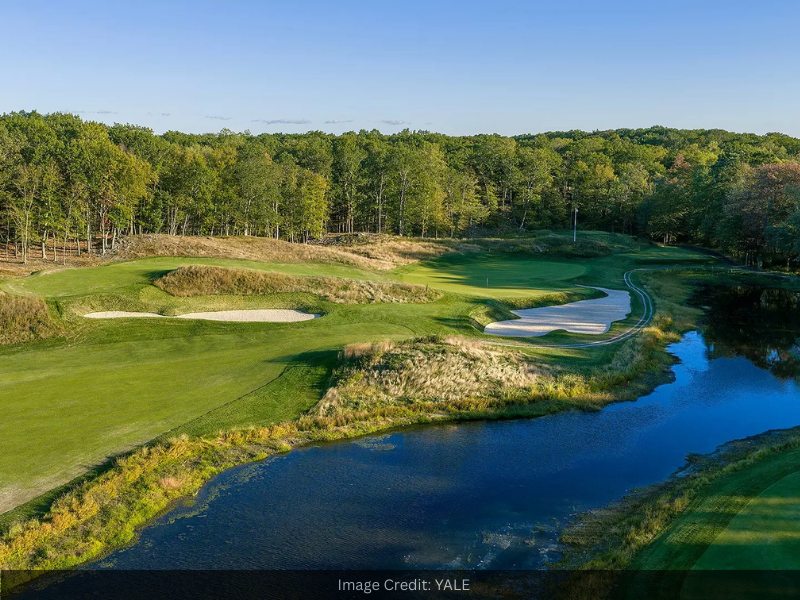
The Yale Golf Course restoration marks a historic moment for college golf as one of the most iconic university courses prepares to reopen ahead of its centennial celebration. Located in New Haven, Connecticut, the legendary Yale Golf Course has undergone a major transformation designed to restore its original character while preparing it for the future.
Originally opened in 1926, the course is widely considered one of the finest collegiate golf facilities in the United States. As it approaches its 100-year anniversary, the Yale Golf Course restoration ensures that the historic venue will continue to serve generations of players and golf enthusiasts.
A Landmark Restoration Project
The Yale Golf Course restoration project is one of the most significant renovation efforts in modern golf architecture. The restoration began after the course closed in September 2023 and has been part of a multi-year effort to bring the layout closer to its original design.
Renowned golf course architect Gil Hanse led the project. His work focused on returning the course to the vision created nearly a century ago by the original designers, Seth Raynor and Charles Blair Macdonald.
The restoration, estimated to cost around $25 million, involved extensive work on greens, bunkers, fairways, and drainage systems. The goal was not to redesign the course but to remove decades of changes and bring the layout back to its historic form.
Returning the Course to Its Original Vision
A central aim of the Yale Golf Course restoration was to recreate the playing conditions that existed when the course first opened in 1926. Architects focused on restoring the classic template holes that have made the course famous among golf historians.
These template holes, such as Redan and Biarritz, reflect architectural concepts inspired by famous British links courses. Over the years, changes to the course had altered the original design, but the restoration seeks to reintroduce the dramatic bunkering, natural terrain, and strategic angles that once defined the layout.
Experts believe that restoring these elements will once again showcase the brilliance of Raynor’s design and elevate the course among the best classic golf layouts in the United States.
Preparing for the Centennial Celebration
The completion of the Yale Golf Course restoration arrives at a meaningful time. The course will celebrate its 100th anniversary in 2026, marking a century since it first opened to golfers.
The centennial celebration will highlight the course’s legacy within college golf and its importance to the history of the game. Over the decades, the course has hosted prestigious competitions, including the U.S. Junior Amateur Championship and multiple NCAA regional tournaments.
As the centennial approaches, the restored course is expected to attract attention from golf historians, architecture enthusiasts, and players who want to experience one of the sport’s most famous collegiate venues.
A Historic Course with a Bright Future
The Yale Golf Course restoration is not only about preserving history—it also prepares the course for the next century of golf. Improvements to turf quality, course infrastructure, and maintenance practices aim to provide a better playing experience while protecting the historic design.
Yale Athletics has emphasized that the restored course will continue to serve both competitive golfers and members of the public who visit the facility. The course has long been known as one of the best university-owned golf courses in the country and remains an important part of the Yale athletic community.
The project also highlights a growing trend in golf architecture: restoring historic courses rather than replacing them with modern designs. By preserving the original vision of Raynor and Macdonald, the restoration allows golfers to experience the strategic challenges that defined early American golf course architecture.
Renewed Excitement for Golf Fans
With the Yale Golf Course restoration nearing completion and the centennial celebration approaching, excitement is building among golfers and historians alike. The restored course promises to deliver a playing experience that honors its rich past while embracing the future.
For Yale University, the reopening represents more than just a renovation; it is a celebration of a landmark course that has shaped collegiate golf for nearly a century. As players return to its fairways, the historic course will once again stand as one of the most remarkable golf venues in the United States.