If you want stronger shoulders, better upper-body stability, and a safer way to lift overhead, the dumbbell shoulder press is an essential exercise to master.
In this article, we’ll show you how to do it with proper form, explain the key benefits, and highlight the common mistakes to avoid so you can get the most out of every rep. Keep reading to learn how this simple yet powerful exercise can transform your workouts and help you build stronger, more balanced shoulders.
What is Dumbbell Shoulder Press?
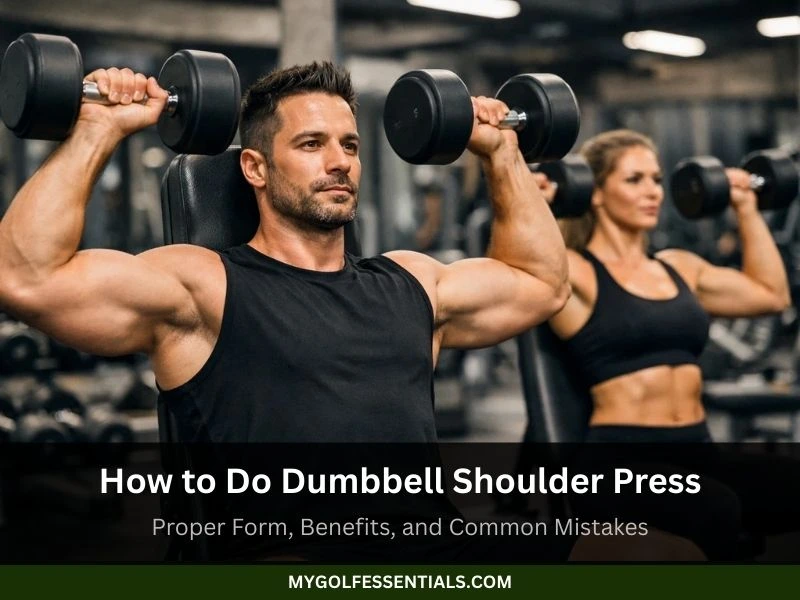
The dumbbell shoulder press is a classic upper-body exercise that targets your shoulders by pressing dumbbells overhead. Unlike machines, using dumbbells requires both arms to work independently, helping you build strength, balance, and coordination. You can perform it seated or standing, depending on your comfort level and training goals.
What Muscles It Works
The dumbbell shoulder press isn’t just a shoulder exercise. It engages several muscles throughout your upper body. Here are the muscles it works:
Primary muscles:
- Deltoids (shoulders): The main target, especially the front (anterior) and side (lateral) portions.
- Triceps: These assist in pushing the dumbbells overhead.
Supporting muscles:
- Upper chest (clavicular portion of pectorals): Helps stabilize the lift.
- Trapezius (upper traps): Supports shoulder movement and helps maintain posture.
- Core muscles: Your abs and lower back stabilize your body, especially when standing.
Why It’s a Key Shoulder Exercise
The dumbbell shoulder press is essential if you want strong, well-rounded shoulders. It builds both size and strength, improves posture, and increases upper-body stability.
Since it also engages supporting muscles like your core and traps, it helps improve overall upper-body control and balance. Thus, making it a foundational move for beginners and advanced lifters alike.
Now that you have a brief idea of what the dumbbell shoulder press is, let’s find out how to perform it in the coming sections.
How to Prepare Before You Start
Proper preparation helps you press with better form, lift safer, and get more results from the dumbbell shoulder press. Before you pick up the weights, focus on warming up, choosing the right dumbbells, and setting yourself up safely.
Here’s how you can do them in general:
1. Do Warm-Up Moves for Shoulders and Upper Body
Warming up your shoulders and upper body reduces injury risk and improves movement during the exercise. Spend 5–8 minutes on light, controlled motions.
- Arm circles: Rotate your arms forward and backward to loosen the shoulder joints.
- Shoulder rolls: Roll your shoulders up, back, and down to activate the traps.
- Band pull-aparts or light dumbbell raises: Use very light resistance to wake up your shoulder muscles.
- Push-ups or wall push-ups: Get blood flowing through your chest, shoulders, and triceps.
Keep all warm-up movements slow and controlled. You should feel warm, not tired.
2. Choose the Right Dumbbells
Selecting the right weight is key to proper form and steady progress.
- Start with lighter dumbbells if you’re new to the movement.
- You should be able to complete all reps with full control and without leaning back.
- If you have to swing the weights or arch your lower back, the dumbbells are too heavy.
- Increase weight only when you can perform every rep with clean form.
Good form always matters more than lifting heavy.
3. Safety Tips Before Lifting
A few simple checks before you start can protect your shoulders and lower back.
- Sit or stand with your core tight and spine neutral.
- Keep your feet flat and stable on the floor.
- Make sure your grip is firm and wrists stay straight.
- Avoid locking your elbows hard at the top of the movement.
- Stop immediately if you feel sharp shoulder or joint pain.
Taking a moment to prepare sets the foundation for a strong, safe dumbbell shoulder press.
How to Do Dumbbell Shoulder Press: Step-By-Step Guide
The dumbbell shoulder press is simple in theory, but doing it correctly makes a big difference in results and safety. Follow these steps carefully to keep proper form, protect your shoulders, and get the most out of every rep.
Step 1: Get Into the Starting Position
You can perform the dumbbell shoulder press seated or standing.
- Seated: Sit on a bench with back support. Keep your feet flat on the floor and your back firmly against the bench.
- Standing: Stand tall with feet shoulder-width apart. Slightly bend your knees and tighten your core.
Hold one dumbbell in each hand and rest them at shoulder height. Your palms should face forward or slightly inward. Elbows should be bent at about 90 degrees and positioned slightly in front of your body, not flared straight out to the sides.
Keep your chest up, shoulders down, and spine neutral.
Step 2: Brace Your Core and Set Your Posture
Before you start pressing, tighten your core muscles as if you’re preparing for a light punch to the stomach. This helps protect your lower back and keeps your body stable.
- Keep your head in a neutral position.
- Avoid leaning back.
- Keep your wrists straight, not bent backward.
This setup is key for safe and effective lifting.
Step 3: Press the Dumbbells Upward
Begin the movement by pressing the dumbbells straight up over your head.
- Push smoothly and evenly with both arms.
- Keep the dumbbells moving in a controlled path.
- Do not let one arm rise faster than the other.
As the dumbbells move upward, your elbows should extend naturally. Stop just before your arms fully lock out at the top.
Step 4: Control the Top Position
At the top of the movement:
- The dumbbells should be directly above your shoulders.
- Your arms should be nearly straight, but not locked.
- Your shoulders should stay down, not shrugged toward your ears.
Pause briefly for control, not momentum.
Step 5: Lower the Dumbbells Slowly
Lower the dumbbells back to the starting position in a slow and controlled manner.
- Keep tension in your shoulders.
- Lower until the dumbbells are back at shoulder level.
- Elbows should return to about 90 degrees.
Avoid letting the weights drop quickly. The lowering phase is just as important as the press.
Step 6: Breathe the Right Way
Proper breathing helps you stay strong and stable.
- Inhale as you lower the dumbbells.
- Exhale as you press the dumbbells upward.
Do not hold your breath during the lift.
Step 7: Repeat for Controlled Reps
Continue pressing for your desired number of repetitions.
- Focus on smooth, steady reps.
- Keep your form consistent from start to finish.
- Stop the set if your form starts to break down.
Quality reps matter more than heavy weight.
Key Form Check During Each Rep
As you perform each rep, keep these points in mind:
- Core tight at all times.
- No excessive arching of the lower back.
- Elbows slightly forward, not flared wide.
- Controlled speed on both the way up and down.
Doing the dumbbell shoulder press step by step with proper form helps you build strong shoulders, improve stability, and reduce injury risk. Once you master this technique, you’ll get better results and progress faster over time.
Benefits of Dumbbell Shoulder Press For Your Golf Performance
The dumbbell shoulder press is more than just a shoulder-strengthening exercise. It can have a direct impact on your golf game. For a fact, improving shoulder strength, stability, and overall upper-body control helps you swing more efficiently, reduce injury risk, and increase power.
Below are the key benefits explained in detail.
1. Builds Shoulder Strength and Swing Power
Strong shoulders are essential for a controlled and powerful golf swing. The dumbbell shoulder press targets the front and side delts, helping you generate more force during your swing. Because each arm works independently, it also corrects strength imbalances that can affect swing consistency.
2. Improves Upper Body Stability and Posture
A stable upper body is crucial for a smooth golf swing. This exercise strengthens the muscles that support your shoulders, upper back, and core, helping you maintain proper posture throughout the swing. Better posture reduces fatigue on long rounds and prevents slouching that can throw off your form.
3. Supports Joint Health and Shoulder Mobility
Golf puts repeated stress on the shoulders and rotator cuff. By strengthening and stabilizing the shoulder joints, the dumbbell shoulder press helps maintain mobility and reduces the risk of overuse injuries. Using dumbbells allows a natural range of motion, which is safer for your joints than machines or rigid bars.
4. Enhances Energy and Endurance
Although it’s primarily a strength exercise, the dumbbell shoulder press engages multiple upper-body muscles, improving endurance and energy for long rounds. Stronger muscles help maintain swing power even in the later holes, keeping your performance consistent.
Additional Benefits for Golfers
- Improves balance and coordination: Each arm moves independently, helping you stabilize your body during your swing.
- Strengthens your core: Standing variations activate your abs and lower back, which are key for rotational power in golf.
- Transfers to daily movements: Lifting, reaching, and swinging motions in golf become easier and safer.
- Fits all skill levels: You can adjust dumbbell weight, reps, and variations to match your fitness and golfing needs.
By including the dumbbell shoulder press in your routine, you’ll strengthen the muscles that matter most for golf while improving control, stability, and swing efficiency.
Common Mistakes to Avoid
Even small errors during the dumbbell shoulder press can reduce results and increase the risk of injury. Watch out for these common mistakes and focus on correcting them.
- Using Too Much Weight: Starting with dumbbells that are too heavy can force you to use momentum instead of muscle, which reduces effectiveness and stresses your shoulders. Begin with a manageable weight and increase gradually as your strength improves.
- Arching the Lower Back: Leaning back to press the dumbbells overhead puts unnecessary strain on your spine. Keep your core tight and spine neutral throughout the movement to protect your lower back.
- Flaring Elbows Too Wide: Allowing your elbows to flare out excessively can strain your shoulder joints. Keep your elbows slightly in front of your body and aligned with your wrists for a safer, more effective press.
- Rushing Reps or Using Momentum: Pressing the weights too quickly reduces control and limits muscle activation. Focus on slow, controlled movements, both on the way up and down.
- Not Engaging Your Core: Your abs and lower back stabilize your body during the lift. Forgetting to brace your core can affect balance, posture, and the efficiency of the exercise.
- Neglecting Shoulder Mobility: Attempting the press without sufficient shoulder mobility can lead to pain or injury. Warm up properly and consider lighter dumbbells or reduced range of motion if needed.
Variations You Can Try
The dumbbell shoulder press can be performed in several ways to match your fitness level, goals, and available equipment. Trying different variations can also prevent boredom and help target your muscles from slightly different angles.
- Seated Shoulder Press: Sitting on a bench with back support keeps your lower back stable, allowing you to focus more on your shoulders. This is ideal if you want to lift slightly heavier weights safely.
- Standing Shoulder Press: Performing the press while standing engages your core and lower body for additional stability. This version helps improve overall balance and functional strength.
- Single-Arm Dumbbell Press: Pressing one arm at a time forces each shoulder to work independently, helping correct strength imbalances. It also increases core activation as your body works to stay stable.
- Arnold Press: Named after Arnold Schwarzenegger, this variation starts with palms facing your chest and rotates outward as you press the dumbbells overhead. It targets all parts of the delts and adds a greater range of motion.
- Alternate Press for Beginners: If you’re new to shoulder presses, try pressing one arm at a time while keeping the other dumbbell at shoulder height. This helps maintain control and proper form while building confidence with the movement.
When done correctly, these variations can help you build strength, improve stability, and keep your workouts challenging and effective.
How Many Sets and Reps
The number of sets and reps you do for the dumbbell shoulder press depends on your goals, fitness level, and whether you want to focus on strength, muscle growth, or endurance.
Here’s a general idea of how many sets and reps may be required, depending on your focus:
| Goal | Sets | Reps | Rest Between Sets |
| Strength | 3–5 | 4–6 | 90–120 seconds |
| Muscle Growth (Hypertrophy) | 3–4 | 8–12 | 60–90 seconds |
| Endurance / Toning | 2–3 | 12–20 | 30–60 seconds |
Tips for Reps and Sets
- Start light: Begin with lighter dumbbells to master form before increasing weight.
- Control the movement: Focus on slow, controlled reps rather than rushing.
- Progress gradually: Add weight or reps only when you can complete all sets with proper form.
- Listen to your body: Stop if you feel pain in your shoulders, elbows, or lower back.
By following the right sets and reps for your goals, you can safely and effectively strengthen your shoulders and upper body.
When to Skip or Modify
The dumbbell shoulder press is highly effective, but it’s not always safe for everyone. Knowing when to skip or modify the exercise can help you avoid injury and still strengthen your shoulders safely.
Shoulder Pain or Injury
If you have current shoulder pain, inflammation, or an injury, it’s best to skip the dumbbell shoulder press until cleared by a healthcare professional. Pressing overhead with pain can worsen the condition. Focus on rehabilitation exercises or consult a physiotherapist for safe alternatives.
Limited Mobility
Limited shoulder or upper-body mobility can make it difficult to perform the press safely. If your range of motion is restricted:
- Reduce the overhead movement range.
- Use lighter dumbbells.
- Perform seated or single-arm variations
These modifications allow you to work the muscles without straining your joints.
Alternative Moves
If pressing overhead isn’t suitable, you can still strengthen your shoulders with safer alternatives:
- Lateral raises: Focus on side delts without overhead stress.
- Front raises: Target the front delts using a controlled range.
- Resistance band presses: Lower impact on joints while maintaining strength work.
By knowing when to skip or modify, you can protect your shoulders while still making progress with upper-body training.
Final Thoughts
The dumbbell shoulder press is a simple yet highly effective exercise that strengthens your shoulders, improves upper-body stability, and supports overall fitness. By following proper form, warming up correctly, and avoiding common mistakes, you can maximize its benefits while reducing the risk of injury.
Whether your goal is building strength, enhancing muscle size, improving posture, or even boosting performance for activities like golf, the dumbbell shoulder press is a versatile addition to any workout routine. Remember to adjust weight, reps, and variations to match your fitness level, and don’t hesitate to modify the exercise if you experience pain or have limited mobility.
Incorporate this exercise consistently, focus on controlled movements, and you’ll see improvements in strength, stability, and functional performance over time.
Resources:
- Research Gate: Exercise: Dumbbell Seated Shoulder Press
- National Library of Medicine(USA): Shoulder Muscle Activation of Novice and Resistance Trained Women during Variations of Dumbbell Press Exercises
Key Takeaways
- The dumbbell shoulder press is a fundamental upper-body exercise that targets shoulders, triceps, and supporting muscles like traps and core.
- It can be performed seated or standing, depending on your goals and stability requirements.
- Proper warm-up and preparation are essential to prevent injury and maximize performance.
- Maintaining a neutral spine and tight core ensures safe lifting and protects the lower back.
- Press the dumbbells overhead in a controlled motion, keeping elbows slightly forward and wrists straight.
- Using dumbbells independently helps correct strength imbalances between arms and improves coordination.
- The exercise builds shoulder strength, stability, and size, making it valuable for sports like golf and general fitness.
- Common mistakes include using too much weight, arching the back, flaring elbows, rushing reps, and neglecting core engagement.
- Variations like seated, standing, single-arm, Arnold, or alternate presses allow progression and adaptation for all fitness levels.
- Adjust sets, reps, and weight according to your goals (strength, hypertrophy, or endurance) and modify if you experience pain or limited mobility.
FAQs
Is dumbbell shoulder press better than barbell shoulder press?
Dumbbells often allow a more natural arm path, can reduce joint stress, and require more stabilizer activation than a barbell. Barbells usually let you lift heavier loads and may be better for maximal overhead strength, while dumbbells are excellent for hypertrophy and shoulder health.
Should I do dumbbell shoulder press seated or standing?
Seated pressing provides more stability and focuses stress on the shoulders by limiting leg drive. Standing pressing challenges core and full-body stability more but can be harder to keep strict if you tend to use momentum from the legs and lower back.
How heavy should I go on dumbbell shoulder press?
Choose a weight that lets you complete your target reps with 1–2 reps left in reserve and no breakdown in technique. For muscle growth, many lifters work in the 8–12 rep range, while slightly heavier 5–8 rep sets are often used for strength.