Golf ball spin is one of the most important yet often overlooked parts of the game. Whether you’re hitting a drive, an iron, or a chip, knowing how backspin and sidespin work can make a huge difference in your accuracy, distance, and control.
In this article, you’ll learn exactly what backspin and sidespin do, how they affect your shots, and practical tips to control them in 2026. Keep reading to improve your game and start hitting more precise, consistent shots every time you step on the course.
What Is Golf Ball Spin?
Golf ball spin is the rotation of the ball as it travels through the air. Every time you hit a shot, whether it’s a drive, an iron shot, or a chip, the ball starts spinning the moment it leaves the clubface. The amount and direction of this spin change the ball’s height, distance, and shape in the air.
With the right spin, you can hit straighter drives, stop your irons faster on the green, and add control to your short game. On the other hand, with the wrong spin, your shots can fly too high, fall short, or curve off target.
Types of Golf Ball Spin Include the following:
- Backspin: Backspin makes the ball rise higher and stay in the air longer. It also helps the ball stop quickly when it lands. Wedges and irons create the most backspin because of their loft and grooves. Backspin is helpful for approach shots and short-game control.
- Sidespin: Sidespin is the spin that makes the ball curve left or right. A small amount of sidespin can create a fade or draw on purpose. Too much sidespin leads to slices or hooks, which cause big misses. Most golfers try to limit sidespin on long shots to keep the ball straight.
- Topspin: Topspin makes the ball dive downward quickly. It is common in putting or special bump-and-run shots, but it’s rare in full swings. With full shots, the loft of the club naturally creates backspin, so topspin almost never appears unless the strike is very poor.
These spin types work differently in the air, and the next sections break down how each one shapes your shots and how you can control them on the course.
What Is Backspin?
Backspin is the backward rotation of the golf ball that happens when the clubface strikes the ball with a slightly downward motion and enough friction. When the ball rolls upward on the clubface at impact, it starts spinning backward as it leaves the club. This backward rotation interacts with the air and creates lift, which is why the ball climbs higher instead of flying straight forward.
How Backspin Affects Launch, Height, and Stopping Power
Backspin has a direct effect on how your ball travels under the following aspects:
- Launch: Higher backspin usually creates a steeper launch angle, helping the ball get into the air more easily.
- Height: The more backspin you produce, the higher the ball climbs during its flight because the spin adds lift.
- Stopping Power: High backspin makes the ball slow down quickly when it lands. This helps the ball either stop fast or even spin back on the green, giving you better control on approach shots.
Which Clubs Create the Most Backspin
Wedges and short irons create the most backspin because they have:
- More loft
- Sharper grooves
- Higher friction on the clubface
Pitching wedges, gap wedges, sand wedges, and lob wedges all generate high spin, especially when the grooves are clean and sharp. Mid-irons generate moderate spin, while drivers and long irons produce the least.
Why Backspin Helps Control Approach Shots
Backspin is one of the best tools for controlling approach shots. It helps the ball stop fast on the green, even from long distances. This means you can aim closer to the flag without worrying about the ball rolling past. With more backspin, you get a softer landing, tighter distance control, and a better chance to set up birdie opportunities.
What Is Sidespin?
Sidespin is the spin that makes the golf ball curve left or right during its flight. It happens when the clubface is not pointing in the same direction as the swing path at impact. This mismatch forces the ball to spin sideways as it leaves the club.
The bigger the difference between face angle and swing path, the more sidespin you create and the more the ball curves.
Ball Flight Shapes Caused by Sidespin: Fade, Slice, Draw, Hook
Sidespin is the main reason the ball shapes in the air. It creates four common flight patterns:
- Fade: A gentle curve from left to right (for a right-handed golfer). This is controlled sidespin and often a desired shot shape.
- Slice: A strong curve from left to right. This happens when there’s too much sidespin, usually from an open clubface.
- Draw: A gentle curve from right to left. Many golfers use a draw for extra distance and a stronger flight.
- Hook: A hard curve from right to left. This comes from excessive sidespin and usually leads to big misses.
How Unwanted Sidespin Hurts Accuracy
Too much sidespin quickly leads to inconsistency. When the ball curves more than you expect, you can:
- Miss fairways
- Miss greens
- Lose distance
- Land in trouble on both sides of the course
Furthermore, giving unwanted sidespin also makes the ball unstable in the wind. A small push from a side wind can turn a slight fade into a big slice.
Sidespin vs Curvature: How Much Is Too Much?
Some curvature is normal. In fact, almost every golf shot has a small fade or draw. Problems start when the ball curves more than a few yards.
Too much sidespin becomes a problem when:
- You struggle to control the start line,
- The ball finishes far off target,
- The curve keeps increasing with faster swings,
- You cannot predict where the ball will land.
A controlled fade or draw is useful. An excessive curve (like a slice or hook) shows that the face and path are too far apart.
Backspin vs Sidespin: Key Differences
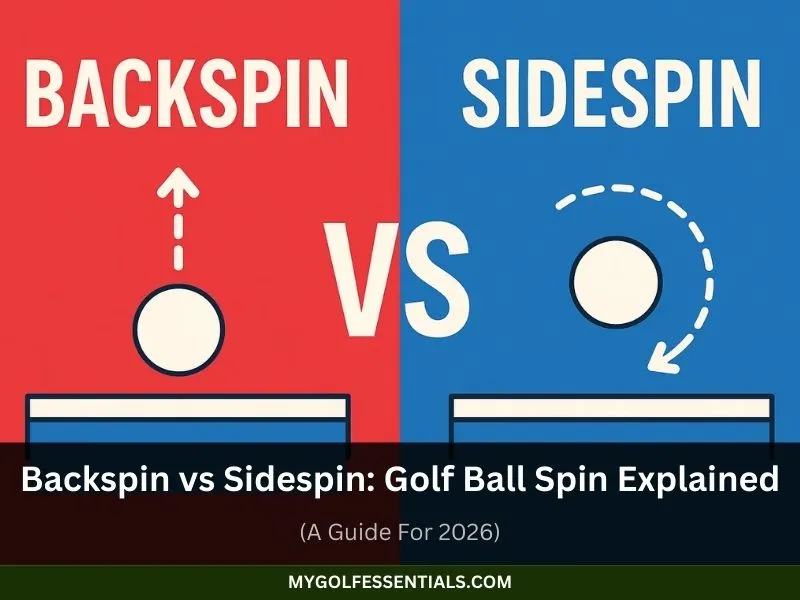
Backspin and sidespin affect the golf ball in very different ways. Understanding their differences helps you control your shots better and avoid big mistakes.
Here is a comparison table, showcasing some key differences between Backspin and Sidespin:
| Feature | Backspin | Sidespin |
| Direction of Spin | Rotates backward (toward the golfer) | Rotates sideways (left or right) |
| Effect on Ball Flight | Makes the ball rise higher and stay in the air longer | Makes the ball curve left or right |
| Impact on Distance | Can slightly reduce distance due to higher launch but increases control | Can reduce accuracy and effective distance if unwanted |
| Effect on Landing | Helps the ball stop quickly or spin back on the green | Can make the ball roll off target or miss the green entirely |
| Clubs That Create It | Wedges and short irons | Any club can create sidespin, usually from misaligned swing or clubface |
| Purpose | Improves approach shots, short game control, stopping power | Can be used intentionally for fades/draws, but excessive sidespin is a problem |
| Common Problems | Too little backspin: ball rolls too far | Too much sidespin: slices, hooks, loss of accuracy |
As you can see, backspin mainly controls height, landing, and stopping power, while sidespin controls curvature and shot shape. Both are essential in golf, but mastering backspin improves approach shots, and controlling sidespin prevents major misses.
How Golf Ball Spin Affects Your Game
Golf ball spin plays a major role in every shot you hit. The type and amount of spin can affect distance, accuracy, and how the ball behaves when it lands. Here’s how spin impacts different shots:
1. For Tee Shots
On drives from the tee, backspin helps lift the ball into the air, giving it distance and height. However, too much backspin can make the ball climb too high and lose roll after landing.
Remember, giving unwanted sidespin on tee shots leads to slices or hooks, causing the ball to curve off the fairway. Thus, controlling sidespin is key to hitting straight, long drives.
2. For Iron Shots
Iron shots rely heavily on backspin for control and stopping power. Proper backspin helps the ball land softly on the green and prevents it from rolling too far. Sidespin on iron shots can cause missed greens if the ball curves too much. A slight fade or draw can be used strategically, but excessive curvature reduces accuracy.
3. For Wedge Shots
Wedges are designed to produce high backspin. This helps the ball stop quickly on the green, giving you precise control for approach shots.
Backspin also allows for “spin back” shots, where the ball stops and rolls slightly backward after landing. Sidespin should be minimized to avoid hooks or slices near the green.
4. Around-the-Green Shots
Chipping and pitching rely on backspin to control roll and trajectory. More backspin allows the ball to stop close to the hole, making putts easier.
On the other hand, sidespin is usually undesirable around the green because it makes the ball roll unpredictably, affecting short-game accuracy.
5. Shot Performance in Wind
Spin interacts with wind to change ball flight. So, keep in mind the following general facts when playing in windy conditions:
- Backspin: In headwinds, more backspin keeps the ball higher and reduces roll. In tailwinds, too much backspin can reduce distance.
- Sidespin: Even slight sidespin can exaggerate curves in the wind, turning a small fade into a big slice or draw. Controlling sidespin is essential for consistent performance in windy conditions.
Mastering both types of spin improves every aspect of your game, from drives to short-game shots.
What Affects Golf Ball Spin?
Several factors determine how much spin your golf ball generates. Being aware of the following 7 aspects of play will help you control your shots and improve consistency.
1. Clubface Angle
The angle of the clubface at impact is one of the biggest factors affecting spin.
- A closed clubface (pointing left for right-handed golfers) can add sidespin, causing hooks.
- An open clubface (pointing right) can produce slices.
- The loft of the clubface also influences backspin: more loft = more backspin.
2. Swing Path
Your swing path determines how the club moves through the ball:
- Inside-to-out swing can create a draw.
- Outside-to-in swing can create a fade.
- A straight swing path minimizes unwanted sidespin, producing straighter shots.
3. Attack Angle
Attack angle is the vertical angle at which the club strikes the ball:
- Steeper downward strike increases backspin, especially with wedges.
- Shallow or upward strike produces less backspin and may reduce stopping power.
4. Strike Location on the Face
Where you hit the ball on the clubface affects spin:
- Center of the face produces predictable spin and flight.
- High or low contact can reduce backspin or cause inconsistent launch.
- Heel or toe strikes often increase sidespin, leading to slices or hooks.
5. Ball Quality and Compression
The type of golf ball affects how spin is generated:
- High-spin balls create more backspin and stopping power on greens.
- Low-spin balls produce less spin for straighter, longer drives.
- Ball compression matters too: firmer balls spin less on slower swings.
6. Club Groove Condition
Clean, sharp grooves grip the ball better, creating more spin:
- Worn grooves reduce friction and spin, especially on wedge shots.
- Regularly cleaning your clubface ensures optimal spin performance.
7. Course Conditions (Grass, Moisture, Rough)
Spin is also affected by the playing surface:
- Wet or thick grass reduces spin because the ball slides off the clubface.
- Dry, tight lies increase backspin.
- Rough can add sidespin and reduce distance, making shots harder to control.
Controlling spin isn’t just about swing technique. It also depends on the clubs and ball you choose, as well as the course conditions. Knowing these factors helps you hit more consistent and accurate shots.
5 Tips to Increase Backspin
Backspin gives you better control, softer landings, and more stopping power on the greens. Here are five ways to increase it effectively:
1. Set Up in the Right Stance
Your stance affects how the club strikes the ball.
- Position the ball slightly back in your stance for iron and wedge shots.
- Maintain a balanced posture with a slight forward tilt of the spine.
- A proper stance allows a clean, downward strike, which generates more backspin.
2. Make Clean Contact and Ball-First Strike
Clean contact is key to producing spin:
- Strike the ball before the ground (ball-first contact).
- Avoid hitting too much turf or fat shots, which reduce spin.
- A crisp strike allows the grooves on the clubface to grip the ball better.
3. Use Wedges with Fresh Grooves
Grooves on wedges help create friction and backspin:
- Sharper, clean grooves generate more spin.
- Worn grooves reduce the ball’s grip and backspin.
- Regularly clean your wedges or replace them when grooves are worn.
4. Select Matching Balls for Higher Spin
The type of golf ball matters:
- High-spin balls are designed to maximize backspin on irons and wedges.
- Mid- or low-spin balls reduce backspin but may help with longer drives.
- Choose balls that match your swing speed and desired control.
5. Practice Hitting Shots with the Ideal Swing Speed
Backspin increases with the right swing speed:
- Too slow reduces lift and stopping power.
- Too fast can create sidespin and less control.
- Practice consistent swing speeds that allow the clubface to grip the ball properly for optimal spin.
By focusing on stance, contact, club maintenance, ball choice, and swing speed, you can consistently generate more backspin and control your approach shots with precision.
5 Tips to Reduce Sidespin
Controlling sidespin is key to hitting straighter, more accurate shots. Here are five practical ways to reduce unwanted curve:
1. Fix the Open or Closed Clubface
The clubface angle at impact is the main cause of sidespin:
- Open clubface: Leads to slices (ball curves right for right-handed golfers).
- Closed clubface: Leads to hooks (ball curves left).
- Ensure the clubface is square at impact to minimize sidespin.
2. Straighten Your Swing Path
The path of your swing affects ball spin:
- Swinging inside-to-out can create draws; outside-to-in can create fades.
- For straighter shots, focus on a neutral, straight swing path through the ball.
- Use slow practice swings to feel the correct path.
3. Improve Grip and Body Alignment
Your grip and body position influence spin:
- Grip: Too strong or weak can twist the clubface at impact.
- Alignment: Square shoulders, hips, and feet help the clubface stay straight through the swing.
- Small adjustments in grip and stance can drastically reduce sidespin.
4. Do equipment Checks That Reduce Unwanted Curve
Sometimes equipment affects spin:
- Check shaft flex, club length, and lie angle for proper fit.
- Using the wrong shaft or club can create unwanted sidespin, especially on long shots.
- Regular club fitting can ensure your equipment supports straighter shots.
5. Practice Straighter Shots
Consistent practice helps reduce sidespin:
- Use alignment sticks or markers to guide your swing path.
- Practice hitting half-shots with controlled speed to focus on square contact.
- Work on drills that emphasize striking the ball in the center of the clubface.
- Record or monitor your swings to identify tendencies causing slices or hooks.
By focusing on clubface position, swing path, grip, equipment, and targeted practice, you can reduce unwanted sidespin and hit straighter, more accurate shots consistently.
How to Control Your Spin in 2026
To control your spin in 2026, you need to take charge of both your technique and your equipment. Start by focusing on your swing mechanics. You must keep your clubface square at impact, maintain a consistent swing path, and strike the ball cleanly. These fundamentals are the foundation for controlling both backspin and sidespin.
Next, pay attention to the equipment you use. You need golf balls designed to match your swing speed and desired spin level. High-spin balls give you more stopping power on approach shots, while low-spin balls help you hit longer, straighter drives. Your clubs matter too. So, make sure your wedges have sharp grooves, your irons are fitted correctly, and your driver is matched to your swing.
Take advantage of technology. You can use launch monitors and spin-tracking devices to see exactly how your spin behaves and make real-time adjustments. Modern club designs also help reduce unwanted sidespin while enhancing control over backspin.
Finally, practice with purpose. You must repeat drills that emphasize center-face contact, proper attack angle, and consistent swing speed. By combining proper technique, the right equipment, and focused practice, you can take full control of your spin and hit more accurate, consistent, and powerful shots in every round.
Common Spin Mistakes Golfers Make
Even experienced golfers struggle with spin when small mistakes creep into their game. Avoid these common errors to hit more consistent shots:
1. Hitting Down Too Much or Too Little
Striking the ball too steeply or too shallow can ruin spin.
- Too steep: You may create excessive backspin but lose distance and risk hitting fat shots.
- Too shallow: You reduce backspin, making it harder to control approach shots.
Focus on a smooth, balanced strike to get consistent spin.
2. Choosing the Wrong Ball for Your Game
Not all golf balls are created equal. Using a ball that doesn’t match your swing speed or spin needs can hurt both distance and control.
- High-spin balls: Best for precise approach shots.
- Low-spin balls: Ideal for straighter drives and longer shots.
Pick a ball that fits your style to control spin effectively.
3. Bad Contact Leading to Gear-Effect
Off-center hits, especially on drivers or long irons, create the gear-effect, causing the ball to spin sideways unexpectedly.
- Hitting toward the heel or toe increases unwanted sidespin.
- Focus on striking the center of the clubface to maintain predictable spin and flight.
4. Misreading Wind and Lie Effects
Spin interacts with wind and ground conditions, and misjudging them can ruin your shots:
- Wind: Strong gusts can exaggerate both backspin and sidespin effects.
- Lie: Hitting from rough, wet grass, or uneven ground changes spin behavior.
Always consider the environment before swinging to avoid surprises.
Avoiding these spin mistakes requires focus on contact, ball choice, and environmental awareness. Master these areas, and your ball flight will become more predictable, giving you better control and consistent results on the course.
Best Golf Balls for Spin Control in 2026
Choosing the right golf ball is one of the easiest ways to control your spin. In 2026, the top balls combine high spin, soft feel, and premium performance to give you better control around the greens and consistency on longer shots.
Here are our top recommendations for 2026:
High-Spin Balls
High-spin balls are designed to give maximum stopping power and control, especially on approach shots. Some top options include:
- Callaway Chrome Tour X: Known for exceptional responsiveness and high spin, ideal around the greens.
- Srixon Z-Star Diamond: Delivers high spin and higher ball flight for better stopping power on the green.
- Titleist Pro V1x / Pro V1x Left Dash: Popular among low-handicappers for soft feel and superior spin control.
- Bridgestone Tour B XS: Soft feel with excellent feedback, helping golfers generate spin even if driver distance is slightly reduced.
- Wilson Staff Model X: Firm-feeling ball that stops quickly on greens, perfect for precision shots.
Mid-Spin Balls
Mid-spin balls offer a balance between spin control and distance. They are ideal if you want some stopping power around the greens without sacrificing roll or carry on longer shots. Some options include the Srixon Z-Star XV, which adds durability while still maintaining spin.
Low-Spin Balls
Low-spin balls reduce sidespin and help golfers hit straighter drives. These are ideal for players who struggle with slices or hooks but still want some backspin on shorter shots.
Which Type Is Best for Your Handicap and Swing Speed?
When choosing a golf ball, think about what matters most for your game. Consider the following brands if you want to match your ball to your needs:
- Maximum Greenside Spin: If you want the ball to stop quickly on the green, try Chrome Tour X, Z-Star Diamond, or Staff Model X.
- Soft Feel & Spin: For a softer feel and good spin, go with Bridgestone Tour B XS or Titleist Pro V1x.
- Durability with Spin: If you want a ball that lasts longer but still spins well, choose Srixon Z-Star XV (it has a special Spin Skin+ coating).
- High Swing Speeds: If you swing the club really fast, the Chrome Tour X and Tour B XS are the best options.
Key Features to Look For:
- Soft Covers: Balls with soft covers help you control spin and make it easier to stop the ball on the green.
- Spin-Boosting Coatings: Some balls, like the Srixon Z-Star XV, have coatings that give extra spin on wedge shots.
- Tour-Level Performance: Balls used by professional golfers usually offer the best spin, control, and overall performance.
To control spin in 2026, pick a ball that matches your swing speed, feel preference, and shot requirements. High-spin balls help with greenside stopping power, mid-spin balls offer a balance of control and distance, and low-spin balls reduce sidespin for straighter shots. Choosing the right ball gives you the precision and consistency needed to improve every part of your game.
Final Thoughts
Mastering golf ball spin is essential for improving every part of your game, from drives to approach shots and short-game finesse. Backspin helps you control height, stopping power, and precision on the greens, while sidespin shapes your shots and affects accuracy.
By understanding how each type of spin works, avoiding common mistakes, and using the right equipment (like properly fitted clubs and balls suited to your swing), you can take control of your shots.
In 2026, combining solid technique with modern spin-friendly golf balls and focused practice will give you better consistency, more predictable ball flight, and increased confidence on the course. Whether you’re aiming to stop your irons closer to the pin or hit straighter drives, learning to control backspin and sidespin is a game-changer that can lower your scores and make every round more enjoyable.
Key Takeaways
- Golf ball spin is the rotation of the ball in the air and affects distance, height, and shot shape.
- Backspin makes the ball rise higher, stay in the air longer, and stop quickly on the green.
- Sidespin causes the ball to curve left or right, creating fades, draws, slices, or hooks.
- Topspin is rare in full swings and mostly appears in putting or bump-and-run shots.
- Wedges and short irons generate the most backspin, while drivers and long irons create the least.
- Controlling sidespin is crucial for hitting straighter drives and avoiding big misses.
- Spin is affected by clubface angle, swing path, attack angle, strike location, ball type, club grooves, and course conditions.
- High-spin balls help stop the ball quickly on greens; low-spin balls reduce sidespin for straighter shots.
- Proper technique, equipment, and practice are key to controlling both backspin and sidespin.
- Avoid common mistakes like wrong ball choice, poor contact, misreading wind, and incorrect swing mechanics to achieve consistent, accurate shots.
FAQs
What is a good spin rate for a driver?
PGA Tour pros average 2,685 RPM off the driver, while amateur males hit around 3,275 RPM. Ideal rates range from 1,900-2,800 RPM depending on swing speed and launch angle for distance. Lower spin suits faster swings to avoid ballooning.
What causes too much spin on a golf ball?
High spin often results from steep angle of attack, open clubface, or low swing speed compressing softer balls excessively. Wet grooves or poor contact also increase friction. Topspin from hitting fat shots reduces distance further.
How can you reduce golf ball spin?
Choose low-spin balls with ionomer covers for drivers, maintain shallow angle of attack, and ensure clean clubface grooves. Tee the ball higher and hit up on it to minimize dynamic loft. Faster swings naturally lower relative spin.
Do all golf balls spin the same?
No, premium urethane-covered balls spin more for greenside control, while distance balls with firmer covers spin less to maximize tee shots. Construction, dimple patterns, and compression ratings dictate spin profiles.