Skip to content
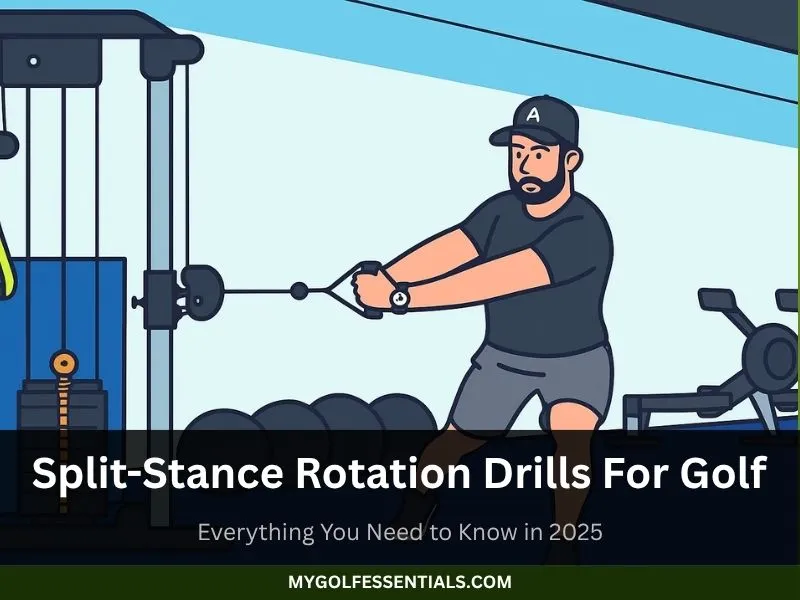
Looking to hit longer drives, make cleaner contact, and stay balanced through every swing? The secret might not be in your arms or club but in how your body rotates. Don’t worry, we’ve got you covered with this article.
In this guide, we’ll explore split-stance rotation for golf, a simple yet highly effective drill that builds both power and stability. Whether you’re a weekend golfer or looking to compete in 2025, this article will show you how to set up, practice, and integrate this technique into your game for better results on every shot.
Why Power and Stability Matter in Your Golf Swing
Power and stability are the two main forces behind a strong, repeatable golf swing. Here, power gives you distance, while stability gives you control. And both these attributes depend on how well your body moves and stays balanced throughout the swing.
When your body can rotate smoothly while staying grounded, you create more club-head speed and transfer that energy efficiently into the ball. Thus, helping you to play longer drives and more consistent contact.
Furthermore, stability also lets you control that power, keeping your posture solid. Thus, preventing unnecessary movement and allowing your hands and club to return to the same spot at impact.
Common Faults You May Make Due To Lack of Stability or Rotational Power When Playing Golf
When golfers don’t have enough stability or rotational strength, several swing issues tend to appear. Some of the key mistakes can include the following:
- Loss of Balance During the Swing – The body sways or falls off-center, especially during the downswing, reducing solid contact.
- Early Extension – Standing up too early from posture due to weak lower-body control, leading to mishits.
- Swaying or Sliding Hips – Instead of rotating, the hips move sideways, breaking the kinetic chain and causing inconsistency.
- Limited Turn or Over-Rotation – Weak core or tight hips restrict rotation, while compensating with the arms causes timing issues.
- Casting or Scooping – When the body isn’t stable, the arms take over too soon, losing stored power before impact.
- Poor Weight Transfer – Inability to load onto the trail leg and drive through the lead leg means power is lost in transition.
- Inconsistent Contact – Without balance, it’s hard to hit the center of the clubface repeatedly, affecting both distance and accuracy.
Golf isn’t just about swinging harder. It’s about using your body efficiently, especially your legs, hips, and core, to generate energy without losing balance. That’s where drills like the split-stance rotation come in handy, as they train you to stay stable while building the rotational strength needed for powerful, accurate shots.
What Is Split-Stance Rotation
Split-stance rotation is a golf-specific exercise and movement drill designed to improve how your body rotates during the swing. In this stance, one foot is placed slightly forward and the other slightly back (similar to the setup in a lunge position). This staggered base helps isolate the lower body, forcing your hips and core to work harder to control rotation and maintain balance.
The main goal of this drill is to train your body to rotate from the hips and torso while keeping your lower body steady. Practicing it regularly helps you build rotational strength and balance, both essential for distance and consistency on the course.
Differences Between Split-Stance Rotation and Traditional Stance
In a traditional golf stance, both feet are aligned parallel to the target line, allowing a more symmetrical base. The rotation happens with both legs sharing the load evenly.
However, in a split-stance, the staggered foot position changes how your body engages muscles. In this stance:
- The lead leg takes more of the load, improving strength and stability through the front hip.
- The trail leg supports balance and helps control rotation through the downswing.
- You get a more realistic feel of how weight transfers in an actual golf swing, but in a slower, controlled movement.
This setup limits unnecessary side-to-side sway and helps you learn how to rotate around a firm lead side, which is a key move for consistent, powerful ball striking.
How the Lower Body, Hips, and Core Are Positioned In The Split Stance Setup
Here’s how your lower body, hips, and core should be positioned in the split stance setup:
- Feet: The lead foot is slightly ahead, and the back foot is turned out a bit for balance.
- Knees and Hips: Both knees are softly bent, and your hips stay level, not tilted or swayed.
- Core and Upper Body: The core stays firm and engaged to keep your upper body from collapsing or twisting off-center.
- Weight Distribution: Most of your weight is evenly split, but slightly more on the lead leg to help stability during rotation.
This setup mimics the feel of the downswing and impact phase of a real golf swing, which occurs when your lead side is engaged, and your trail side is rotating through.
How It Differs from Regular Swings or Drills
Regular golf swings often involve a full turn with both feet level and moving naturally. In contrast, the split-stance rotation limits your lower-body movement so you can focus on controlled hip and torso rotation without over-swaying.
This makes it an excellent training drill, not necessarily a full-swing position. It isolates your rotational power and balance, helping you strengthen the muscles that stabilize your swing. Over time, this carries over to more efficient movement, better sequencing, and improved club-head speed in your normal stance.
How Split-Stance Rotation Builds Power
Power in the golf swing comes from how well your body can store and release rotational energy. Doing split-stance rotation drills helps you train exactly that, which is to teach your body to use the lower body, hips, and core to create torque and transfer force efficiently into the swing.
When you rotate from a split stance, you remove the ability to use momentum or excessive lower-body movement. This forces your muscles (especially the glutes, obliques, and core) to generate rotation in a controlled way.
Over time, these muscles become stronger and more responsive, giving you a more powerful and repeatable swing.
Here’s how the split-stance rotation helps build power step by step:
- Engages the Lead Leg for Stability and Drive: The lead leg acts as a solid post during rotation. Training from this position strengthens the hip and thigh muscles, helping you push off the ground and transfer energy up through your body at impact.
- Builds Torque Through Hip and Torso Separation: The split stance allows the hips and torso to rotate slightly at different times, creating what’s known as separation. This stored energy, when released, adds explosive speed to your downswing and impact.
- Strengthens Core Muscles for Controlled Rotation: Your core acts as the bridge between your upper and lower body. By rotating against a steady base, the core works harder to stabilize your spine and generate rotational force. This leads to faster, more powerful turns without losing balance.
- Improves Ground Force and Energy Transfer: Power in golf starts from the ground up. The split-stance drill teaches you to use the ground effectively by pressing through your feet to create upward and rotational force that transfers through your hips, core, and into the club.
- Enhances Speed Without Over-Swinging: Because the drill isolates your movement, you learn to generate speed efficiently rather than by swinging harder. This improves swing mechanics, increases club-head speed, and reduces strain on your back and shoulders.
Examples of Drills or Band/Cable Variations to Increase Power
To get the most out of split-stance rotation, try adding resistance tools like bands or cables. These variations help strengthen the exact muscles used in your swing:
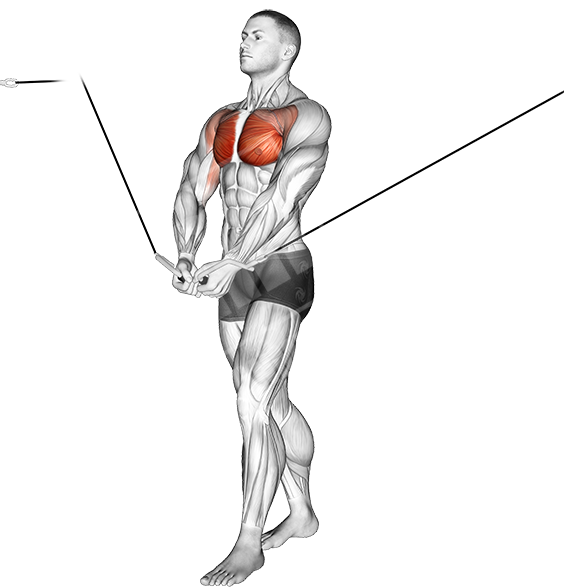
- Cable Split-Stance Rotations: Attach a cable at chest height. Stand in a split stance and rotate your torso across your body against the resistance. Focus on leading the motion with your hips, not your arms.
- Resistance Band Rotations: Secure a resistance band to a stable point. Hold the band with both hands and rotate through your torso while keeping your lower body steady. This variation trains both strength and control.
- Medicine Ball Rotational Throws: Hold a medicine ball in a split stance and perform rotational throws against a wall. This dynamic movement builds explosive power and helps you feel the ground-to-core energy transfer.
- Half-Kneeling Cable Rotations: For more isolation, drop to one knee and perform the same rotation using a cable. This emphasizes core control and hip engagement.
Each of these variations strengthens your rotational chain (from the feet and hips through to the torso), helping you generate more speed and consistency when you return to your normal swing.
The more consistently you practice split-stance rotation, the better your body learns to sequence movement from the ground up, which is the same way professionals build their power. It’s not just about strength but using energy efficiently for maximum impact.
How Split-Stance Rotation Builds Stability
While power helps you hit farther, stability ensures you stay balanced and in control throughout your swing. Without a stable base, even the strongest player will struggle to make consistent contact. The split-stance rotation drill trains your body to maintain balance and posture while rotating, which are the key elements for consistent, repeatable shots.
When you practice this drill, the staggered stance challenges your balance right away. Because one foot is forward and the other back, your core and lower body must constantly work together to keep you upright as you rotate. This helps you strengthen the muscles that control your movement and resist unwanted sway or sliding.
Here’s how the split-stance rotation specifically improves your stability:
- Teaches Balance Under Rotation: The uneven stance naturally throws off your center of gravity. As you rotate, your stabilizer muscles in the hips, legs, and core must adjust to keep you steady. Over time, this improves your ability to stay balanced during the full golf swing.
- Reduces Sway and Sliding: Many golfers struggle with swaying the hips or sliding the lower body during the swing. The split-stance position limits this movement, training your body to rotate around a fixed axis to help you achieve solid, centered contact.
- Strengthens Core and Obliques for Postural Control: Your core, obliques, and lower back work together to hold your posture through the rotation. This helps prevent the upper body from tilting or collapsing, keeping your spine angle consistent through impact.
- Improves Lower-Body Coordination: Because each leg has a different role (the lead leg stabilizes and the trail leg guides rotation), your body learns better coordination between the two sides. This balance is essential for smoother transitions and consistent follow-through.
- Enhances Stability Through the Lead Side: The drill trains your lead side (hip, knee, and ankle) to handle more pressure as you rotate. This mimics the real swing motion, where your lead leg must remain strong to control the downswing and impact.
Optional Drill Variations to Build Stability
To focus more on balance and control, try these variations:
- Split-Stance Hold with Rotation Pause: Rotate halfway and pause for three seconds before returning. This forces your stabilizer muscles to engage and hold your position.
- Slow-Tempo Resistance Band Rotations: Use a light resistance band and rotate slowly while maintaining posture. The slower tempo challenges your balance and strengthens small stabilizing muscles.
- Eyes-Closed Rotations (Advanced): Perform slow rotations with your eyes closed to increase your body’s awareness of balance and positioning.
These drills help you develop a strong, grounded base, giving you the control needed to deliver power consistently through every swing.
How to Set Up for a Split-Stance Rotation
Before you start any split-stance rotation drill, getting into the right position is essential. A proper setup ensures you target the correct muscles, maintain balance, and move safely through the rotation. Even small mistakes in your stance or posture can reduce the drill’s effectiveness or cause unnecessary strain.
Follow these steps to set up correctly:
- Start with Your Feet: Stand tall and place one foot slightly in front of the other, about the distance of a short walking stride. Keep your feet about hip-width apart to maintain stability. Point your toes forward or slightly turned out for comfort and balance.
- Position Your Knees and Hips: Slightly bend both knees, keeping them soft but stable. Don’t lock them. Make sure your hips stay level, not tilted forward or back. Your lead hip should feel firm, while the trail hip remains mobile to allow smooth rotation.
- Set Your Upper Body: Tilt forward slightly from the hips while keeping your spine straight and chest up. Engage your core muscles to support your posture. Keep your shoulders relaxed and arms extended comfortably in front of you if holding a cable, band, or club.
- Distribute Your Weight Correctly: Balance your weight evenly between both legs, but place a little more pressure (about 60%) on the lead leg. Feel grounded through your feet, where your lead foot provides stability, while your trail foot allows controlled movement.
- Check Your Alignment: Your head and chest should stay centered between your feet. Avoid leaning too far forward or backward. This keeps your rotation efficient and balanced.
Safety and Effectiveness Tips
- Warm up first to loosen your hips, back, and shoulders.
- Perform slow, controlled rotations at the beginning. Don’t rush the movement.
- Focus on quality over quantity; 8–10 smooth reps per side are more effective than fast, uncontrolled turns.
- Stop if you feel any pain in your lower back or hips.
A proper setup builds the foundation for powerful, balanced movement. Once your form feels natural, you can move on to more advanced versions of the drill using bands, cables, or medicine balls to add resistance and challenge your stability.
Drills and Progressions for Split-Stance Rotation
Once you’ve learned the correct setup, you can start adding drills that gradually build your strength, control, and rotational speed. Begin with simple, low-resistance movements to get comfortable with balance and body coordination, then move toward more advanced drills that mimic real golf swing patterns.
Below are progressions you can follow, from basic warm-up versions to full golf-specific movements.
1. Basic Warm-Up Version (Bodyweight or Band)
Purpose: To activate your hips, glutes, and core while learning proper rotation control.
How to do it:
- Stand in a split stance with one foot slightly ahead of the other.
- Cross your arms over your chest or hold a light resistance band at chest height.
- Rotate your torso slowly toward the lead side, then return to the middle.
- Keep your lower body stable. Avoid swaying or shifting side to side.
Focus cues:
- Rotate smoothly, not forcefully.
- Keep your eyes forward and spine tall.
- Engage your core throughout the motion.
Sets/Reps: 2–3 sets of 10–12 slow rotations per side.
2. Intermediate Version (Cable or Medicine Ball)
Purpose: To add resistance and build rotational strength and power.
Cable Variation:
- Attach a cable at chest height.
- Stand in a split stance with slight knee bend and strong posture.
- Hold the handle with both hands and rotate your torso across your body against the resistance.
- Control the return. Don’t let the cable pull you back too fast.
Medicine Ball Variation:
- Hold a medicine ball in front of your chest.
- Rotate toward your lead side, then explosively rotate back and throw the ball against a wall (or mimic the throw if space is limited).
- Focus on using your hips and core, not your arms, to power the movement.
Sets/Reps: 2–3 sets of 8–10 controlled rotations (or throws) per side.
3. Full Golf-Specific Swing Integration
Purpose: To connect the drill to your real golf swing.
How to do it:
- Set up in a split stance with a golf club or alignment stick.
- Make a half backswing and rotate through to a balanced finish while maintaining posture.
- Focus on a smooth sequence (hips lead, torso follows, arms last).
- Keep your lower body grounded and controlled, just as you would during an actual shot.
Progression tip: As your balance improves, shorten the gap between your feet to make the stance more like your normal swing. This helps the movement transfer naturally to your full swing mechanics.
4. Tips on Reps, Sets, Frequency, and Progression
- Reps/Sets: 8–12 repetitions per side, 2–3 sets per drill.
- Frequency: 2–3 times per week for best results.
- Progression: Increase resistance gradually with stronger bands or heavier medicine balls once your balance and form stay solid.
- Rest: Take short breaks (30–45 seconds) between sets to maintain control and focus.
- Key Reminder: Prioritize movement quality over resistance. Smooth, controlled motion builds more effective power than rushed reps.
Sample Routine
Here’s a simple weekly routine to help you build both power and stability using split-stance rotation drills:
Warm-Up (5–7 minutes)
- Dynamic stretches: hip circles, torso twists, light squats.
- 1 set of bodyweight split-stance rotations (10 reps each side).
Main Workout (15–20 minutes)
- Cable Split-Stance Rotations – 3 sets of 8 reps each side.
- Medicine Ball Rotational Throws – 3 sets of 6 explosive reps each side.
- Split-Stance Golf Club Rotations – 2 sets of 10 reps, focusing on form.
Cool-Down (3–5 minutes)
- Gentle hip and spine stretches.
- Light torso rotations to relax muscles.
This progression builds rotational strength step by step, teaching your body to stay stable while generating controlled power, which is exactly what every golfer needs for longer, more accurate shots.
Common Mistakes & How to Fix Them
Even though split-stance rotation drills look simple, small technique errors can stop you from getting real benefits. Below are some of the most common mistakes golfers make during this exercise, and how to correct them for better balance, power, and control.
1. Losing Balance or Sliding the Lead Leg
The mistake: Many golfers lose balance during rotation or let their lead leg slide forward instead of staying stable. This usually happens when your stance is too narrow or your weight isn’t evenly distributed.
Why it matters: Poor balance limits power transfer and can make your swing inconsistent.
How to fix it:
- Widen your stance slightly for more stability.
- Keep your front knee bent and lead foot grounded throughout the rotation.
- Focus on keeping your weight centered, which is about 60% on the front leg, 40% on the back.
- Slow down your rotations until you can stay balanced from start to finish.
2. Rotating Too Much With the Arms Instead of the Torso and Hips
The mistake: It’s common to overuse your arms while your torso and hips barely move. This reduces core engagement and makes your swing feel disconnected.
Why it matters: The goal of the split-stance rotation is to train your hips and core (not just your arms) to generate power.
How to fix it:
- Keep your arms extended but relaxed.
- Start the rotation from your hips and let your torso follow.
- Imagine your arms simply “following” the body’s movement instead of leading it.
- Use a mirror or record yourself to check that your torso is moving first.
3. Holding the Lower Body Too Rigidly and Blocking Rotation
The mistake: Some golfers try to stay “stable” by locking their lower body completely, which actually restricts the natural rotation needed for power.
Why it matters: Your lower body should stay grounded, not stiff. Overly rigid legs or hips prevent you from transferring energy smoothly through your swing.
How to fix it:
- Keep your knees soft and your hips mobile.
- Let your trail foot heel lift slightly during the rotation if it feels natural.
- Think “controlled movement,” not “frozen stability.”
- Use light resistance at first so your lower body can move naturally with your torso.
4. Not Transferring the Drill Into the Full Swing
The mistake: Practicing the split-stance rotation without applying its benefits to your full swing limits your results.
Why it matters: This drill is designed to improve your rotation sequence, balance, and power. But this only happens if you blend it into your regular swing mechanics.
How to fix it:
- After each training session, hit a few balls focusing on the same hip and torso movement you practiced.
- Use slow-motion swings to feel the same control and balance.
- Gradually close your stance to your normal golf position while keeping the same rotation pattern.
- Record your swing to check that your lower body and core are now driving the movement.
Pro Tip: Quality is everything in rotational drills. Always move at a controlled pace first, as speed and power should come naturally once your balance, timing, and movement patterns are solid.
How to Incorporate It into Your Practice and Game
The split-stance rotation is most effective when it becomes a regular part of your golf routine, not just a one-off exercise. By adding it at the right points in your practice and linking it to different parts of your game, you can build lasting power and stability that show up where it matters most: on the course.
Here’s when you can use it in your practice:
1. Warm-Up (Before You Hit Balls)
Start your session with 2–3 sets of split-stance rotations using body weight or a light resistance band.
This wakes up your hips, core, and stabilizing muscles before you swing. It helps you feel rotation from your torso rather than your arms. You’ll notice better balance and rhythm right from your first few shots.
2. Main Practice Session
Include split-stance rotations between swing sets. For example, after every 10–15 full swings, do a few slow, controlled rotations.
This helps your body reinforce the correct movement pattern. You’re training your swing sequence even as you hit shots. Try adding resistance (like a cable or med ball) during these breaks to build strength and control.
3. On-Course or Pre-Round Routine
Before teeing off, perform a few split-stance rotations with a club in hand.
Focus on smooth hip and torso movement. It’s a great reminder to stay balanced and rotate through impact instead of overusing your arms.
Tips For Linking the Drill to Different Parts of Your Game
- Driver: The drill helps you use your lower body and core more efficiently to create power. You’ll notice better club-head speed and longer drives.
- Irons: It improves weight transfer and balance through impact, giving you cleaner, more consistent ball contact.
- Short Game: While you won’t rotate as much with wedges or chips, the improved stability you gain helps you stay controlled and steady through smaller swings.
Tips For Measuring Your Progress
To see if your split-stance work is paying off, track these key signs:
- Club-Head Speed: Use a launch monitor or speed radar to check for gradual increases in swing speed. Even a 1–2 mph boost shows better rotational efficiency.
- Ball Flight: Look for more consistent trajectories (straighter shots with better control, especially under pressure).
- Stability and Feel: Notice whether your balance feels stronger during the swing. You should feel grounded and able to rotate freely without losing posture.
Pro Tip: Consistency is more important than intensity. Practicing the split-stance rotation just 10–15 minutes, 3–4 times a week, can noticeably improve your swing mechanics and body control over time.
Putting It All Together in 2025 and Beyond
The split-stance rotation is a modern, highly effective way for golfers to build both power and stability in a way that aligns with the demands of today’s game.
Why This Technique Matters for Modern Golfers
Golfers today face more physical demands than ever. Modern swings are faster, longer, and more biomechanically complex. The split-stance rotation targets exactly what you need:
- Fitness Integration: Strengthens core, hips, and stabilizers (muscles that contribute to injury prevention and longevity).
- Biomechanics: Trains your body to rotate efficiently, improving torque and weight transfer without over-relying on arms or hands.
- Competition Readiness: Better rotational power and stability translate to consistent distance and accuracy, helping you perform under pressure.
How Equipment and Training Trends Support This Drill
Advances in golf training and equipment make split-stance work more relevant than ever:
- High-Tech Launch Monitors and Sensors: Allow you to measure club-head speed, rotation, and balance so that you can track improvements from drills like split-stance rotations.
- Resistance Tools and Bands: Easily integrate into your practice to build functional strength specific to golf.
- Modern Training Philosophy: Today’s programs emphasize core-to-limb sequencing, stability under rotation, and injury prevention (all of which are core benefits of split-stance rotations).
Next-Step Actions: Applying What You’ve Learned
- Start Small: Add split-stance rotations to your warm-up or practice 2–3 times per week. Focus on form first.
- Track Progress: Measure club-head speed, ball flight, and stability feel. Gradually increase resistance or complexity over time.
- Integrate With Your Swing: Use the drill cues in your driver, irons, and short game swings. Make it a habit, not just an exercise.
- Consistency Is Key: Like any skill, rotational power and stability improve with repeated, intentional practice. Even 10–15 minutes per session adds up.
- Reflect and Adjust: Notice what works best for your body and swing style. Make small tweaks to foot placement, rotation tempo, or resistance to maximize results.
By consistently practicing and integrating split-stance rotations into your training, you’re not just improving a single drill. But also building a foundation for a more powerful, stable, and repeatable golf swing in 2025 and beyond.
Final Thoughts
The split-stance rotation is a simple but effective way to build both power and stability in your golf swing. By learning to rotate from your hips and core while keeping your lower body steady, you can hit the ball farther and more consistently.
Practice this drill regularly, starting with basic bodyweight rotations and moving to resistance or full swing versions. Use it in warm-ups, practice sessions, or even on the course to train your body to move correctly.
The key is to be consistent. By adding split-stance rotations to your routine and focusing on proper form, you can improve your balance, control, and power. Thus, helping you play better golf in 2025 and beyond.
Key Takeaways
- Power and stability are essential for consistent, long, and accurate golf shots.
- Split-stance rotation trains the hips, core, and lower body to generate controlled rotational power.
- Staggered foot positioning improves balance, reduces sway, and mimics real swing weight transfer.
- Lead leg engagement strengthens the front hip and thigh, providing a stable base for rotation.
- Core and torso separation builds torque, increasing club-head speed without over-swinging.
- Resistance tools like bands, cables, and medicine balls can enhance both strength and power.
- Split-stance variations help improve stability by challenging balance and lower-body coordination.
- Proper setup and posture are critical, as soft knees, level hips, and engaged core ensure effectiveness.
- Integrating the drill into practice and on-course routines reinforces movement patterns and improves performance.
- Consistency and mindful practice are key, because even short, regular sessions lead to measurable improvements in rotational power, balance, and swing repeatability.
FAQs
Is Split-Stance Rotation suitable for beginners?
Yes, it can be adapted for all skill levels. Beginners should start with bodyweight or light resistance and focus on form before progressing to bands or cables.
How often should golfers do Split-Stance Rotation?
For best results, perform this drill 2–3 times per week as part of a warm-up or strength routine, especially before playing or practicing.
Can Split-Stance Rotation be done with equipment?
Yes, it can be performed with resistance bands, cables, or medicine balls to increase difficulty and simulate golf swing dynamics.