
Looking to build a stronger, more stable lower back without needing a full gym setup? Whether you’re dealing with back discomfort, aiming to improve posture, or simply want to prevent future injuries, adding the right dumbbell exercises to your routine can make a big difference.
In this guide, we’ll walk you through 7 of the best and safest dumbbell exercises to strengthen your lower back in 2025. Keep reading to learn how each move works, what muscles it targets, and how to perform it with proper form.
Why Strengthening the Lower Back with Dumbbells is Important
Your lower back plays a crucial role in almost every movement you make, whether you’re standing, walking, lifting, or twisting. Strengthening it isn’t just for athletes or gym-goers; it’s important for anyone who wants to move comfortably and stay injury-free as they age.
Here’s why training your lower back with dumbbells matters:
- Supports Better Posture: A strong lower back helps you maintain a natural spinal alignment. Poor posture often stems from weak supporting muscles, leading to slouching and discomfort over time.
- Boosts Core Stability: The lower back is part of your core system, along with your abs, hips, and pelvis. When your lower back is strong, it works with these muscles to stabilize your entire midsection, helping you perform movements with more control and less strain.
- Reduces Risk of Injuries: Lower back pain is one of the most common complaints in adults. Weak back muscles increase your risk of strains, herniated discs, and other painful conditions. Strengthening your lower back improves its resilience and helps you avoid injuries, especially during physical tasks like lifting or sports.
- Improves Balance and Movement Efficiency: A strong lower back enhances your ability to move safely and efficiently. Whether you’re picking up groceries or swinging a golf club, your spine and surrounding muscles play a vital role.
Why Dumbbells?
- Easily Accessible – Dumbbells are simple to use, space-friendly, and available in most gyms or home workout setups.
- Balanced Muscle Development – Since dumbbell training often works each side of the body independently, it helps correct imbalances and ensures both sides of your back are equally strong.
- Functional Strength – Dumbbell exercises often mimic real-life movements, improving the strength you need for daily activities and sports.
By incorporating dumbbell exercises into your routine, you’re not only building a stronger back, but you’re also investing in long-term physical health and performance.
Safety Tips for Lower Back Dumbbell Workouts
Before jumping into any workout, especially one that targets the lower back, safety should be your first priority. The lower back is a sensitive area, and training it the wrong way can do more harm than good. Follow these key safety tips to protect your spine and get the most out of your dumbbell workouts.
1. Warm Up First
A proper warm-up prepares your body for movement, increases circulation, and activates key muscle groups.
Warm-up ideas (5–10 minutes):
- Light cardio (brisk walking, cycling, or jumping jacks).
- Dynamic stretches like leg swings and hip circles.
- Bodyweight moves like glute bridges or bird-dogs to activate your core and lower back.
2. Maintain Proper Form
Form is everything when it comes to lower back exercises. Poor alignment or rushing through reps can easily lead to strain or injury.
Form tips to keep in mind:
- Neutral spine: Keep your back flat, not rounded or hyperextended.
- Engage your core: Always tighten your abdominal muscles to support your lower back.
- Controlled movements: Don’t use momentum—move slowly and focus on muscle engagement.
- Feet grounded: Maintain a stable base, especially for deadlifts and carries.
If you’re ever unsure of your form, use a mirror or record yourself to review your technique. Even better, ask a trainer for feedback.
3. Know When to Stop or Adjust
Listening to your body is crucial. Some soreness is normal, especially if you’re new to training, but sharp pain or discomfort in your lower back is a red flag.
Signs you should stop or modify your workout:
- Sudden or sharp lower back pain during or after an exercise.
- Numbness or tingling down the legs.
- Constant rounding of your back even with light weights.
- Fatigue that compromises form.
If any of these signs appear, take a break, lower the weight, or switch to a gentler movement.
Now that you have a better idea about strengthening the lower back with dumbbells safely, let’s explore our top 7 exercise recommendations for lower back dumbbell exercises.
7 Best Dumbbell Exercises for Lower Back Strength
As we discussed before, dumbbells are incredibly effective for building strength in your lower back, especially when used with proper form and control.
Below are seven of the best exercises that target your lower back while also engaging supporting muscles like the glutes, hamstrings, and core.
1. Dumbbell Romanian Deadlift (RDL)
The Dumbbell Romanian Deadlift is a controlled, strength-building movement that focuses on hinging at the hips rather than bending at the knees. It’s one of the most effective exercises for training the posterior chain, especially the lower back, glutes, and hamstrings.
Because the movement is slow and deliberate, it’s excellent for developing muscle control and improving posture without stressing the lower back when done properly.
Main Muscles Worked:
- Lower back (erector spinae)
- Glutes
- Hamstrings
Secondary Muscles that will gain impact:
- Core
- Grip muscles (forearms)
- Calves
Equipment Needed:
- A pair of dumbbells
- Flat, non-slip surface
How to Do Dumbbell Romanian Deadlift (RDL) Exercise:
- Stand with your feet hip-width apart, holding a dumbbell in each hand in front of your thighs, palms facing your body.
- Keep a soft bend in your knees and maintain a straight back with your core engaged.
- Hinge at your hips and slowly lower the dumbbells down the front of your legs.
- Go as low as your flexibility allows without rounding your back, usually around mid-shin.
- Pause briefly at the bottom, then squeeze your glutes and drive your hips forward to return to the starting position.
- Repeat for the desired number of reps, maintaining control throughout.
Form Tips:
- Keep your spine neutral and your shoulders pulled back.
- Push your hips backward rather than leaning forward.
- Keep the dumbbells close to your body during the movement.
- Engage your core to avoid arching your lower back.
Common Mistakes to Avoid:
- Rounding the lower back at the bottom of the movement.
- Allowing the dumbbells to drift away from the legs.
- Locking or hyperextending the knees.
- Using momentum instead of muscle control.
Reps and Sets Recommendation:
- 3 sets of 10–12 reps.
- Rest 60–90 seconds between sets.
Why It’s Effective for Lower Back Strength:
The RDL strengthens the muscles that support the spine during lifting and daily activities. It reinforces hip hinging, improves spinal stability, and enhances control of the lower back, all while building strength in a safe, joint-friendly way.
2. Dumbbell Single Leg Deadlift
The Dumbbell Single Leg Deadlift is a unilateral movement that not only strengthens your lower back but also challenges your balance, stability, and coordination.
By working one leg at a time, it exposes and helps correct any strength imbalances between the left and right sides of your body. This exercise is especially useful for athletes and those looking to improve functional strength and posture.
Main Muscles Worked:
- Lower back (erector spinae)
- Glutes
- Hamstrings
Secondary Muscles that will gain impact:
- Core
- Calves
- Hip stabilizers
Equipment Needed:
- One or two dumbbells
- Optional: Wall or chair for balance support (if needed)
How to Do Dumbbell Single Leg Deadlift Exercise:
- Stand tall holding one dumbbell in your right hand, arm extended down, with feet hip-width apart.
- Shift your weight to your right leg and slightly bend the knee.
- Begin to hinge at the hips while extending your left leg straight behind you for balance.
- Lower the dumbbell toward the ground, keeping your back flat and the dumbbell close to your leg.
- Stop when your torso is almost parallel to the ground and your back leg is extended straight.
- Squeeze your glute and hamstring to return to the starting position. Complete all reps on one side before switching.
Form Tips:
- Keep your back straight and hips square throughout the movement.
- Focus your gaze on a point in front of you to help maintain balance.
- Move slowly to stay in control.
- Engage your core for spinal support.
Common Mistakes to Avoid:
- Rotating the hips or shoulders during the lift.
- Letting the back round as you lower the dumbbell.
- Rushing the movement and losing balance.
- Locking out the standing knee.
Reps and Sets Recommendation:
- 3 sets of 8–10 reps per leg.
- Rest 60–75 seconds between sets.
Why It’s Effective for Lower Back Strength:
This exercise isolates one side of the lower back at a time, strengthening stabilizing muscles and improving balance. It’s also less compressive on the spine compared to barbell lifts, making it a great option for safe and targeted lower back strengthening.
3. Dumbbell Suitcase Carry
The Dumbbell Suitcase Carry is a simple yet highly effective core and back-strengthening movement. Named for its resemblance to carrying a suitcase on one side, this exercise challenges the stabilizing muscles of the lower back and core to keep your spine upright and balanced. It’s especially useful for improving posture, spinal alignment, and functional strength.
Main Muscles Worked:
- Lower back (quadratus lumborum, erector spinae)
- Obliques
- Core stabilizers
Secondary Muscles that will gain impact:
- Forearms (grip strength)
- Shoulders
- Glutes
Equipment Needed:
- One dumbbell
How to Do Dumbbell Suitcase Carry Exercise:
- Stand tall with your feet hip-width apart, holding a dumbbell in one hand at your side like a suitcase.
- Engage your core and keep your shoulders level. Avoid leaning toward the weighted side.
- Begin walking in a straight line, maintaining a slow and controlled pace.
- Keep your spine tall and upright throughout the carry.
- Walk for a set distance or time, then switch sides and repeat.
Form Tips:
- Keep your chest up and shoulders square.
- Avoid leaning or tilting toward the weight.
- Take slow, deliberate steps to stay balanced.
- Keep your core engaged to reduce stress on the spine.
Common Mistakes to Avoid:
- Leaning sideways toward the dumbbell.
- Allowing the shoulder on the weighted side to drop.
- Walking too quickly and losing form.
- Using a weight that is too light to challenge your core.
Reps and Sets Recommendation:
- 3 sets of 20–30 seconds per side (or 15–20 meters walking distance).
- Rest 30–60 seconds between rounds.
Why It’s Effective for Lower Back Strength:
The Dumbbell Suitcase Carry strengthens the deep stabilizing muscles of the lower back and core, which play a key role in keeping the spine upright. It’s a highly functional movement that mimics real-life lifting tasks and improves overall core and back stability.
4. Dumbbell Glute Bridge
The Dumbbell Glute Bridge is a floor-based exercise that primarily targets the glutes while also strengthening the lower back and core.
By placing a dumbbell on your hips, you increase resistance and improve posterior chain activation. This movement is gentle on the spine, making it an excellent choice for those looking to strengthen the lower back safely.
Main Muscles Worked:
- Glutes
- Lower back (erector spinae)
- Hamstrings
Secondary Muscles that will gain impact:
- Core
- Hip flexors
Equipment Needed:
- One dumbbell
- Exercise mat (optional for comfort)
How to Do Dumbbell Glute Bridge Exercise:
- Lie on your back with knees bent and feet flat on the floor, hip-width apart.
- Hold a dumbbell over your hips with both hands, keeping it stable.
- Engage your core and press through your heels to lift your hips off the ground.
- Squeeze your glutes at the top and hold briefly.
- Lower your hips back down with control, returning to the starting position.
- Repeat for the desired number of reps.
Form Tips:
- Keep your feet flat and avoid lifting your heels.
- Engage your core throughout the movement.
- Avoid overextending your lower back at the top.
- Squeeze your glutes at the peak of each rep.
Common Mistakes to Avoid:
- Arching your back excessively at the top.
- Using your lower back instead of your glutes to lift.
- Letting your knees flare outward.
- Dropping the dumbbell or allowing it to roll during movement.
Reps and Sets Recommendation:
- 3 sets of 12–15 reps.
- Rest 45–60 seconds between sets.
Why It’s Effective for Lower Back Strength:
This exercise strengthens the glutes and hamstrings, which reduces strain on the lower back during movement. By reinforcing proper hip extension mechanics, the dumbbell glute bridge helps prevent imbalances and supports better posture and spinal alignment.
5. Dumbbell Bent Over Row
The Dumbbell Bent Over Row is a compound movement that targets multiple upper and lower back muscles. It involves pulling dumbbells toward your torso from a hinged position, which not only strengthens your lats and rhomboids but also engages your lower back to maintain posture.
This is an effective exercise for improving overall back definition and spinal support.
Main Muscles Worked:
- Lower back (erector spinae)
- Lats
- Rhomboids
Secondary Muscles that will gain impact:
- Traps
- Rear shoulders
- Core
Equipment Needed:
- Two dumbbells
- Flat, stable surface
How to Do Dumbbell Bent Over Row Exercise:
- Stand with your feet shoulder-width apart, holding a dumbbell in each hand by your sides.
- Bend your knees slightly and hinge at your hips until your torso is nearly parallel to the floor.
- Keep your back straight and arms extended downward with palms facing in.
- Pull the dumbbells up toward your waist, keeping elbows close to your body.
- Squeeze your shoulder blades together at the top.
- Lower the dumbbells slowly and repeat.
Form Tips:
- Keep your back flat and neck neutral throughout the movement.
- Engage your core to support the lower back.
- Pull with control, not momentum.
- Avoid swinging the weights or shrugging your shoulders.
Common Mistakes to Avoid:
- Rounding the spine during the movement.
- Jerking the weights up using momentum.
- Standing too upright and losing the hinge position.
- Letting elbows flare out too wide.
Reps and Sets Recommendation:
- 3 sets of 10–12 reps.
- Rest 60–90 seconds between sets.
Why It’s Effective for Lower Back Strength:
This exercise requires your lower back to stabilize your body while you row, which builds endurance and strength in the erector spinae. It also improves posture and enhances muscle balance between the upper and lower back.
6. Dumbbell Reverse Lunge
The Dumbbell Reverse Lunge is a dynamic lower-body exercise that enhances strength, stability, and coordination. Compared to forward lunges, the reverse version places less stress on the knees and helps engage the posterior chain, particularly the glutes and lower back. This unilateral movement is excellent for improving balance and muscular control.
Main Muscles Worked:
- Glutes
- Hamstrings
- Lower back
Secondary Muscles that will gain impact:
- Quads
- Calves
- Core
Equipment Needed:
- A pair of dumbbells
- Flat surface with room to step backward
How to Do It:
- Stand upright with a dumbbell in each hand at your sides.
- Step one foot backward into a lunge position, keeping your front knee above the ankle.
- Lower your back knee toward the floor until both knees form 90-degree angles.
- Push through the heel of your front foot to return to standing.
- Alternate legs, or complete all reps on one side before switching.
Form Tips:
- Keep your torso upright and back straight throughout the movement.
- Engage your core to maintain balance.
- Step back far enough so your front knee stays over your ankle.
- Control the descent and avoid slamming your back knee.
Common Mistakes to Avoid:
- Leaning forward or hunching the back.
- Letting the front knee move too far past the toes.
- Using too heavy weights and losing form.
- Inconsistent stride length causing imbalance.
Reps and Sets Recommendation:
- 3 sets of 8–10 reps per leg.
- Rest 60 seconds between sets.
Why It’s Effective for Lower Back Strength:
The Dumbbell Reverse Lunge builds strength in the glutes and hamstrings, which helps support the lower back. The core and erector spinae work to keep the spine stable during movement, improving balance and posture in daily activities.
7. Dumbbell Deadlift
The Dumbbell Deadlift is a foundational strength training exercise that targets the entire posterior chain, especially the lower back. It mimics a natural lifting motion, making it a functional movement that enhances both strength and everyday performance.
Using dumbbells offers a safer, more controlled alternative to the barbell deadlift, especially for beginners or those focused on form.
Main Muscles Worked:
- Lower back (erector spinae)
- Glutes
- Hamstrings
Secondary Muscles that will gain impact:
- Core
- Forearms (grip strength)
- Quads
Equipment Needed:
- Two dumbbells
- Flat surface
How to Do It:
- Stand with your feet hip-width apart, holding a dumbbell in each hand in front of your thighs.
- Keep your shoulders back, chest up, and core braced.
- Hinge at your hips and slightly bend your knees as you lower the dumbbells down the front of your legs.
- Go down until the dumbbells reach around mid-shin level or just before your back starts to round.
- Push through your heels and drive your hips forward to stand back up.
- Repeat with control for each rep.
Form Tips:
- Maintain a neutral spine throughout the movement.
- Keep the dumbbells close to your body.
- Engage your core to support your back.
- Avoid locking out the knees at the top.
Common Mistakes to Avoid:
- Rounding the back during the descent.
- Bending too much at the knees (turning it into a squat).
- Letting the dumbbells drift away from your legs.
- Rushing the movement without muscle control.
Reps and Sets Recommendation:
- 3 sets of 10–12 reps.
- Rest 60–90 seconds between sets.
Why It’s Effective for Lower Back Strength:
This exercise directly targets the lower back muscles while teaching proper lifting mechanics. It reinforces hip hinging and builds a strong foundation that protects the spine during both training and everyday movements.
These exercises, when done consistently and with proper technique, will help you develop a strong, stable, and injury-resistant lower back.
Our Equipment Recommendations for Lower Back Dumbbell Exercises
Choosing the right equipment can make a big difference in how effective and safe your lower back workouts are. Below are our top recommendations, each selected based on user reviews, practicality, and popularity..

1. Adjustable Dumbbell: UNNMIIY Adjustable Dumbbells Set 4-in-1 Kettlebell & Barbell Kit
If you’re short on space or want versatility, this 4-in-1 adjustable set is a great option. It includes dumbbells, kettlebells, and a barbell connector, making it ideal for a full range of strength workouts, including all the dumbbell lower back exercises in this guide.
Key Features:
- Adjustable plates for progressive overload.
- Non-slip handles for better grip.
- Can convert into a kettlebell or barbell.
- Compact and multi-use, ideal for home gyms.
| Check out on Amazon |
2. Adjustable Weight Bench: YOLEO Adjustable Workout Bench for Full Body Training
This bench is perfect for enhancing exercises like glute bridges, bent-over rows, and core work. It’s foldable, sturdy, and offers multiple incline/decline options.
Key Features:
- 7 backrest positions.
- Foldable design for easy storage.
- Heavy-duty steel frame supports up to 660 lbs.
- Thick padding for added comfort and support.
| Check out on Amazon |
Additional Equipment (Optional but Helpful)
While not required, these tools can help improve your performance and comfort:
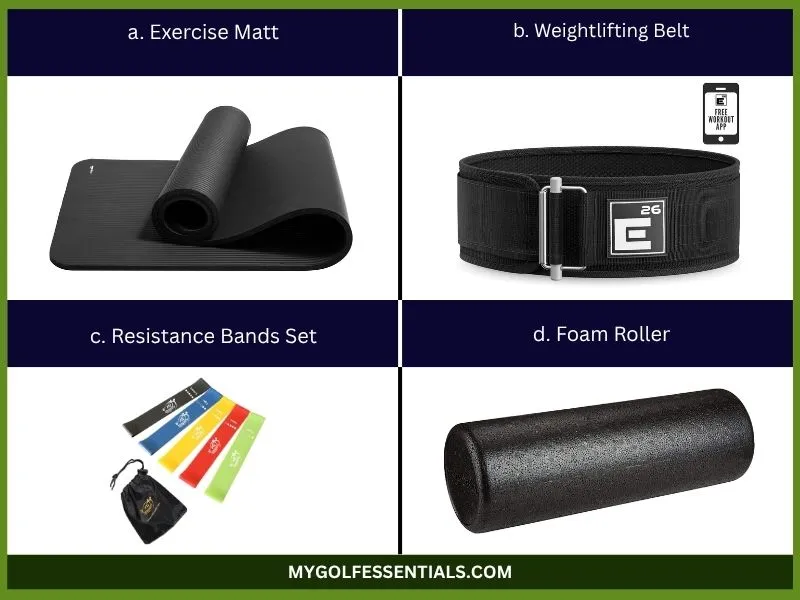
| Product Name | Why It’s Needed | |
| 1. Exercise Mat | Adds cushioning for floor-based exercises like glute bridges or stretching. | Check Out on Amazon |
| 2. Weightlifting Belt | Useful for advanced lifters who need extra lower back support during deadlifts. | Check Out on Amazon |
| 3. Foam Roller | Speeds up recovery and reduces muscle tightness post-workout. | Check Out on Amazon |
| 4. Resistance Bands | Great for warm-ups or adding light resistance to glute bridges and lunges. | Check Out on Amazon |
Equipping yourself with the right tools ensures safer form, greater comfort, and more effective workouts, especially when working your lower back. Even a compact setup with just adjustable dumbbells and a bench can help you build serious strength from home.
Sample Lower Back Dumbbell Workout Routine
A well-structured routine not only targets the right muscles but also reduces the risk of injury. Below is a full lower back dumbbell workout plan, including a warm-up, a main workout using the exercises you’ve learned, and a cool-down to support recovery.
Warm-Up Routine (5–8 minutes)
Warming up is essential before any strength workout to increase blood flow and activate muscles. Here’s a simple bodyweight warm-up that preps your back, core, hips, and hamstrings.
Warm-Up Routine:
- Cat-Cow Stretch – 10 reps
- Hip Circles – 10 reps each direction
- Bodyweight Glute Bridges – 15 reps
- Arm Swings (forward and backward) – 15 seconds each
- Standing Good Mornings – 10 reps
Main Workout (Dumbbell-Based Exercises)
This lower back workout combines strength, control, and balance. Perform the following exercises in the given order, allowing rest between sets for optimal form and performance.
| Exercise | Sets | Reps | Rest |
| Dumbbell Romanian Deadlift | 3 | 10–12 | 60 sec |
| Dumbbell Single Leg Deadlift | 3 | 8–10 per leg | 60–90 sec |
| Dumbbell Suitcase Carry | 3 | 30–40 sec per side | 60 sec |
| Dumbbell Glute Bridge | 3 | 12–15 | 45–60 sec |
| Dumbbell Bent Over Row | 3 | 10–12 | 60 sec |
| Dumbbell Reverse Lunge | 3 | 8–10 per leg | 60 sec |
| Dumbbell Deadlift | 3 | 10–12 | 60–90 sec |
Tip: Start with lighter weights if you’re new, and gradually increase as you build strength and confidence.
Cool-Down and Recovery (5–7 minutes)
After the workout, spend a few minutes cooling down to relax your muscles and prevent stiffness.
Cool-Down Routine:
- Child’s Pose Stretch – 30 seconds.
- Seated Hamstring Stretch – 30 seconds per leg.
- Supine Twist – 20–30 seconds per side.
- Deep Breathing in Lying Position – 1 minute.
Stretching after exercise helps release muscle tension and promotes flexibility, both important for a healthy lower back.
Stick with this routine 2–3 times per week, ensuring at least one rest day between sessions. Combine it with core strengthening and hip mobility work for the best long-term results.
Common Mistakes You Might Make While Doing Lower Back Dumbbell Exercises and How to Avoid Them
Even the most effective lower back exercises can lead to injury or reduced benefits if done with poor technique. Below are some common mistakes people make during dumbbell workouts and how you can correct them for safe, long-term progress.
Mistake 1: Rounding the Back During Lifts
Rounding the back during lifts puts excessive pressure on your spine and can cause serious injury over time.
How to avoid it:
- Keep your spine neutral throughout the movement.
- Engage your core before starting each rep.
- Practice movements like hip hinges with no weight first to develop proper form.
Mistake 2: Using Momentum Instead of Muscle Control
Using momentum instead of muscle control while swinging the weights takes tension off the target muscles and reduces the effectiveness of the exercise.
How to avoid it:
- Move slowly and with control, especially on the lowering (eccentric) phase.
- Focus on feeling the muscle engagement with every rep.
- Use a mirror or video to check your movement speed and posture.
Mistake 3: Lifting Too Heavy, Too Soon
Trying to go too heavy too soon can compromise your form, especially in back-dominant moves like deadlifts and rows.
How to avoid it:
- Start with a moderate weight that lets you perform 10–12 reps with good form.
- Increase weights gradually, only when your current load feels too easy.
- Prioritize quality over quantity.
Mistake 4: Ignoring Core Engagement
A disengaged core increases strain on the lower back and reduces spinal support.
How to avoid it:
- Brace your core like you’re preparing to be punched.
- Practice planks and core activations as part of your warm-up.
- Keep your torso tight throughout each movement.
Mistake 5: Poor Hip Hinge Mechanics
Many people bend from the waist rather than hinging from the hips, placing stress on the spine, and that’s a considerable problem.
How to avoid it:
- Push your hips back, not your chest down.
- Keep a slight bend in the knees.
- Practice bodyweight hip hinges before adding dumbbells.
Correcting these mistakes early will help you get stronger, protect your back, and make the most of your training. Up next: Additional Tips for Lower Back Health. Let me know when you’re ready.
Additional Tips for Lower Back Health
To keep your lower back strong and injury-free, it’s important to go beyond just exercise. A combination of smart training, targeted mobility work, good nutrition, and mental wellness all contribute to long-term spinal health and performance.
1. Strengthen Your Core and Hips
Your core and hips act as stabilizers during most lower body movements. If they’re weak, your lower back ends up doing more work than it should.
Why It’s Important:
- A strong core supports your spine during every lift and movement.
- Stable hips promote better posture, reduce lower back strain, and support efficient movement.
Helpful Additions:
- Core Workouts: Planks, dead bugs, bird-dogs, and side planks (2–3x/week).
- Hip Strengtheners: Glute bridges, band walks, clamshells, and step-ups.
2. Stretching and Recovery
Maintaining flexibility and allowing time for muscle repair are essential parts of preventing back pain and promoting growth.
Stretching Tips:
- Focus on hamstrings, glutes, hip flexors, and lower back muscles.
- Stretch after each workout and hold each position for 20–30 seconds.
- Use a foam roller or massage ball to release muscle tightness around the lumbar spine and hips.
Recovery Tips:
- Sleep 7–9 hours a night to promote muscle healing.
- Don’t overtrain. Give your back at least 48 hours of rest between intense strength sessions.
- Include active recovery days with light walking, yoga, or mobility work.
3. Nutrition for Back Health
The foods you eat can directly influence your recovery, strength levels, and inflammation in the body.
Nutrition Guidelines:
- Protein: Essential for muscle repair. Aim for lean sources like eggs, fish, tofu, or chicken.
- Calcium and Vitamin D: Help maintain strong bones (try dairy, leafy greens, and sunlight exposure).
- Anti-inflammatory Foods: Include berries, fatty fish, nuts, olive oil, and turmeric to support joint health.
- Hydration: Staying well-hydrated supports disc health and overall spinal function.
4. Mental Wellness and Back Health
Stress and poor mental health can manifest physically, including tension in the lower back.
Mental Wellness Practices:
- Mindfulness and Meditation: Just 5–10 minutes daily can reduce tension and improve body awareness.
- Breathing Exercises: Helps with relaxation and better core engagement during lifts.
- Consistency Over Perfection: Progress takes time. So, avoid burnout by setting realistic goals and listening to your body.
By supporting your training with proper nutrition, active recovery, and mental well-being, you’ll not only strengthen your lower back but also maintain overall health and performance for the long run.
How Doing Lower Back Dumbbell Exercises Can Help Improve Your Golf Game?
If you’re a golfer, your swing power, control, and injury prevention largely depend on how strong and stable your lower back is. Dumbbell exercises targeting this area don’t just help with general fitness. They can directly translate to better performance on the course.
Why the Lower Back Matters in Golf
The lower back acts as a key link between your upper and lower body. Every time you rotate, swing, or follow through, your lower back helps stabilize and transfer power. A weak or tight lower back can reduce swing efficiency or even lead to pain and overuse injuries.
How Dumbbell Training Benefits Your Game
- Improved Swing Power: Exercises like Romanian Deadlifts and Dumbbell Deadlifts increase strength in your posterior chain( including glutes, hamstrings, and lower back), which generates more force in your swing.
- Better Rotation and Control: A stronger lower back provides better trunk stability, allowing you to rotate through the hips and torso more smoothly during your backswing and follow-through.
- Reduced Risk of Injury: Strengthening your core and back muscles with dumbbells helps absorb shock and stress during repetitive swings, protecting you from lower back strain, a common issue for many golfers.
- Increased Endurance on the Course: A more stable back and core reduce overall fatigue, so you can maintain good posture and swing mechanics even in the later stages of a round.
- Enhanced Balance and Posture: Moves like the Dumbbell Single-Leg Deadlift improve your balance and hip control, which helps during setup and improves shot consistency.
Bonus Tip:
Add a few lower back dumbbell movements to your training 2–3 times a week, and pair them with core and mobility work. You’ll not only feel stronger and more balanced, but your swing performance, driving distance, and injury resistance may all improve.
Final Thoughts
Strengthening the lower back with dumbbell exercises is a highly effective strategy for improving posture, core stability, and overall physical resilience. A strong lower back not only supports better spinal alignment but also helps reduce the risk of injury while enhancing balance and movement efficiency. These amazing benefits go beyond the gym and can really enhance your daily life and sports performance.
The recommended exercises(such as the Dumbbell Romanian Deadlift, Single Leg Deadlift, Suitcase Carry, Glute Bridge, Bent Over Row, Reverse Lunge, and Dumbbell Deadlift) provide a comprehensive approach to lower back strength, targeting not just the erector spinae but also the glutes, hamstrings, and core. By prioritizing proper form, controlled movements, and gradual progression, these routines help ensure safety and maximize results.
Supplementing your training with core and hip strengthening, regular stretching, proper nutrition, and mental wellness practices further supports long-term back health and injury prevention. Whether your goal is to move more comfortably, excel in sports like golf, or simply age well, consistent lower back training with dumbbells is a practical and accessible solution for building a strong, stable, and resilient body.
Key Takeaways
- A strong lower back supports better posture, core stability, and reduces the risk of injuries during daily activities and exercise.
- Dumbbell exercises are easy to use, space-friendly, and promote balanced muscle development by working each side independently.
- Warming up with light cardio and dynamic stretches prepares your body, increases circulation, and activates key muscle groups before lower back workouts.
- Maintaining a neutral spine, controlled movements, and core engagement are critical to avoid injury and maximize results.
- Stop or modify exercises if you experience sharp pain, numbness, or fatigue that compromises your form.
- Key dumbbell exercises for the lower back include Romanian Deadlifts, Single Leg Deadlifts, Suitcase Carries, Glute Bridges, Bent Over Rows, Reverse Lunges, and Deadlifts—each engaging supporting muscles like glutes, hamstrings, and core.
- Perform lower back workouts 2–3 times per week, gradually increasing weights as strength improves, and always prioritize quality over quantity.
- Supplementing lower back training with core and hip strengthening exercises enhances stability and reduces strain on the lower back.
- Adequate rest, stretching, hydration, and a balanced diet rich in protein, calcium, and anti-inflammatory foods support muscle repair and long-term back health.
- Stronger lower back muscles improve power, balance, and injury resilience, translating to better performance in sports like golf and other dynamic activities.
FAQs
Can dumbbells help strengthen the lower back?
Yes, dumbbells are excellent for strengthening the lower back because they allow for a wide range of motion, promote balanced muscle development, and can be used for both bilateral and unilateral exercises. They are especially useful for home workouts or when gym equipment is limited.
Are dumbbell exercises safe for people with lower back pain?
Dumbbell exercises can be safe for people with lower back pain if performed with proper form and appropriate weight selection. It is important to focus on posture, avoid excessive loading, and consult a healthcare professional if you have a history of back issues.
How often should I do lower back dumbbell exercises?
For most individuals, performing lower back dumbbell exercises 2–3 times per week is sufficient to build strength and endurance without overtraining. Allow at least one day of rest between sessions to promote recovery.
Can I do lower back dumbbell exercises at home?
Yes, most lower back dumbbell exercises can be performed at home with minimal equipment, making them accessible for people who do not have access to a full gym. All you need is a pair of dumbbells and enough space to move safely.