Improving hip mobility is essential for every golfer who wants a smoother, more powerful swing. One of the most effective stretches for achieving this is the 90/90 hip stretch. In this guide, we’ll show you how to perform it correctly, explain its benefits for golfers, and provide tips to include it in your flexibility routine.
So, we invite you to read on our article and learn how this stretch can enhance your performance on the course in 2025.
What is 90/90 Hip Stretch?
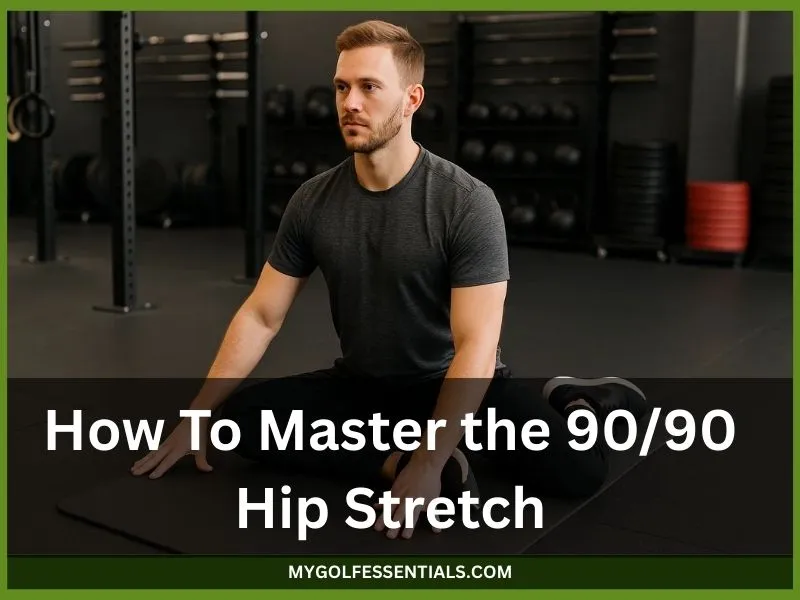
The 90/90 hip stretch is a floor-based mobility exercise that focuses on improving hip rotation. It gets its name from how the legs are positioned, with both bent at 90 degrees, one in front and the other to the side. This setup allows you to work on two important movements at the same time: external rotation of the front hip and internal rotation of the back hip.
To get into the position:
- Sit on the floor with your front leg bent at a 90-degree angle, shin across your body.
- Place your back leg out to the side, also bent at 90 degrees, with the knee pointing behind you.
- Keep your chest tall and spine straight as you hold the position.
This stretch challenges the hips in a way most standing stretches cannot, making it especially useful for athletes who rely on rotation and lower-body mobility.
Muscles Targeted by the 90/90 Hip Stretch
The 90/90 hip stretch works several key muscle groups:
- Hip flexors – the muscles at the front of the hip that often tighten from sitting or repetitive movement.
- Glutes – especially the gluteus medius and minimus, which support hip rotation and stability.
- External rotators – smaller muscles deep in the hip joint that control rotation and balance.
By targeting both internal and external rotation, this stretch improves overall hip function, balance, and range of motion.
Benefits of the 90/90 Hip Stretch for Golfers
Golf puts a lot of demand on the hips, and without proper flexibility, the swing can become restricted, less powerful, and more likely to cause discomfort. The 90/90 hip stretch helps golfers by improving mobility and building strength in the muscles that control hip rotation.
Here are the main reasons why it is so effective:
1. Improves Hip Mobility and Rotation
The golf swing depends heavily on hip rotation to create torque and transfer energy from the lower body to the club. By opening up the hips in both directions, the 90/90 stretch allows for a greater range of motion. This extra mobility helps golfers maintain proper swing mechanics and avoid compensating with the spine or shoulders.
2. Reduces Stiffness and Lowers Injury Risk
Sitting for long hours, whether at work or driving, often shortens the hip flexors and weakens supporting muscles. The 90/90 stretch counteracts this tightness by lengthening the hip flexors and engaging the glutes. With better hip flexibility, golfers reduce strain on the lower back, knees, and hamstrings, which lowers the risk of common overuse injuries.
3. Increases Power and Smoothness in the Swing
A fluid golf swing depends on efficient energy transfer through the kinetic chain, starting from the ground, moving through the hips, and finishing with the arms. Restricted hips can break this chain, leading to a loss of clubhead speed and inconsistent ball striking. Practicing the 90/90 stretch strengthens the muscles that stabilize the hips, allowing for smoother weight transfer and more powerful rotation.
4. Enhances Balance and Stability
The position of the 90/90 stretch challenges your ability to stay upright without collapsing forward. This improves core engagement and strengthens stabilizing muscles in the hips and lower back. Greater stability in these areas translates to better balance during the golf swing, particularly when shifting weight from backswing to follow-through.
5. Supports Long-Term Performance
Regularly including the 90/90 stretch in a warm-up or cool-down routine builds long-term flexibility. Over time, this prevents the gradual loss of hip mobility that often affects golfers as they age. Maintaining this range of motion supports consistent performance, allowing golfers to play more comfortably and with fewer physical limitations.
Additional Benefits
- Promotes better posture both on and off the course.
- Helps reduce fatigue by allowing muscles to move more efficiently.
- Improves recovery after long rounds or practice sessions.
- Supports overall athletic performance beyond golf, including running, cycling, and weight training.
In short, the 90/90 hip stretch not only improves flexibility but also directly enhances the mechanics that make a golf swing efficient, powerful, and pain-free. It is one of the most effective stretches for golfers who want to protect their bodies and elevate their game.
Now that you know what the 90/90 hip stretch is and its benefits, let’s find out how to perform this stretch correctly.
How to Perform the 90/90 Hip Stretch Correctly
Performing the 90/90 hip stretch with proper form is essential to gain the full benefits and avoid injury. This section will guide you through the step-by-step process, provide tips for maintaining posture and alignment, and explain what you should feel during the stretch.
Step-by-Step Guide
- Start seated on the floor – Sit with your legs extended in front of you.
- Position the front leg – Bend one knee at 90 degrees in front of your body so that your shin is roughly perpendicular to your torso.
- Position the back leg – Bend the other knee at 90 degrees behind you, with your shin parallel to your body and the knee pointing outward.
- Align your torso – Keep your chest tall and shoulders relaxed. Avoid slouching or leaning forward.
- Engage your core – Activate your abdominal muscles to support your spine during the stretch.
- Hold the position – Maintain the stretch for 20–60 seconds, depending on your flexibility level. Switch sides and repeat.
Additional Tips for Maintaining Posture and Alignment
- Keep your back straight and avoid rounding your spine.
- Position your hips evenly on the ground, avoiding a lean to one side.
- Place your hands lightly on the floor in front or beside you for support.
- Breathe steadily and avoid holding your breath.
What to Feel During the Stretch
- A gentle pull or tension in the front hip flexors and glutes.
- Stretching sensations along the outer hip of the front leg and inner thigh of the back leg.
- Mild pressure in the deep external rotators, but not sharp or painful sensations.
Perform the 90/90 stretch slowly and focus on controlled movements. The goal is to improve mobility over time, not to force the legs flat on the ground.
Common Mistakes to Avoid While Doing 90/90 Hip Stretch
Performing the 90/90 hip stretch correctly is essential to gain the full benefits and prevent injury. Many golfers and athletes make small mistakes that reduce the effectiveness of the stretch or place unnecessary strain on the hips and lower back.
Being mindful of the common mistakes listed below can really help you practice with confidence and gradually enhance your mobility. Keep at it, and you’ll see great progress!
1. Folding the Spine or Poor Posture
- One of the most common mistakes is rounding the lower back or slumping forward.
- Folding the spine takes tension off the hips and places strain on the lower back.
- To avoid this, keep your chest tall, shoulders relaxed, and spine straight.
- Engage your core muscles to help maintain a stable, upright position throughout the stretch.
2. Incorrect Leg or Hip Positioning
- Placing the legs at the wrong angles reduces the stretch’s effectiveness.
- The front leg should be at a 90-degree angle with the shin roughly perpendicular to the torso, while the back leg should also form a 90-degree angle with the knee pointing outward.
- Avoid letting your hips tilt to one side; both sit bones should remain in contact with the floor.
- Using props like yoga blocks or a folded towel under the hips can help maintain proper alignment if you have tight hips.
3. Overstretching or Forcing the Movement
- Trying to push the knees flat to the floor or forcing a deeper stretch can cause discomfort or injury.
- The stretch should create gentle tension, not sharp pain.
- Focus on slow, controlled movements and gradually increase your range of motion over time.
- Holding the stretch too long or pushing beyond your comfort level can lead to muscle strain or joint irritation.
Additional Tips to Avoid Mistakes
- Warm up before attempting the stretch to reduce stiffness.
- Perform the stretch on both sides evenly to maintain balanced mobility.
- Breathe steadily and avoid tensing up, which can limit the stretch.
By paying attention to posture, leg positioning, and controlled movement, you can maximize the benefits of the 90/90 hip stretch while reducing the risk of injury. Proper practice ensures improved hip mobility, better swing mechanics, and safer performance on the golf course.
Modifications and Progressions
The 90/90 hip stretch can be adapted to meet different flexibility levels and gradually advanced as your mobility improves. Whether you are a beginner with tight hips or an experienced golfer looking for a deeper challenge, there are variations that make the stretch more accessible and effective.
Easier Versions for Beginners or Tight Hips
If you find it difficult to sit in the 90/90 position, there are ways to ease into the stretch:
- Elevated hips: Sit on a cushion, yoga block, or folded towel to raise your hips. This reduces the angle at the joints and makes it easier to maintain posture.
- Smaller angles: Instead of bending your legs at a full 90 degrees, bring them in slightly closer to your body until you feel a comfortable stretch.
- Support with hands: Place your hands on the floor beside you for balance and to reduce strain on the hips.
These modifications allow you to hold the position without discomfort, while still working toward improved mobility.
Using Props for Support
Props can make the 90/90 stretch more stable and help you stay aligned:
- Yoga blocks under the knees: Provide support if your knees don’t reach the ground, preventing unnecessary strain.
- Towel or cushion under the hips: Helps maintain balance and keeps the pelvis from tilting.
- Straps or bands: Can be used to assist with rotation movements if you’re adding mobility drills to the stretch.
Props are especially useful if you’re practicing for longer durations or during recovery days, as they allow you to relax into the stretch while keeping good form.
Advanced Variations to Increase Stretch and Mobility
Once you are comfortable with the standard position, you can progress to deeper or more active variations:
- Forward fold: Lean gently over the front leg while keeping the spine straight to intensify the stretch in the glutes.
- Rotational lift: From the 90/90 position, try lifting the back knee slightly off the ground while keeping the foot down to activate hip rotators.
- Dynamic switch: Transition from one 90/90 side to the other in a controlled motion without using your hands. This challenges hip strength and mobility while building fluidity.
- Weighted progression: Hold a light weight against your chest while leaning forward to increase the stretch and build stability.
These progressions not only deepen the stretch but also train the hips to handle rotation under control, making them highly beneficial for golfers who want smoother swings and stronger lower-body mechanics.
By starting with beginner-friendly modifications and working up to advanced versions, you can steadily improve hip mobility while keeping the stretch safe and effective.
How To Incorporate 90/90 Hip Stretch into Your Golf Flexibility Routine
Adding the 90/90 hip stretch into your training routine can make a big difference in mobility, comfort, and swing efficiency. The key is knowing when and how to use it so you can get the most benefit without overdoing it.
Sample Routine
Here’s a simple way to fit the 90/90 hip stretch into your golf flexibility work:
- Begin with 2–3 minutes of light movement such as walking, dynamic leg swings, or torso twists to warm up the muscles.
- Move into the 90/90 hip stretch and hold the position for 20–40 seconds on each side.
- Repeat 2–3 rounds, switching sides between each hold.
- Add 1–2 complementary stretches (like pigeon pose or hip flexor stretch) to round out your session.
This routine can be done in as little as 8–10 minutes and is easy to fit into daily practice or golf warm-ups.
Suggested Sets and Repetitions
- Beginner: 2 sets of 20–30 seconds per side.
- Intermediate: 2–3 sets of 30–45 seconds per side.
- Advanced: 3 sets of 45–60 seconds per side, adding controlled movements such as leaning forward or rotating the torso.
Consistency is more important than duration. Practicing a little every day will bring better results than doing long stretches occasionally.
How to Combine with Other Stretches or Warm-Up Moves
The 90/90 hip stretch works well alongside other hip and spine mobility drills:
- Before golf: Pair with dynamic stretches such as walking lunges, torso rotations, and cat-cow movements to warm up the joints and muscles.
- After golf or workouts: Combine with static stretches such as pigeon pose, seated hamstring stretch, or spinal twists to release tension and aid recovery.
This combination helps prepare the body for play and keeps it balanced afterward.
When to Do the Stretch for Best Results
- Before playing or practice: Use the 90/90 stretch as part of your warm-up, but keep it light and dynamic. Hold shorter times (15–20 seconds) and focus on moving gently in and out of the position to activate muscles.
- After playing or workouts: Perform longer holds (30–60 seconds) to release tension, improve flexibility, and speed up recovery.
- On rest days: Include it in your general mobility routine to maintain hip health and prevent stiffness.
By fitting the 90/90 hip stretch into your golf routine in a structured way, you not only increase flexibility but also prepare your body for smoother, more powerful swings while reducing the risk of injury.
Tips for Maximizing Results
To get the most out of the 90/90 hip stretch, it’s important to focus not just on the position itself, but also on how you practice it. Proper technique, awareness, and consistency can make the stretch more effective and reduce the risk of injury.
Here are some key tips to maximize your results:
1. Breathe Deeply and Hold Stretches Effectively
- Take slow, deep breaths while holding the stretch. This helps your muscles relax and allows a deeper, more comfortable stretch.
- Avoid holding your breath or tensing your body, which can limit mobility and create unnecessary strain.
- Gradually increase the hold time as your hips become more flexible, starting with 20–30 seconds and working up to 60 seconds per side.
2. Listen to Your Body and Progress Safely
- Pay attention to how your hips and surrounding muscles feel during the stretch. You should feel gentle tension, not sharp pain.
- Avoid forcing your legs into a position that causes discomfort or pain. Flexibility improves gradually with consistent practice.
- If you experience tightness or discomfort, modify the position by using props like cushions or yoga blocks to support your hips.
3. Maintain Consistency and Patience for Long-Term Improvement
- Practice the 90/90 stretch regularly, ideally several times per week, to see noticeable gains in hip mobility.
- Combine it with other mobility and strengthening exercises to support balanced hip function.
- Understand that improvement takes time; incremental progress is more effective and safer than trying to advance too quickly.
By focusing on breathing, mindful practice, and regularity, the 90/90 hip stretch can become a key part of your golf flexibility routine, improving swing mechanics, reducing injury risk, and supporting overall hip health.
Final Thoughts
The 90/90 hip stretch is a simple but very effective exercise that can make a big difference in your golf game. It helps you move your hips more freely, which is important for a smooth and powerful swing. Many golfers lose distance or struggle with accuracy because their hips feel tight, and this stretch directly targets that problem. By practicing it regularly, you can keep your hips flexible, strong, and ready for every round.
This stretch also does more than improve your swing. It lowers the chances of pain or injuries in your back, knees, or legs because it balances the way your hips move. It also makes your body more stable when you shift your weight during a swing, which means better control of the club. Over time, this can help you play with more confidence and less effort.
The best part is that the 90/90 hip stretch doesn’t take much time. Just a few minutes before or after a game can bring real results if you stay consistent. You don’t need special equipment, and there are easy versions if you feel stiff at first. As you improve, you can try harder variations to keep challenging your hips and building strength.
In the long term, incorporating this stretch into your routine benefits more than just golf. It can also improve daily activities such as walking, sitting, and standing for extended periods. Good hip movement makes your body feel lighter and reduces stiffness from sitting too much.
If you make this stretch a habit, you’ll notice your swing feels smoother, your body feels stronger, and you’ll be able to enjoy the game for many years without as much risk of pain or injury.
Key Takeaways
- The 90/90 hip stretch improves both internal and external hip rotation, essential for a powerful golf swing.
- It targets key muscles like the hip flexors, glutes, and external rotators, supporting stability and mobility.
- Regular practice reduces stiffness from sitting and lowers the risk of golf-related injuries.
- Better hip mobility allows for smoother weight transfer and increased swing power.
- The stretch also enhances balance and posture, helping golfers stay stable through their swing.
- Beginners can use props or smaller angles to ease into the position without strain.
- Common mistakes include poor posture, incorrect leg angles, and overstretching (all of which should be avoided.
- Advanced variations, like forward folds or dynamic switches, further challenge mobility and control.
- The 90/90 stretch can be added to warm-ups, cool-downs, or rest-day routines for best results.
- Consistency, patience, and proper technique are key to seeing long-term improvements in flexibility and golf performance.
FAQs
Are there any precautions or who should avoid the 90/90 stretch?
It should be avoided by those with back pain, lower extremity pain during the stretch, or who have had hip or knee replacements unless cleared by a healthcare professional.
How often should the 90/90 stretch be performed?
For best results, it can be done daily or several times a week, with both dynamic (repetitive) and static (hold) variations recommended.